A study led by Cornell, Ithaca, New York, says a new process can create a higher value of green energy from food waste, a report by the Cornell Chronicle says.
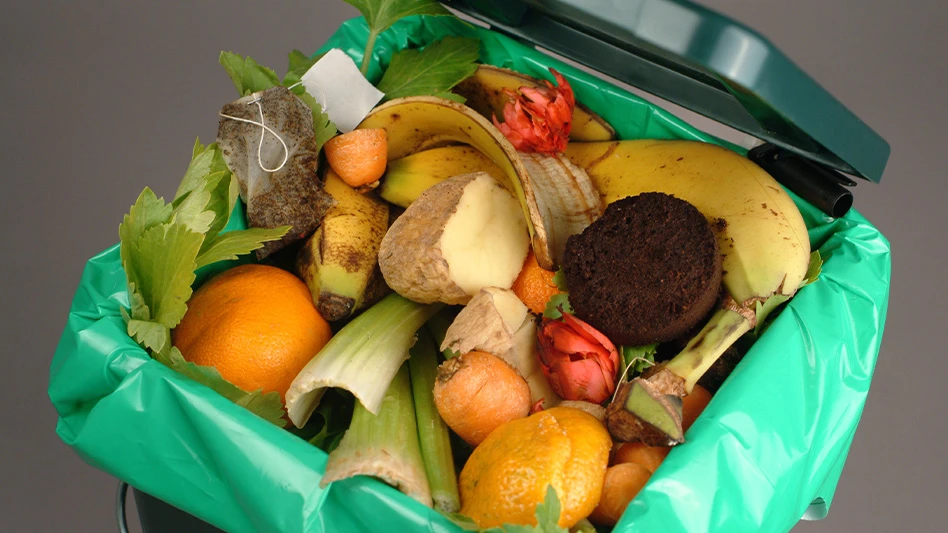
The study, which appeared in Bioresource Technology claims that hydrothermal liquefaction extracts a majority of the energy from food waste before anaerobic digestion. According to the report, the waste is pressured cooked to produce a crude bio-oil during the process, which can be refined into biofuel.
The remaining aqueous food waste is then anaerobically digested and converted into methane, which can be used to produce commercial amounts of energy and heat.
Roy Posmanik, lead author of the study, says anaerobic digestion could take weeks to convert the food waste while adding this new process can create a more efficient system. “We’re talking about minutes in hydrothermal liquefaction and a few days in an anaerobic digester,” he says.
The paper, titled “Coupling Hydrothermal Liquefaction and Anaerobic Digestion for Energy Valorization from Model Biomass Feedstocks,” was co-authored by Rodrigo Labatut from the Pontifical Catholic University of Chile, Andrew Kim, Cornell class of 2017, and former post-doctoral researcher Joseph Usack.
The research was supported by the United States-Israel Binational Agricultural Research and Development Fund, Cornell’s Atkinson Center for a Sustainable Future, the Cornell Energy Institute and the Chilean Fund for Science and Technology.
The study, which appeared in Bioresource Technology claims that hydrothermal liquefaction extracts a majority of the energy from food waste before anaerobic digestion. According to the report, the waste is pressured cooked to produce a crude bio-oil during the process, which can be refined into biofuel.
The remaining aqueous food waste is then anaerobically digested and converted into methane, which can be used to produce commercial amounts of energy and heat.
Roy Posmanik, lead author of the study, says anaerobic digestion could take weeks to convert the food waste while adding this new process can create a more efficient system. “We’re talking about minutes in hydrothermal liquefaction and a few days in an anaerobic digester,” he says.
The paper, titled “Coupling Hydrothermal Liquefaction and Anaerobic Digestion for Energy Valorization from Model Biomass Feedstocks,” was co-authored by Rodrigo Labatut from the Pontifical Catholic University of Chile, Andrew Kim, Cornell class of 2017, and former post-doctoral researcher Joseph Usack.
The research was supported by the United States-Israel Binational Agricultural Research and Development Fund, Cornell’s Atkinson Center for a Sustainable Future, the Cornell Energy Institute and the Chilean Fund for Science and Technology.
Latest from Waste Today
- Fleetio launches AI capability to accelerate fleet maintenance approvals
- Recycle Ann Arbor extends drop-off station operating hours
- Sybilion seeks to help manufacturers confidently address volatility
- Ecowaste Solutions partners with city of Trinity, Texas
- Bristal Hauling acquires G&R Garbage Disposal
- Baltimore trash collection expected to slow as WTE facility closes for maintenance
- Landfill Insights | Connecting the dots: Policy to practice
- FCC Environmental Services awarded collection contract in Florida