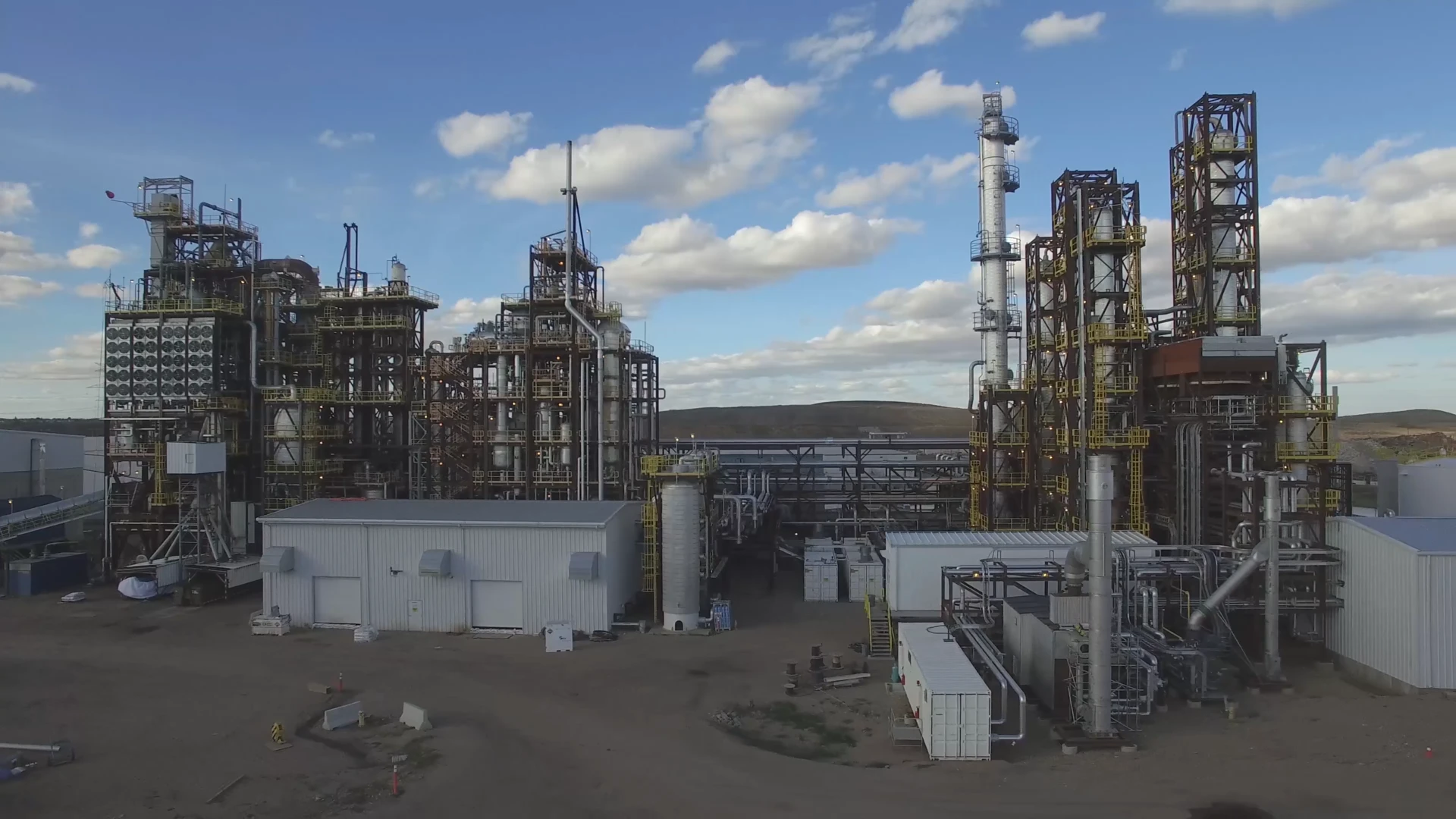
During the past decade, the annual tonnage of post-recycled municipal solid waste being placed in California’s landfills has increased by almost 50%, and since 2014, its recycling rate has declined from 50% in 2014 to 40% (in 2018, the last year for which data has been released).
Due in part to state government’s myopic view that recycling, anaerobic digestion, and composting are the only acceptable means of processing municipal solid waste, California has placed 341.1 million tons of post-recycled waste in landfills during the past ten years.
It has long been clear that, under its current policies, the state could never achieve by this year, 2020, its legislatively-mandated goal of 75% recycling, nor will it be able to meet its additional mandate for a 75% reduction in the statewide disposal of organic waste (from the 2014 level) by 2025.
According to the most recent report by CalRecycle (California’s Department of Resources Recycling and Recovery), California’s 14.1 million residences and 1.5 million businesses, after adjusting for population growth, generated 77.6 million tons of municipal solid waste in 2018. 39.9 million tons were landfilled, either in California or out-of-state, and an additional 6.3 million tons of material went to six other disposal-related activities, bringing disposal to 46.3 million tons, or 60% of generated waste. An estimated 31.3 million tons were recycled using the limited options provided in the statute—source reduction, recycling, and composting. And that gets you to the state’s most recently announced statewide recycling rate of 40%.
If China had banned all recyclable paper and plastic imports in 2018, a policy it is currently implementing, the statewide recycling rate could have declined to as low as 33%.
If it had not been for the economic downturn caused by COVID-19, the state would have generated more than 80 million tons of solid waste this year. According to CalRecycle’s projections, to achieve 75% recycling, approximately one-half of the post-recycled solid waste that would have been landfilled this year (an additional 23 million tons) would need to have been source reduced, recycled, or composted—an impossibility.
Expressed another way, it has been estimated that, under CalRecycle’s current policies, meeting its 2025 goal of 75% organic waste reduction in landfills would require the construction of 110 additional anaerobic digestion and composting facilities—and it is questionable whether the composting facilities could be sited and permitted, and whether there would be markets for the residuals.
This goal has been made even more difficult by the fact that, as of this past January, landfill diversion credit is no longer allowed for green waste when it is used as alternative daily cover. This has increased the volume of waste being recorded as landfilled, and in California’s Central Valley it has intensified the need for open-field burning of agricultural residues.
In its report on 2018 recycling, released in April, CalRecycle acknowledged the state’s increasing disposal rate and said, “If we do not want this to continue then outlets other than landfills must be found.”
But what have they actually done?
In 2011, AB 341 mandated the source reduction, recycling or composting of not less than 75% of the state’s solid waste by 2020, and since that time, no new statute or subsequent CalRecycle policy documents have so much as mentioned non-combustion thermal technologies—pyrolysis and gasification as used to convert the non-recyclable portion of the municipal solid waste stream to electricity, biofuels, or chemical feedstocks—as playing any role in achieving this goal.
In fact, for at least 15 years CalRecycle’s policies have been contrary to the definition of recycling in the state's Public Resources Code. Section 40180 defines recycling as "the process of collecting, sorting, cleansing, treating, and reconstituting of materials that would otherwise become solid waste, and returning them to the economic mainstream in the form of raw material for new, reused, or reconstituted products, which meet the quality standards necessary to be used in the marketplace.”
This process, also known as molecular recycling, involves changing the form or structure of something, whereas CalRecycle, in its AB 341 planning and other policymaking, has maintained that recycling comprises only material segregation, collection, and sorting.
And who is responsible for this?
Over the past 15 years, the state’s legislature, responsive only to those who cling to the belief that traditional recycling is the only legitimate pathway to zero waste, has blocked all efforts to amend or remove from statute repressive provisions that discourage developers from attempting to permit their projects in the state.
And what can state government do to correct this? Simply act on the language in California’s long-standing Bioenergy Action Plan, which directs CalRecycle “to work to promulgate changes to existing law to develop a regulatory framework for biomass waste conversion facilities, meeting environmental standards, that clearly distinguishes them from disposal, and provides clear permitting pathways for their development, as well as provides diversion credits to local jurisdictions for solid waste processed by these technologies.”
Among the “changes to existing law,” removal of its gasification definition would be a priority. Universally acknowledged to be scientifically inaccurate, it restricts the use of air or oxygen in the thermal conversion process (a disqualifying element for most technologies), and requires the entire biorefining process, not simply the gasification step, have zero emissions—a physical impossibility and a standard that would shut down every power plant and petroleum refinery in the state.
Further, the use of post-recycled MSW as a feedstock for the production of biofuels, chemicals, or sustainable products does not qualify as landfill diversion, and because public agencies face fines if they fail to meet their diversion goals, they are reluctant to make their wastestreams available to these processes.
Another positive step would be to bring the state’s Waste Management Hierarchy up-to-date, inserting Energy Recovery after Source Reduction and Reuse and Recycling/Composting, and before Treatment & Disposal.
The California Air Resources Board has long recognized that, on a life-cycle basis, organic waste is one of the only feedstocks that can meet the emissions reduction objectives of its Low Carbon Fuel Standard. As early as 2010, its staff declared that to assist in meeting this goal by 2020, 24 new waste-to-biofuels facilities would be needed in the state—18 cellulosic ethanol biorefineries and six new biodiesel/renewable diesel plants. Not one has been constructed.
The Potential
The potential for Conversion Technologies (also known as Advanced Recovery Technologies) in California, indeed all across the nation, is massive. However, operational certainty will require clear permitting and regulatory pathways based upon standards of performance, subject to environmental standards consistent with other solid waste processing or refinery operations, rather than attempting to define, categorize, and regulate these technologies by type.
The fundamental weakness of the current approach is that it does not entail an internationally-proven, comprehensive systems engineering approach—one that embraces all proven policy and technologies available to create an infrastructure that can respond to changes in the recycling market, and/or major changes in the volume and types of solid waste being generated.
Theoretically, with today’s proven technologies, the 43.2 million tons of solid waste estimated to have been placed in landfills last year could have supported the production of more than 1.6 billion gallons of low carbon fuel.
At least seven projects are currently in development in the San Joaquin Valley that will apply gasification or pyrolysis to the constructive disposal of agricultural residues. These projects include major cellulosic ethanol plants by Aemetis and West Coast Waste using gasification technologies from InEnTec and Enerkem. This is possible because the State's repressive gasification definition and its regulations relating to MSW do not apply to single-stream cellulosic wastes.
Approximately 1 million tons of orchard and vineyard removals were permitted for open field burning last year. Finding solutions for the disposal of agricultural residues has become a problem of “life and death” proportions for this $50 billion industry, and conversion technologies are already playing a major role in addressing this issue.
Hopefully, these projects in California’s Central Valley will open the way for thermal technologies to access a broader array of biogenic wastes and residuals as feedstocks, including many fractions of MSW.
The same technologies that can convert cellulosic wastes to biofuels or power in California's Central Valley are prevented from making productive use of MSW.
In 2016, SB 1383 established methane emissions reduction targets for various sectors of California’s economy. I