The Smart MRF
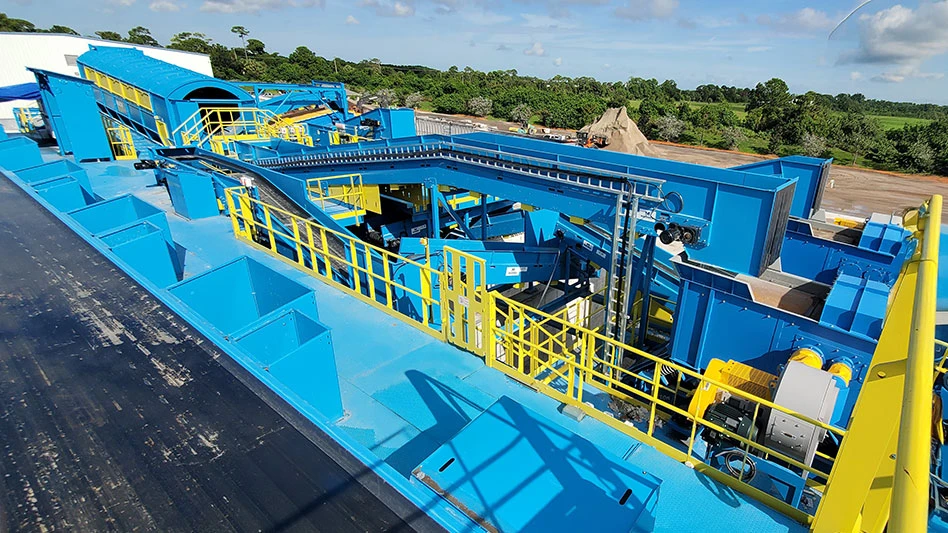
Material recovery facilities (MRFs) are basically factories that operate in reverse. Using sensors, automated controls, and mechanical separation equipment, they take apart finished goods that have been disposed as waste and separate them into their individual material components for resale as raw materials. The automation and equipment are what make a MRF cost-effective, limiting labor costs and boosting productivity. The current sophistication of these advanced recycling technologies is just a taste of things to come. The result will be the “Smart MRF,” an important component of the coming Third Industrial Revolution based on “a new infrastructure of 5G internet, renewable energy, and automated driverless transport internet, all riding on top of an Internet of Things platform,” says Jeff Beer in an article for Point Blue (www.bit.ly/2LqLGgo). But to understand where we are going, we need to review a history of the recycling industry to understand where we have been and where we are now.
World War II and the Start of the Recycling industry
There has always been a scrap metal industry. Steel, copper, and aluminum have always been too valuable to waste. And wartime demands have always spurred scrap metal recycling. During World War II, recycling of rubber for the war effort also became a big industry. Scrap material drives were important throughout the war not just as sources of raw material for the war effort, but also as morale boosters back at the home front. It gave ordinary Americans a sense of purpose and participation in winning the war. Combined with rationing, scrap drives freed up materials from the civilian economy and let war production operate at full speed.
The first major scrap drive was for rubber since many of the sources of natural rubber were in the hands of our foes. Rubber was needed from unconventional sources (even if they were of poor quality) until research could develop synthetic rubber. After this first successful scrap drive, the War Production Board encouraged scrap drives throughout the war. Metal shortages were also critical with the need for metal scrap met by pots, pans, old sheet metal, automobile bumpers and fenders, used radiators, and worn out farm equipment. Even the old Civil War cannons found at monuments in town squares were melted down for the war effort. One campaign recycled 5 million tons of steel in just three weeks. Tin, steel, and copper were melted down and used to make ships, planes, tanks, and weapons. Scrap drives were an ongoing effort with most towns holding scrap drives monthly throughout the duration of the war. Even scrap paper found a use as cardboard and packing materials—and to meet the military’s voracious appetite for paperwork.
The ‘60s & Earth Day: The Recycling Industry Takes Off
After the war, scrap drives went the way of Rosie the Riveter as America settled into the prosperous ‘50s. But with prosperity came waste and a spendthrift attitude to resources which manifested itself in a serious litter problem that required a national campaign to combat it. In reaction to the conformity of the 1950s, the ‘60s became a laboratory for social experimentation and a hotbed of cultural activism. This included the birth of the modern environmental movement. And in the ‘60s, the nascent environmental movement (with the help of an Italian-American actor who played a crying Native American) fought back against the tide of litter. Bottling companies were pressured into offering nickel deposits to encourage reuse of glass beverage bottles.
By the end of the ‘60s, America would see the mainstream establishment of the environmental movement, the first Earth Day, campaigns against litter, and the creation of the Environmental Protection Agency (EPA). However, these early efforts were hampered by economic reality; recycling had begun before it was economically feasible and solely as a result of social-minded efforts driven by a concern for the environment. As with most social advances, this movement began in California, and by Earth Day in 1970, over 3,000 recycling drop-off centers had been started. These efforts later grew into coordinated curbside recycling programs.
The 1980s—Explosive Growth, Pushback, and China
Despite increased environmental awareness, recycling rates held steady or grew slowly until the mid-1980s:
Modern recycling started with the Mobro 4000 garbage barge of 1986. At the time, the Mobro 4000 incident was widely cited by environmentalists and the media as emblematic of the solid-waste disposal crisis in the US due to a shortage of landfill space. Almost 3,000 municipal landfills had closed between 1982 and 1987. It triggered a national debate about waste disposal and was a factor in increased recycling. This concern jump started recycling in communities nationwide.
However, a backlash resulted and recycling was criticized, along with its basic economics and necessity. Summarized in a New York Times Sunday Magazine article entitled “Recycling is Garbage,” these attacks make the following claims:
“Since there’s no shortage of landfill space (the crisis of 1987 was a false alarm), there’s no reason to make recycling a legal or moral imperative. Mandatory recycling programs aren’t good for posterity. They offer mainly short-term benefits to a few groups—politicians, public relations consultants, environmental organizations, waste-handling corporations—while diverting money from genuine social and environmental problems. Recycling may be the most wasteful activity in modern America: a waste of time and money, a waste of human and natural resources.”
This would change with the industrialization of China, which provided the first mass market for recycled materials. The rapid growth of Chinese consumer products industries required vast amounts of processed recycled materials. In doing so, Chinese industry provided the true financial incentive and economic rationale for the recycling industry. As recycling became a global industry, China emerged as the largest importer of the world’s waste materials, importing a third of Britain’s recyclables and 100% of the US West Coast waste paper market. Almost two-thirds of the fiber used to manufacture paper and cardboard in China comes from waste paper imported from overseas. Imports of waste paper in China increased from 3 million tons in 1996 to almost 20 million tons a decade later. These materials get sent to Chinese factories and are used to make both packaging materials and consumer goods. As a result, the amount of recycling in the US has tripled since the 1960s.
The 2000s & the Current State of the Recycling Industry
These good times continued for the global recycling industry until the Great Recession of 2008. A further collapse of commodity prices occurred in 2010. Since 2000, both waste generation rates and recycling amounts have flattened out.
The future of the industry is marked by two major trends: increased rates of recycling and reduced rates of waste generation. Technology and lifestyle habits have changed, reducing waste just as the technology and political will devoted to recycling have never been better. Take two examples. Between 1994 and 2014, US newspaper recycling rates rose from 49.8% to 68.9%, but the actual volume of newspapers that have ended up in bins simultaneously declined, from 15.81 million tons to 7.89 million tons (Source: American Forestry & Paper Association). The average weight of an aluminum beer can has declined 38% between 1972 and 2014 (in 1990, a recycler would have needed 29 beer cans to make a pound, but would need 34 today), saving money for shippers and manufactures but hurting the recycling industry’s bottom-line (Source: The Aluminum Association).
China’s seemingly endless demand for recyclable material is also in question. Instead of serving as the foundation of the recycling industry, Chinese demand has become unpredictable. The Chinese have recently banned the import of various types of scrap: plastics, textiles, and mixed papers. Largely the result of both environmental concerns and a shift from a manufacturing to a consumer economy, it means that China can no longer be counted on as the primary source of demand for recyclables.
The industry is responding to the market changes with a more focused approach to their customers. Instead of simply shipping bulk amounts of recyclables to China, the recycling industry has become savvier in finding profitable end uses and market niches for its materials. Instead of quantity, the industry is focusing on quality. This is especially true of the plastics industry, leading to a focus on the more profitable types of plastic materials. In short, the recycling industry has gotten more agile and smart. A smarter recycling industry can take advantage of a still growing global recycling market, using this newfound sophistication to extract even greater profits from an industry projected to grow from 21 billion euros in 2015 to 35 billion euros by 2020.
MRF Technology and Operations—Present and Future
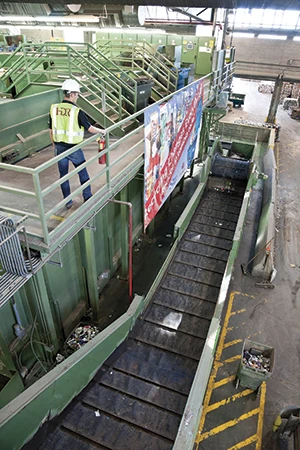
The original MRFs were “clean” MRFs that relied on households and businesses to source separate their recyclables prior to curbside collection. Arriving in already segregate quantities, these MRFs primarily utilized human labor to organize waste arriving in multiple streams and prepare it for resale. Human workers will always remain an integral part of any MRF operation since no facility will ever achieve 100% automation and mechanization. Given the heterogeneous and unpredictable nature of the wastestream, human judgment and common sense will always be a necessary feature of any MRF operation.
Mechanization of the recycling process allows for the operation of “dirty” MRFs that receive a single, steady stream of mixed waste from regular waste compaction operations. The automated equipment allows for this mixed wastestream to be effectively separated and rendered into its different material components. And since the organic waste component of the wastestream is typically source separated and sent to a composting facility, the operation of a typical single-stream MRF operation manages mixed waste: metals, paper, cardboard, glass, and plastic.
Metallic waste is either ferrous or nonferrous. Ferrous metals are perhaps the easiest material to extract from the wastestream, with the extraction being performed by either fixed magnets or electromagnets which directly remove ferrous metals from conveyor belts as they pass under or over them. Nonferrous metals are removed by eddy-current separators. These consist of rapidly rotating magnets that induce an electrical current and a counter magnetic field in the nonferrous metals. The two magnetic fields repel each other and the nonferrous metals fly off the conveyor belt into a designated receptacle.
Paper waste is either lightweight and large (old corrugated cardboard, OCC, boxes, and sheets) or lightweight and small (all types of office paper, newsprint, magazines, etc.). Large paper waste is typically removed by disc screeners. Disc screens are large open-topped hoppers with a widespread floor bed. The floor bed is lined with rotating discs of varying sizes, dimensions, and shapes (round, oval, star, etc.) whose edges are set perpendicular to the bed surface. These discs are set to rotating at various speeds as waste is fed into the floor bed. Like a washing machine agitator, their various speeds and shapes create wave patterns in the waste that churn and lift the larger and lighter OCC boxes and sheets to the top of the waste for easy removal. Lightweight paper is removed by the force of applied air currents. Air classifiers are basically tall chimney stacks with a blower applying suction at the top that lift and remove pieces of paper. Further process of the collected paper by type and grade can be performed by an air cyclone.
Glass waste, with its various glass colors, is extracted with LSP light spectrophotometry (LSP) that can distinguish between colors of commercial glass (clear, amber, brown, or green) as well as cullet and ceramics. By reading the various wavelengths of light reflecting off of the surface of the object being examined, the LSP sensor tells a blower system to remove the particular glass piece being examined with a blast of high-velocity, high-pressure air, pushing it into a designated storage bin.
Plastic waste is removed with a similar technology to the LSP, the near infrared sensor.
But instead of reading wavelengths of color, it is used to judge the density (and therefore the type) of plastic waste objects.
Small but heavy objects, mostly residue dirt and debris, are typically removed by rotating trommels. Like many pieces of equipment used by MRFs, trommels are mining machinery modified to extract waste instead of separating ore and slag. Basically, it’s a rotating drum with perforated sidewalls and a rotational axis set at an angle to the horizontal, interior of the trommel which is equipped with a series of vanes. Waste entering through the top slowly falls down through the trommel’s rotating drum, exiting out of the bottom. But during that process, small objects of dirt and debris leave the trommel through the holes in the side walls. This leaves only the larger waste objects in the wastestream for further processing.
Robotics, Automation, and Future Technology
So, what will the future bring? Given all of the ups and downs of the recycling industry over the years, any attempt at prediction could be dangerous. One thing is certain: the same forces of automation, artificial intelligence, and robotics impacting American industry will also cause sweeping changes to MRF operations. MRFs began as purely manual operations and progress to a mechanization stage. The next stage will be the “Smart MRF” that incarnates all the applicable advanced technologies of material handling, sensors, data collection, and robotics.
Automation doesn’t always destroy jobs. Instead, it usually changes and even expands the task performed by an industry’s workforce. For example, the invention of the automatic teller machine (ATM) was thought to spell doom for the job of a bank teller. Instead, there are more bank tellers now than ever before since the ATM allowed for smaller more diverse banks and gave tellers the new tasks of customer service and sales. So it will be with workers at a MRF. Newer, different, and better tasks will be assigned to them while machines take over the truly dirty drudge work required for waste recycling. In the end, technology improves productivity, creating more real wealth and better jobs for all concerned.
Short term, the biggest advances will be in ever more sophisticated optical sorters, of controls, sensors, data acquisition and analysis, metering, remote operations, SCADA, and troubleshooting. Long-term robotics will make their appearance at MRFs and transform their operations. MRF robotics is still in its infancy. For example, a European robotics company, Zenrobotics, has developed a robotic arm with a grappling hand that can physically pick up preprogrammed objects from a wastestream. This system is currently being tested and evaluated by the Finnish company SITA Finland for the recycling of construction and demolition debris waste (a simpler wastestream than MSW with fewer waste types to choose from). Adoption of robotics may be slowed by the very nature of waste with its unpredictable quantities and diverse materials, but like every other industry, the recycling industry will tend to ever-increasing levels of sophistication of automation.
Major Suppliers
VAN DYK Recycling Solutions
With over 340 MRFs and 2,400 recycling and sorting systems installed to date, VAN DYK Recycling Solutions provides turnkey high performing recycling and sorting systems. In addition to providing Bollegraaf and TOMRA optical sorters, they provide whole system design and MRF system upgrades, including control and data systems. In doing so, they provide their customers with customized recycling systems to meet anticipated wastestream characteristics and flow through quantities.
The overall operation of a MRF has to become nimbler in response to changing market conditions. Gone are the days when a single large market (such as China) could be counted on to simply accept mass quantities of recyclables. What this means for MRF operators is summarized by Greg Gesell, P.E., the vice president and project manager for the environmental consulting engineering firm of HDR Inc.:
Providing feedback to the operations manager is really important to maintain quality and avoid lost products and production. QC sorters need to understand when it’s important to inform their shift supervisor regarding missed material or even to shut down the line. Increases in contaminants on a commodity line may mean a screening device needs to be reset or cleaned. Excess missed material on a residue QC station may also point to a malfunctioning component. For example, optical sensors could require cleaning or a screen may be getting plugged. With today’s focus on quality and with the current prices for commodities, these issues are more important than ever. This information is also helpful to know when a break might be beneficial. It can also point to the need for training. Keeping manual sorters at optimum performance pays dividends.
Some newer facilities and retrofits for existing lines are including sensors that can detect missed products and provide feedback to the supervisor. These early warning devices allow the shift supervisor to be able to monitor the processing line more effectively.
Commodities are constantly changing. Staying ahead of changes in packaging is important. The mix of materials will continue to change. Smaller- and larger-sized containers mean more picks and risk of jams in tight clearances, both of which reduce production. Labels on containers are detected and can confuse optical sensors into thinking a container is the wrong material. These types of issues can be addressed, but flexibility needs to be built into the sorting area to allow for adaptation. Flexibility also needs to be built into the equipment. Being able to change spacing and angles of screens, speeds of conveyors, air flow, and angle are a few examples of equipment features that may help address the many influences due to weather, holidays, commercial and residential collection days, seasonal changes, and product evolutions, as well as other short- and long-term changes.
Optical sorters, robotics, and other equipment are very expensive, require space, and are continuing to improve. Deciding which technology and when to build or upgrade is challenging. Cutting corners to save costs on building floor space and equipment features may save on initial capital but may mean changes and updates will be needed sooner. Investing in optical sorter features that are not necessary today but have promise for future commodity changes may or may not be a good idea. The premature replacement also hurts the economics of the MRF, particularly when commodity prices are depressed. In some cases, newer equipment or modified designs require more floor space than is available. It is hard to justify getting more sensory capability and more building space during the initial design of a facility, but where possible to allow for change, changes will occur. Squeezing a new device into a space or arrangement that is less than ideal may mean the value will not be realized. Having the ability to change or add products may save or forestall replacement of major equipment if the equipment can be adapted to new applications.
Developing or modifying a MRF requires experience such as evaluating, planning, designing, permitting, procuring, and construction even if all of these tasks are not required for the current project. Understanding both traditional and trend-setting facilities and related solid waste facilities is important to provide the most cost-effective operations. Planning of a solid waste facility and particularly a more sophisticated MRF starts with a focus on simplifying operations, minimizing traffic movements inside and outside, keeping routes simple, and reducing handling of materials while maximizing payloads. A development process starts with multiple options, evaluates them, and refines them help to select the one that will best serve the client from multiple perspectives: operational, sustainable, environmental, and economic. After the concept is developed, the process line and layout can be developed. Enough flexibility needs to be provided to allow the vendors to arrange their best equipment for their design but enough guidance to address the specifics the client needs.
Latest from Waste Today
- Vecoplan to present modular solutions at IFAT 2026
- Terex Ecotec appoints Bradley Equipment as Texas distributor
- My Green Michigan expands depackaging capacity
- Washington selects Circular Action Alliance as PRO
- Ten-8 Industrial opens new central Florida service center
- Triumvirate Environmental acquires Environmental Waste Minimization
- Official NYC Bin availability expands ahead of deadline
- US Food Waste Pact’s 2025 Impact Report shows decrease in food waste