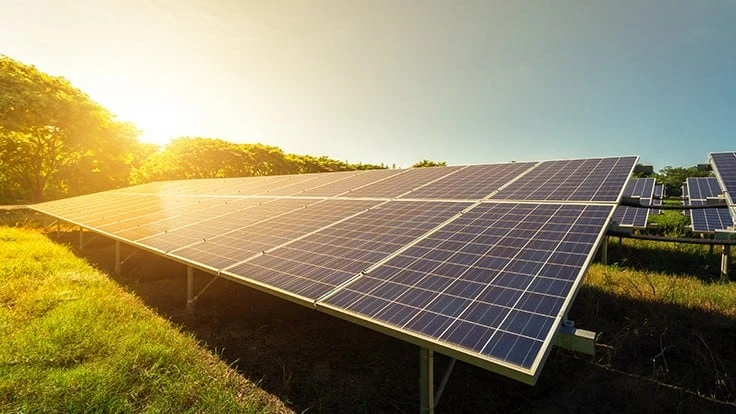
AEP and the city of Columbus, Ohio, have announced an agreement to purchase the electricity produced from a 50-megawatt solar farm currently under construction on a 173-acre former landfill site, according to a report from The Columbus Dispatch.
“We’re delivering on the promise to provide local, Ohio-based clean energy to power our homes and small businesses," Columbus Mayor Andrew J. Ginther said in a written statement. "This project will serve as a beacon in our community, signaling our steadfast commitment to a healthy and prosperous future for all residents.”
The Columbus Solar Park, which was announced last summer, is to sit atop the former Franklin County landfill and is also the former site of the now-closed Phoenix Links Golf Course. It will feed green power into the Greater Columbus electric grid by 2023, with the electricity “available to local entities to buy,” Ty Marsh, executive director of the Solid Waste Authority of Central Ohio (SWACO), announced in July 2020.
For the first five years, or through December 2027, the power from the new solar farm will be used 100 percent by the city's municipal green-energy aggregation program, whose power is being supplied by AEP. Last November, voters approved the aggregation program, which automatically enrolled most Columbus AEP customers unless they chose to opt-out.
Almost 200,000 customers were in the aggregation program when it kicked off this summer, according to The Columbus Dispatch. AEP has pledged to fund construction of solar and wind facilities within the state to meet 100 percent of those customers' demand with renewable sources by 2023.
Starting in 2028, the city's own electric utility, the Columbus Division of Power, would start purchasing half of the solar farm's power. The division serves nearly 16,000 customers, from residential to industrial, throughout the city. Today, only about 20 percent of the division's electricity comes from green energy, all of it through "renewable energy certificates," a spokesman said last month.
Latest from Waste Today
- Recycle Coach partners with Bartec Municipal Technologies
- CPUC conditionally approves RNG procurement contract for Anaergia’s SoCal Biomethane facility
- EPA proposes abandoned tire cleanup plan with focus on energy recovery
- Global Recycling Foundation recognizes Recycling Heroes
- Equipment finance index takes dip in March
- Oregon DEQ issues enforcement order, $3M civil penalty to Valley Landfills
- Sierra International Machinery adds to sales team
- Vernon County, Wisconsin, landfill expansion remains stalled amid DNR delays