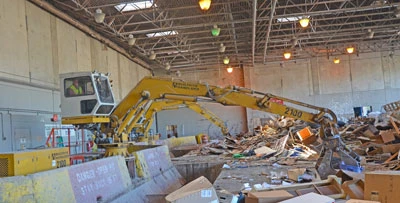
Because of their weight, processing C&D materials is important to those having to meet diversion mandates, points out Brendan McKenzie, national sales manager, OSA Demolition Equipment. “Not only are you saving landfill space, but it’s [also] huge money,” he says.
Recently, McKenzie was speaking to an end user of his company’s products in California, who indicated to him that some recyclable products are now so valuable “they’re actually mining landfills” to retrieve them. “They’re going back and looking for metal they threw away a few decades ago,” he notes. “It’s basically money buried right there in their landfill.”
According to the Institute of Scrap Recycling Industries (ISRI), studies show that the practice creates and supports hundreds of thousands jobs in the US and generates billions in revenue for federal, state, and local governments. It’s not uncommon in some areas of the US to see vehicles canvassing neighborhoods, looking for valuable recyclable scrap materials put out for trash removal before the solid waste trucks arrive, to say nothing of occasional occurrences of outright theft of materials.
Here’s an ISRI breakdown of commodities and their markets:
Scrap recycling of nonferrous metals:
Aluminum, copper, lead, nickel, tin, and zinc can be recycled an infinite number of times as they are among the few materials that do not degrade or lose their chemical or physical properties in the recycling process. Latest statistics show the materials comprised less than 10% of the total quantity of material recycled in the US, but accounted for more than half of the total US scrap recycling industry earnings in 2012. Over 9 million metric tons of nonferrous scrap was processed in the US, from such sources as copper and precious metal circuitry in electronic devices, soft-drink containers, automobile batteries and radiators, aluminum siding, and airplane parts. Markets include secondary smelters, refiners, ingot makers, foundries and other industrial consumers in the US and in over 90 countries worldwide. The Bureau of International Recycling estimates that almost 40% of the world’s copper demand is met using recycled material, while over 80% of the zinc available for recycling is eventually recycled.
Scrap recycling of ferrous metals:
Obsolete ferrous scrap such as iron and steel is recovered from automobiles, steel structures, household appliances, railroad tracks, ships, farm equipment, and other sources, with used vehicles being the largest source. R. L. Polk & Co. estimates nearly 11.8 million vehicles were scrapped in the US in 2012. Ferrous scrap is the most recycled material, domestically and globally. In 2013, over 350 shredders were in operation in North America, up from 120 in the early 1970s. The USGS estimates that 72 million metric tons of iron and steel scrap were purchased in the US in 2012. ISRI indicates while domestic ferrous scrap market participants have faced increased competition for available feedstock in recent years, expanding economic output in general and improved conditions in the automotive and construction sectors should contribute positively for future ferrous scrap supply and demand. ISRI has developed standard specifications for scrap commodities including more than 100 ferrous scrap specifications.
Latest from Waste Today
- My Green Michigan expands depackaging capacity
- Washington selects Circular Action Alliance as PRO
- Ten-8 Industrial opens new central Florida service center
- Triumvirate Environmental acquires Environmental Waste Minimization
- Official NYC Bin availability expands ahead of deadline
- US Food Waste Pact’s 2025 Impact Report shows decrease in food waste
- Coastal Waste & Recycling expands recycling operations with Machinex
- Reconomy acquires German-based GfAW