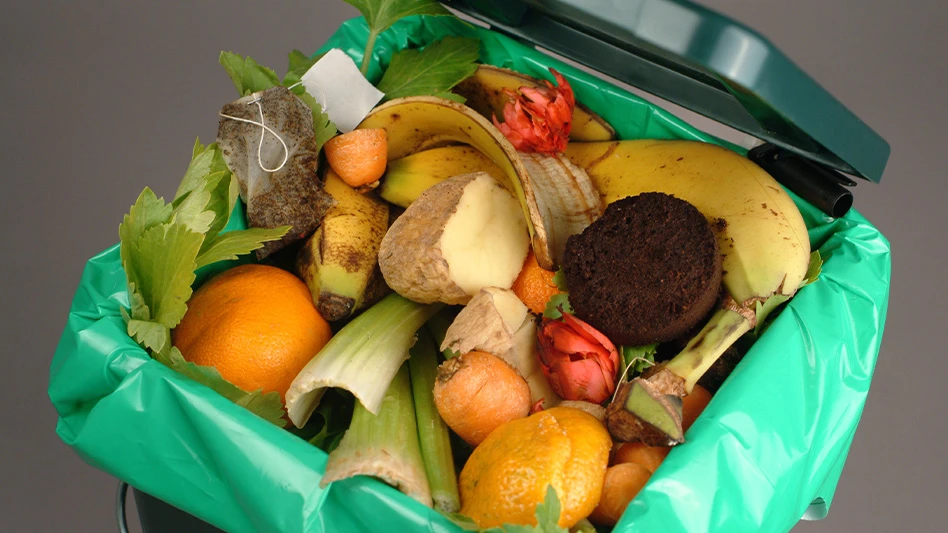
After working an array of odd jobs ranging from house cleaning to floral apprenticeship to years as an optician, Candice Cotler landed at Common Ground Compost, a full-service sustainability firm based in New York City that provides zero-waste services including consulting, education, microhauling and zero-waste events and audits. Through its microhauling division, Reclaimed Organics, the company collects food scraps from various clients, from corporate real estate portfolios to small businesses, and processes them at the East Side Garden on the city’s Lower East Side to produce community compost.
At first, Cotler’s role was to manage the company’s social media accounts on a part-time basis. After quickly becoming certified as a Total Resource Use and Efficiency (TRUE) zero-waste advisor, they rose through the ranks. Following the departure of company founder Laura Rosenshine, Cotler now serves as chief operating officer. As part of their role, Cotler oversees in-house operations, supports educators by creating documents, provides zero-waste consulting services and runs zero-waste events.
With a love for learning, Cotler dives headfirst into anything to do with sustainability. A graduate of the Sanitation Foundation Trash Academy and New York City Department of Sanitation’s Rat Academy, Cotler has continued to pursue education opportunities, currently finishing up a New York City Master Composter certificate.
Helping commercial buildings improve their diversion rates and provide organics collection is a great win.”
Waste Today (WT): Can you tell us more about the relationship between organics collection and pests? Is that why you’ve been taking those kinds of certification courses?
Candice Cotler (CC): Absolutely. Education is the hardest thing. Changing people’s ideas about waste, their ideas about … why rats or mice or cockroaches [are] invading a space? How can I avoid that? What are the best mitigation practices to put in place? I think people overlook composting as a pest mitigation technique, and I think that is a major error.
You know, if you think about it, your food scraps are already in your trash. You are not making more food scraps. You are not making them more available. Ideally, in fact, you’re putting them in a sealed container that is much, much more difficult for a rat or a cockroach to gain access to. We’re taking them out of the bags that have historically, in New York City, been put on the street or stored stacked outside of containers.
There’s a lot of stuff happening in New York City right now, between residential mandatory composting rolling out and waste containerization rolling out. Both of these things in tandem are really powerful when it comes to rat mitigation, and I think composting is a powerful first step.
WT: What are some of the initiatives you’ve been most proud to work on at Common Ground Compost?
CC: One of our coolest things is we work with a large New York City portfolio that has [about] 24 commercial buildings. When we started with them years ago, they didn’t offer organic collection because it is a challenge in New York City. And now, commercial organics collection is available to 100 percent of their commercial tenants. We’re talking hundreds of tenants, and that’s so powerful. Helping commercial buildings improve their diversion rates and provide organics collection is a great win.
I’ll shout out our microhauling division. We are the only organization in New York that picks up food scraps from inside offices in these large commercial buildings. It’s a white glove service—we clean out the bin, we take out the organics, replace your bag and then we compost it. Last year we helped divert over 92,000 pounds of waste. For an organization our size, that’s pretty amazing.
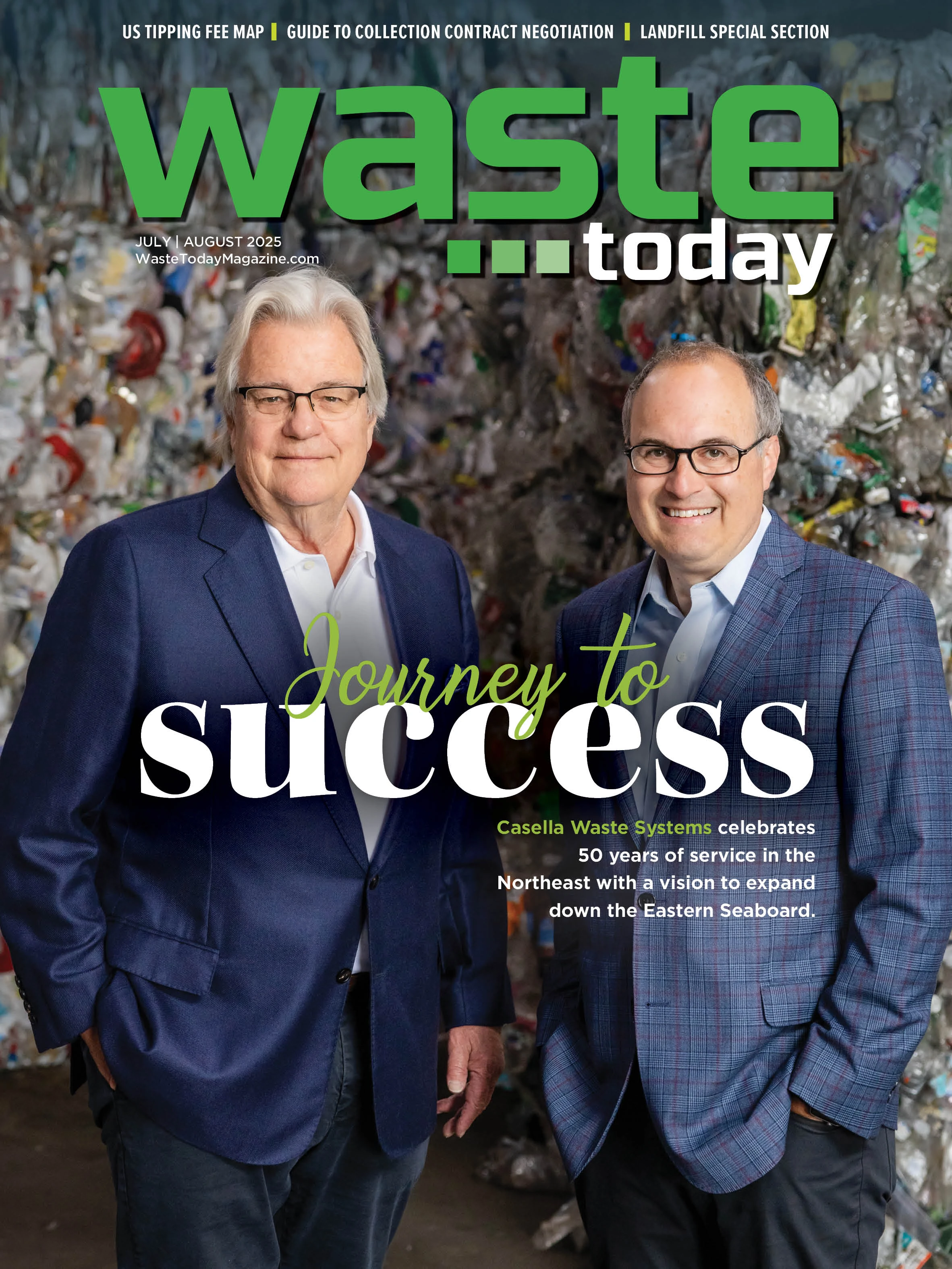
Explore the July/August 2025 Issue
Check out more from this issue and find your next story to read.
Latest from Waste Today
- Fleetio launches AI capability to accelerate fleet maintenance approvals
- Recycle Ann Arbor extends drop-off station operating hours
- Sybilion seeks to help manufacturers confidently address volatility
- Ecowaste Solutions partners with city of Trinity, Texas
- Bristal Hauling acquires G&R Garbage Disposal
- Baltimore trash collection expected to slow as WTE facility closes for maintenance
- Landfill Insights | Connecting the dots: Policy to practice
- FCC Environmental Services awarded collection contract in Florida