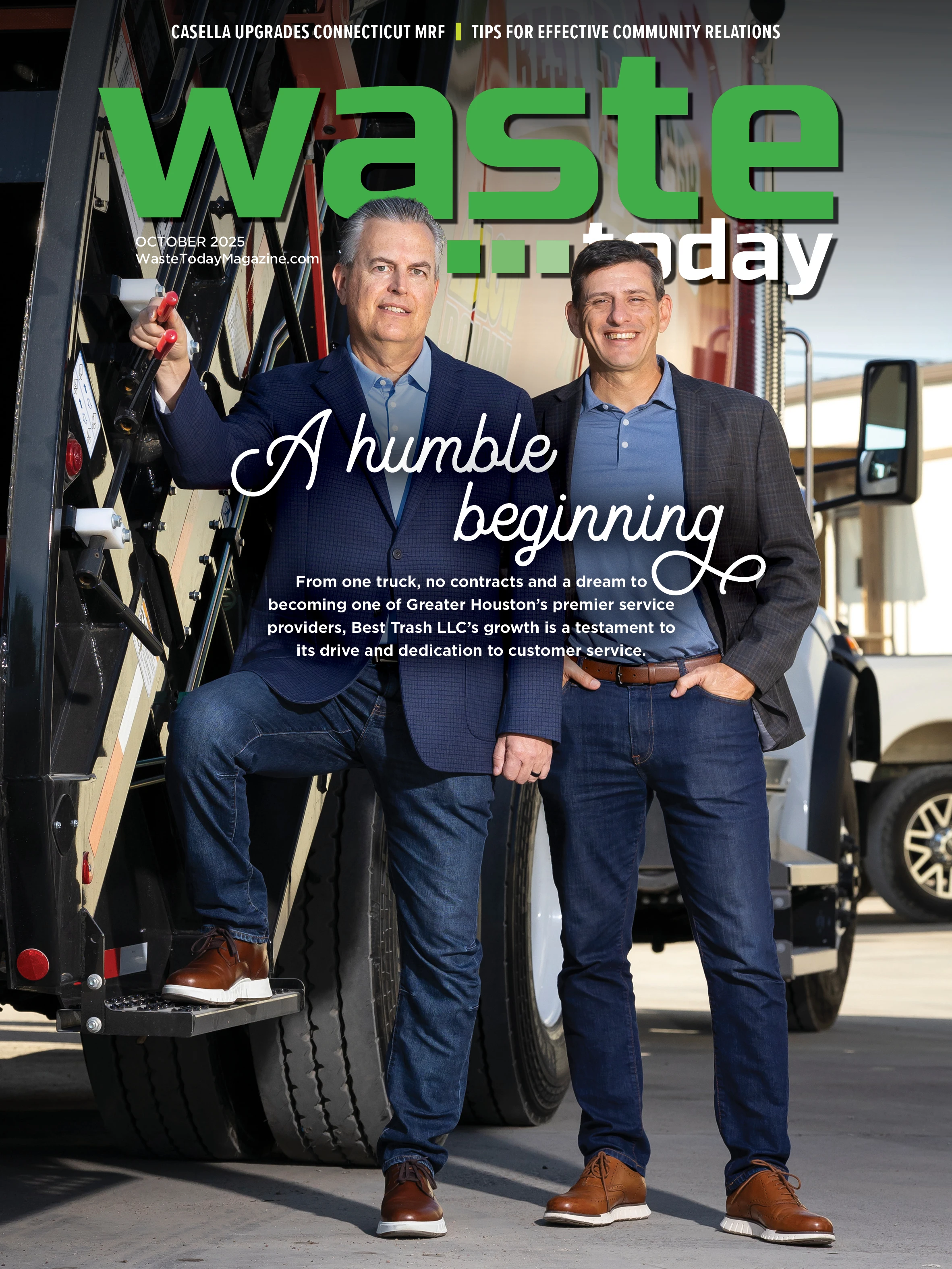
In this issue of Waste Today, we feature a profile of Best Trash, “A humble beginning." The Houston-based company’s Chief Financial Officer David Fleming describes a company culture that is focused on “treating customers and employees right and ensuring the job gets done each and every day.”
While the concept of company culture can sometimes be difficult to summarize, the good ones are easy to spot. But so are the toxic ones.
When asked about their cultures, some companies’ executives might point to perks such as free lunches or snacks, unlimited time off and flexible hours, but experts say a truly strong culture encompasses the shared values, beliefs and behaviors that shape the work environment and employee experience. Company culture influences how people work, interact and achieve results. A positive company culture makes employees feel valued, trusted and encouraged to develop professionally and personally.
According to Great Places to Work, company culture is based on eight elements: credibility, respect, fairness, pride, belonging, effective leadership, values and innovation.
When it comes to effective leadership, Great Places to Work says it is about more than driving employees to hit company targets. Great leaders nurture a team mentality that ensures everyone is working together and doing his or her best. Company leaders who are interested in building a strong culture should ensure their words match their actions; avoid playing favorites; demonstrate competency, honesty and approachability; and show a true interest in their employees as people.
Good leaders also involve team members in decision-making and seek their input and ideas; they support employees’ professional development and recognize their accomplishments.
According to a recent article in the Harvard Business Review titled, “To Change Company Culture, Focus on Systems—Not Communication,” the authors note that “culture doesn’t fail because it’s forgotten. It fails because it’s misunderstood. It’s treated as branding, not behavior. As output, not infrastructure. And when that happens—even the most well-meaning efforts can erode the very trust they’re meant to build.”
The article goes on to state, “In companies where senior leaders changed how they led—how they ran meetings, gave feedback, made decisions and responded to challenge—trust scores rose by an average of 26 percent, even in the absence of a branded campaign. As one executive told us, ‘We didn’t write our values—we reverse-engineered them from how we wanted to behave.’ Another senior leader put it simply: ‘We didn’t announce a culture shift. We just started acting like it mattered.’”
The article’s authors suggest culture must be embodied before it is articulated and advise reviewing how your company’s senior team actually operates, addressing where decisions are opaque or where hierarchy dominates, for instance.
When it comes to culture, it seems actions speak louder than words.
Explore the October 2025 Issue
Check out more from this issue and find your next story to read.
Latest from Waste Today
- Fleetio launches AI capability to accelerate fleet maintenance approvals
- Recycle Ann Arbor extends drop-off station operating hours
- Sybilion seeks to help manufacturers confidently address volatility
- Ecowaste Solutions partners with city of Trinity, Texas
- Bristal Hauling acquires G&R Garbage Disposal
- Baltimore trash collection expected to slow as WTE facility closes for maintenance
- Landfill Insights | Connecting the dots: Policy to practice
- FCC Environmental Services awarded collection contract in Florida