One of the most important aspects of business management is having options. That can include avoiding being constrained by what might seem to be a small thing—such as the limitations of the landfill’s leachate treatment system or lack of a treatment system.
This article talks about how a landfill’s decisions on leachate treatment technology can help provide freedom of choice in three areas—operational decisions about the landfill itself, disposal options for the treated leachate, and options for disposal of leachate concentrate.
1. How Reliance On the Local POTW Can Limit Choice
Some landfills that rely on the local municipality’s Publicly Owned Treatment Works (POTW) are starting to take a closer look at the vulnerabilities this brings. Three areas of concern are:
- In many cases, the landfill is relying on a small-town POTW, which was designed to treat the sewage coming from a few thousand households. The landfill’s flow of leachate may push the POTW to the limits of its capacity, possibly resulting in a call from the POTW telling the landfill to stop sending leachate temporarily, until the POTW can accept more.
- Most landfill leachate contains ultra-violet (UV) inhibitors or quench agents that absorb the UV energy. Many POTWs have switched from chlorine disinfection to UV disinfection, so the POTW may have no choice but to reject the landfill leachate because it can reduce the effectiveness of UV disinfection of the treated effluent.
- There is increasing concern among municipalities that their systems are not sufficient to protect the public from hazards present in industrial wastewater—and this can include landfills. Some of this concern is about leachate constituents that the POTW’s systems were never designed to deal with—such as heavy metals, endocrine disrupting compounds, and PFAS. The municipality may be concerned about the vulnerabilities this places on the community if its effluent is found to be harmful to the environment.
These factors mean increased vulnerability for landfills relying on POTWs for leachate treatment. It puts the landfill at the mercy of decisions made elsewhere—never a good thing from a strategic viewpoint.
Building a way to pilot one’s own ship—with onsite leachate treatment—can be an investment that pays off in peace of mind as well as operating cost and operational independence. One key to success is choosing a treatment technology that is broad-spectrum enough to deal with the realities of leachate now, but also the requirements that may become more strict in the future.
Another key is to choose technology that economically and efficiently minimizes the problem of its disposal while increasing the volume of wastewater that is pure enough for discharge or reuse.
2. Gaining Options for Purified Leachate Disposal
High purity of the treated leachate is essential to gaining the second type of operational independence a landfill needs—freedom as regards the disposal of that effluent.
One of the keys to having that optionality is being able to obtain a National Pollutant Discharge Elimination System (NPDES) permit for the purified effluent. This allows direct discharge of the treated leachate to a local waterway.
While the goal of many landfills may be to have effluent that can be permitted for surface discharge, it may be that having access to plentiful clean water meets other operational priorities too. These can include:
- Dust control on roadways within and near the landfill. A landfill may be using water sourced from elsewhere, such as water wells. There is a cost attached to this, possibly including a water-use permit. In some cases, this water is not as pure as might be desired. It can cause odor issues when it is sprayed on road surfaces and some of it drifts off-property, causing community relations difficulties. Using purified leachate can help avoid this.
- As a constituent in landfill cover foam to suppress odor, dust, and litter. Water with a high degree of purity can be important in helping the foam do its job.
- As a source of operational water for other aspects of the landfill such as makeup water, watering landscaping, and for non-potable uses inside the landfill’s buildings, including flushing toilets and urinals.
Environmental regulators may be particularly pleased if the landfill is able to take what was a self-generated waste product and treat it to the point that it can find a beneficial use that also avoids consumption of other water resources.
Having effluent that meets a high standard creates options—including discharge to surface water if that is the best use for it.
3. Options Regarding Concentrated Leachate
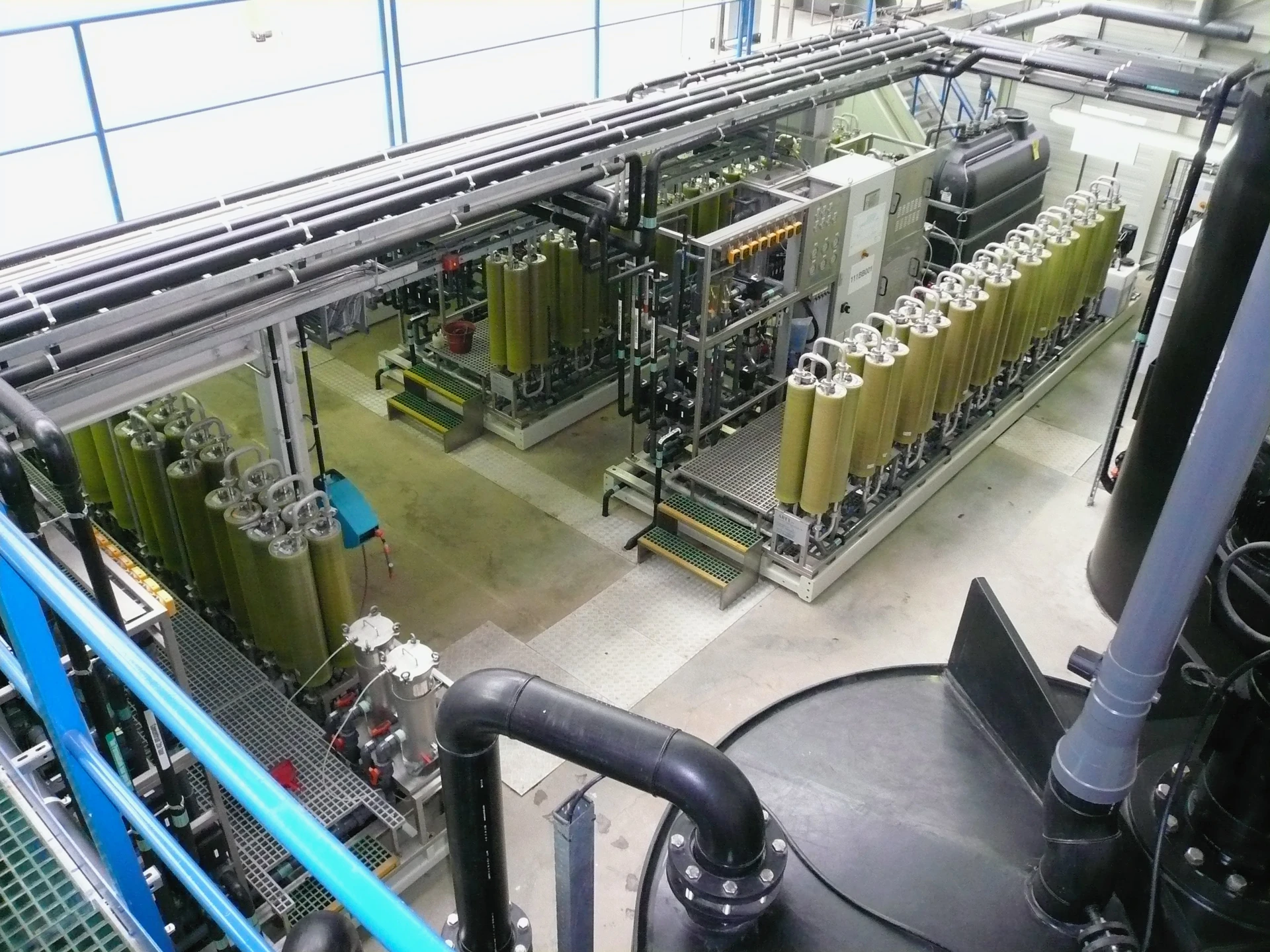
Choosing a leachate treatment system such as reverse osmosis, which is able to squeeze the amount of concentrate down to ten percent of the original volume, also opens up options. With a smaller volume of concentrate, it is more feasible to truck it for disposal elsewhere, evaporate it down to an even smaller volume, solidify it for return to the landfill or circulate it back into the landfill as a liquid. By returning a small amount of residual leachate to the working face, compaction can be increased and biodegradation jump-started to accelerate the stabilization of the landfill. In addition, by keeping all of the contaminants in the landfill, there is no environmental degradation of other sites.
It’s clear that having options is able to help landfills respond to changing situations and changing priorities. A wise choice of leachate treatment technology can support having those opportunities.
Latest from Waste Today
- Interchange 360 to operate alternative collection program under Washington’s RRA
- Waste Pro files brief supporting pause of FMCSA CDL eligibility rule
- New Way Trucks expands US network with Joe Johnson Equipment
- Tire Industry Project publishes end-of-life tire management guide
- Vecoplan to present modular solutions at IFAT 2026
- Terex Ecotec appoints Bradley Equipment as Texas distributor
- My Green Michigan expands depackaging capacity
- Washington selects Circular Action Alliance as PRO