The Town of Smithtown, NY, population 118,000, was the first community outside of California to have 100% of its refuse collection fleet running exclusively on compressed natural gas (CNG). These operations started on January 1, 2007. Since that conversion, they’ve gone on to other municipal operations using CNG, including such public works applications as trucks picking up road debris or related work, according to Russ Barnett, environmental protection director with the town of Smithtown.
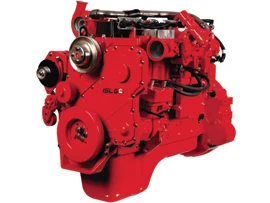
Smithtown runs Crane Carrier and Autocar equipment using the Cummins Westport L-Gas Plus Engine, as opposed to the current ISLG model. The community has had a good experience with the engines, according to Barnett. A number of their highway department or department of public works vehicles operate on CNG. These include Freightliners, Schwartz Sweepers, and a fleet of Honda Civic GX sedans for inspectors and code enforcement personnel.
“Performance has been fine and reliability good for the CNG engines on our refuse collection fleet,” he says. “When Smithtown’s new CNG vehicles were introduced, we received just one complaint. An elderly gentleman was in the habit of bringing his can out in the morning to avoid animals getting into it during the night. Three weeks into the launch, he’d missed collections three times because the trucks were quieter than he’d been used to.”
Barnett, who also serves as municipal manager of this segment of the operations, explains that with diesel fuel prices escalating over two years from $1.30 per gallon to over $3 per gallon, this wreaked havoc on the town’s budget. The community looked for a cheaper alternative fuel, one with a more stable price than diesel.
The report Greening Garbage Trucks, by the environmental advocacy group Inform, helped the town reach its decision. The report was based on a survey done of refuse use in California. The 1,000 CNG-run vehicles there were found to be quiet and reliable. Barnett started calling people to ask them their experiences with the vehicles. He found Allied Waste was operating a single CNG-fueled refuse collection vehicle up on the Harvard University campus. Barnett visited the operation and noted the satisfaction with this vehicle’s performance.
“These systems met our need for stable, long-term, fixed fuel prices,” says Barnett. “That’s why we made the conversion. Typically, here in Smithtown we don’t like to take on new things—those we feel we don’t have a history with. But we did research and ended up contracting with Clean Energy in Seal Beach, California. Clean Energy built the fueling station.
“We’re a conservative town. We don’t experiment with tax dollars. We did our research and found it was a proven, even if not a widely known, technology. We privatized the construction of the new fueling station by contracting with Clean Energy of Seal Beach, California. They built the station without any capital investment by the town, and they offered us long-term fixed fuel prices for our fleet. We privatized that side of the operation.”
Barnett worked with Brookhaven, NY, helping that community do a fleet conversion, which took place in 2009. This town is just under half of a million in population. Brookhaven is now 100% CNG on its refuse truck fleet.
Long Island’s NG infrastructure has been sufficient. It is managed by National Grid. Clean Energy built all three fast-fill energy stations for those refuse fleets. Gas is removed from the gas network. It is compressed into onsite storage cylinders, and then the trucks can fill in seven to 10 minutes, taking on 70 diesel-gallon equivalents—filling as quickly as a diesel truck can be filled.
“Universally, the drivers have told me they’ve much preferred the trucks to diesel because they went home at the end of the day not smelling of diesel fumes,” adds Barnett. “And they told me the cabs were quieter and a much better working environment.
“We figured out it’s costing less to operate the trucks. They’re cleaner, better for the operators, and we place importance on the idea that the NG is a domestically produced fuel as opposed to diesel’s origins from foreign sources.”
Barnett feels people should pay attention to NG, because it’s a lot cheaper to run, better for the environment—burning much cleaner with no particulate emissions and reductions in both nitrogen oxide (70%) and greenhouse emissions (20%) are reduced by up to 25%.
Since the launch in 2007, Barnett has received a steady stream of inquiries from around the country, from both municipal managers and private fleets. From follow-up calls, Barnett has learned there have been other fleets converted around the country. These calls have come from municipal managers from New Jersey, Maryland, Pennsylvania, Colorado, Washington, Michigan, and Texas.
CNG at Work
Jeff Campbell, Cummins Westport’s director of product marketing, notes that government tax incentives and credits for natural-gas vehicles in the US are helping to generate some interest. “The technology works, the fuel costs less, and operators save money, making NG vehicles competitive on a bid basis. It gives people something to differentiate their fleets with a greener technology.”
The chance to use landfill gas has certainly attracted some attention as well. There is a landfill-gas facility in Waste Management’s Altamont, CA, facility, where the company produces its own liquid natural gas (LNG) and uses it in transfer trucks. Several municipalities are also working with greenwaste, using anaerobic digestion to create methane. The city of Toronto is an example of a city looking seriously at such systems, according to Campbell. Its first of three trucks has recently arrived.
Such large players as Waste Management, Republic Services, Veolia among others, use the ISL G Cummins Westport engine, according to Campbell. Fleets in the cities of Los Angeles, Seattle, and New York are other larger users.
“NGVs are certainly creating opportunities in terms of reducing dependence on foreign oil and reducing greenhouse gases,” he says. “Fuel availability is still a factor, but I think NG is a good fuel source over time. In the refuse industry, this application is a really good fit.”
CNG Fueling Compression Equipment
Over the years, there’s been continued interest in CNG. It all may have intensified in the late 1980s when there was a lot of talk about going green, according to Steve Davis, vice president of sales, Universal Air Products Corp. “The problem was, back then, diesel fuel was 75 cents to $1 a gallon and natural gas was $1 per gallon, so it was pretty difficult to make that happen. Now the tides are turned. Natural gas remains $1.50 to $2 per gallon equivalent, while diesel fuel is typically over $3 per gallon.”
Universal specializes in air and gas compressors, filtration, and drying systems. It has partnered with some major suppliers and is considered a leading packager in the country for natural-gas refueling, according to Davis. The company is also involved in the design, installation, and service of its compression equipment.
“We have plenty of NG in North America. It is renewable through biological processes, including tapping into methane from landfills. We control it. It’s clean. Look at the carbon footprint to create a gallon of ethanol, and then look at the one involved with the natural gas; there really isn’t one. It has already been washed away by time. It’s cleaner and costs us far less than oil.”
Universal’s CNG stations are found around the country and the world. The Midwest to the eastern US forms its biggest market currently, though it has done work all over the country. “California is definitely hot for us, and Pennsylvania is good due to extensive NG reserves,” adds Davis. “Even here in Virginia, we’re seeing a lot of success.
“With CNG, you’re going to save money whenever you fill your vehicle. And CNG is a long-term fix; it’s not a band-aid. Once we can get the infrastructure in place and we get CNG mainstreamed, we will never leave it. The resources in this case are extensive, though it’s difficult to estimate the extent of the amount of NG in reserves in the US.”
Fueling solid waste vehicles and other vehicles is no problem; everything comes down to design details. “Refuse truck-sized vehicles are easily manageable, and I would say half of our discussions and half of our orders go for solid waste and/or buses,” adds Davis. “So worries about size of vehicles are not an issue at all.
“CNG is the right thing to do. It breaks the ties to foreign oil, strengthens our country, strengthens our economy, is safer, and we never have to turn around and go back the other way.”
The Shifting Market from Diesel to CNG
Vocational Energy, Tampa, FL, has been building natural-gas fueling stations for two years now. The company helps with everything from truck disposal to station building to post-construction maintenance programs for its stations, providing help with the whole conversion and switchover, along with a good business model so operators understand what they’re getting into. The company deals with all aspects of setup as a true 100% turnkey provider from A to Z, according to co-owner Scott Edelbach.
At first the only real interest in CNG came from operators in southern California, where really tight air-quality mandates dictated that refuse trucks needed to be cleaned up, according to Edelbach. Natural gas was actually the only option available to meet this goal.
But several factors shifted the market. “First, the technology of the engine improved, from 660 pounds of torque in power in the early years, to 1,000 pounds of torque in 2007—a huge increase in power. Reliability increased, along with the additional muscle.”
Second, the EPA mandated new nitrogen-oxide regulation on the diesel markets, requiring diesel trucks to become a lot more complicated, more costly, and more unreliable. “There was a paradigm shift between the two types of equipment,” adds Edelbach. “One type of system was going from more expensive and unreliable to more reasonably-priced and reliable and the other—diesel engines—were going in the exact opposite direction.
“Third, in 2008, the $3.50- to $5-per-gallon diesel fuel prices threw a lot of people for a loop and was really painful for a lot of haulers. They pretty much had about $3 per gallon for diesel built into their budgets. Anything over that starts to sting; an increase in only 50 cents per gallon could add on an additional $7,500 per truck per year—times hundreds of trucks.
“It is now possible to produce energy for only about $1.50 DGE. And Southern California, which originally started the fuel-emissions mandate, is now making this work—without federal dollars in stimulus money.”
According to Edelbach, several states also have removed the state road taxes when such alternative fuels as CNG are used. This results in a removal of up to 40 cents extra per gallon for diesel. Florida, for instance, is one of the states removing the road tax and when government incentives and lower costs are factored in, CNG can run as low as 70 cents per gallon.
“The spread between that amount and $3.50 for diesel fuel means economics has really become a factor. Depending on their size, some refuse collection truck operations can save as much as a million dollars a year. Few fuel alternatives have the clear benefits that CNG has.”
CNG Fueling Stations
Trillium USA specializes in turnkey CNG station solutions, including designing and building the station and then operating and maintaining it for the long term. The company works extensively in California and New York, and has plans to expand operations down the eastern seaboard and into Texas.
Trillium has CNG refueling packages available for the refuse industry, most based on time-fill technology that incorporates overnight fueling. With this type of system, refuse trucks simply hook up to fueling posts when they are parked in the yard and the compressors run during the night to fuel the fleet. This system also supports fast fueling at any time of the day or night.
“When fleets switch to CNG, they’ll phase out their old diesel trucks and build their CNG infrastructure around the new vehicles,” according to William Zobel, Trillium senior vice president. “For refuse fleets building their own stations, there are often considerable upfront equipment and construction costs. However, the long-term fuel savings will offset the cost of that infrastructure. With your own CNG station, you’re going to see significant savings as compared to diesel. Fuel savings could be a dollar per gallon or more depending on the size of your fleet.
“CNG stations are big investments, so you want to ensure you maximize the return on your investment,” Zobel says. “To do this you need to look at the life cycle costs of the equipment and its operating costs. It’s important to consider the quality of both the equipment and the service provided by your vendor. A well-designed, well-built, and well-maintained CNG station will last for 20 years or more, whereas a cheap, poorly maintained system needs major repairs and potential replacement in just a few years. It’s important to remember you get what you pay for in this business.”
Station financing can be arranged in a variety of ways for companies that may not have the ability to pay the upfront station equipment and construction costs. The first choice is often to seek grants from local, state, and federal sources. These funding opportunities are meant to support projects that reduce petroleum use and promote clean air, something that CNG fueling excels at. Federal tax credits and incentives are also available to help reduce the cost of CNG stations and vehicles.
Banks also offer financing for CNG projects. Interest rates are extremely low right now and are even less for municipal clients who qualify for government rates. With bank financing, fixed-rate payments can be made over multiple-year terms. This gives the customers the opportunity to use part of the fuel savings they realize each month toward the infrastructure payment. Essentially, the fuel cost savings can pay for the project.
Finally, fuel providers, such as Trillium and others, can provide financing for qualified projects and include the CNG station costs in a per-gallon cost for fuel. The customer is able to avoid upfront charges and combine the station, ongoing service, and fuel costs into one low price per gallon. This is an excellent option because customers can essentially outsource their CNG equipment and maintenance to industry experts and remain focused on their own core businesses. One simple per-gallon charge covers every aspect of the station and service. It’s a compelling solution to the issue of how to switch to CNG fuel.
Bridging the Gap Between CNG and the Refuse Industry
Raymond Burke has 30 years in the waste industry, 25 of which were with Waste Management. He’s vice president of business development, refuse, for Clean Energy in Seal Beach, CA.
Burke himself was the first to place NG in a refuse truck, back in 1997. Waste Management had the franchise contracts for the municipalities in the Palm Springs area. Palm Desert asked Burke to eliminate its diesel refuse collection trucks in an effort to clean up the air. The only engine available at that time was a Cummins L-10, the first of its kind.
“I committed to converting their fleet but had all kinds of problems, as transit buses, some of which were running on NG then, have different work and needs than refuse vehicles. The fuel and fuel station infrastructure was never really a problem. But the engine designs at first were poor.
“From 1997 to 2002, many manufacturers got into the business and then got out. None of them worked well. The horsepower and torque were weak, dependability poor, and these didn’t run very well. While the engine technology and performance of the truck were challenging, I was able to secure a lot of business by emphasizing that this was one way to clean up the environment.
“In 2002 it got a little better. In 2004 it got closer, and finally, in 2007, the Cummins Westport ISLG came out. That’s what we’re using today. Its performance is comparable to diesel. In fact, it’s comparable in performance to 2010 diesel engines or may even outperform them.”
To run a CNG truck is not a significant challenge anymore, according to Burke. They’re very dependable. They work, have the horsepower and everything a diesel truck has and more—plus all the environmental and economical benefits are included. He points out the slow, steady growth by citing that from 1996 through 2008, the company built 15 NG fueling stations. From 2009 to 2010, it will have built approximately 23 stations in 13 states.
Southern California has even mandated CNG for refuse truck fleets of 15 or more vehicles in a number of its southern counties, according to Burke. This push has expanded to the Seattle market and to Allied Waste sites in Boise, ID, as well as in Texas, New York, Georgia, and Florida.
“CNG not only is cleaner but quieter,” adds Burke. “It’s cheaper and, when all the numbers are in, a better way to operate. The industry is figuring that out, and that is why growth has started to take off.
“At Waste Expo and WasteCon in 2007, no one really knew or understood NG in the context of waste collection. None of the trucks on display or body manufacturers had NG. At the most recent show I think there were seven or eight on display. Now there’s a whole NG section at Waste Expo. It’s really come a long way in terms of visibility; everyone is aware of it. Our phone rang off the wall with people wanting to know more about it.”
Because of issues with diesel, people are looking at other options. Burke is seeing a lot of people converting to NG. “For every gallon of diesel it is the equivalent of 139,000 BTUs,” says Burke. “Doing the math involving the commodity market, the price for NG comes out to 38 cents per gallon versus $3 per gallon for diesel. Infrastructure, federal tax, sales tax, and other things must be added in [on top of the commodity costs], but when you look at the economics involved, we’re saving customers between 60 cents, up to $1.50 per gallon. NG is cleaner. I think there’s lots of outside activity driving people toward this vision of ‘maybe this is what we should be doing.’
“Boone Pickens educated us on the fact that out of the 85 million gallons of oil produced daily, our country uses 21 million, yet we have only 5% of the world’s population. Seventeen million gallons of that 21 is imported from countries that don’t like us, and 71% of all our oil is used for vehicles.
“For heavy-duty vehicle applications, NG is the answer, not the battery, which is good for smaller vehicles. Pickens works hard in congress to help subsidize these 18-wheelers with NG. Around 10% of the vehicles in the waste industry are now being replaced with NG. I see the percentage increasing over the next five years. And I’m more a conservative than optimist. I think at least 30% of the trucks coming off the line in the next five years are going to be NG vehicles.
“Of the over four million NG cars around the world, only 100,000 of those are in the US. In Europe there are 19 different car models available with NG engines. In this country the Honda Civic is the only NG car obtainable from a dealer. Aftermarket retrofit kits are available, and we’ve done airport shuttle vans, buses, lift trucks, and all kinds of different things with these. A lot of taxis at airports are now required by airports to run on NG—but they’re all outfitted with aftermarket products.
“Everyone says hydrogen’s the future, and eventually we’ll probably get there. But NG will give us a couple hundred years to figure hydrogen out.”
Awaiting the Future—for Over 20 Years
Xebec Adsorption Inc. provides natural-gas drying for NG fueling stations as well as clean energy solutions to corporations and governments looking to reduce their carbon footprints. Xebec designs, engineers and manufactures products to transform raw gases into marketable sources of clean energy using a strategy involving a focus on markets where demand has grown for biogas upgrading, natural gas dehydration, and hydrogen purification.
Headquartered in Montreal, QC, Xebec has two state-of-the-art manufacturing facilities in Montreal and Shanghai, an R&D facility in Vancouver, BC, and a sales and distribution network in North America, Asia, and Europe.
Among the biggest improvements made in the CNG and LNG market are the increased funding offered through the American Recovery and Reinvestment Act, according to Phil Taschereau, Xebec sales manager. This has increased the market, mostly for mass transit agencies. “These grants helped boost the market for additional vehicles as well as upgrades and new fueling stations. Industry leaders in engine manufacturing and those owning and operating stations have really helped push for market improvements.”
Taschereau adds that green incentives—including concerns about greenhouse gases and carbon footprints—and the desire to reduce dependency on foreign oil are key issues involved. “Also, the push by major manufacturers to include NGV and hybrid vehicles in their offerings, the recent skyrocketing price of oil and the buzzword of shale gas throughout North America all have gotten out the word that this industry is well aligned to boast the fuel of the future.
“By switching to NGVs, cost reductions in annual fuel bills are realized,” he says. “Cities or companies gain an improved image for going green. Other benefits come, potentially through self-sufficient fueling, like biomethane and pipeline-quality gas from landfill and wastewater treatment plants, and the availability of grant money from federal government to offset some on the initial costs.”
Taschereau sees, in some cases, the availability of fueling stations as an issue. Others include the cost to convert/upgrade may not be financially feasible, or simply that fleet managers are not willing to change. “But Xebec has been involved in and supportive of the NGV market for over 20 years, witnessing a lot of great changes and progress stirring over those years,” he says. “With the NATGAS Act very near on the horizon, we also look forward to an ever-growing market in the next two to five years.”
Availability and Quantity Increasing%
Latest from Waste Today
- My Green Michigan expands depackaging capacity
- Washington selects Circular Action Alliance as PRO
- Ten-8 Industrial opens new central Florida service center
- Triumvirate Environmental acquires Environmental Waste Minimization
- Official NYC Bin availability expands ahead of deadline
- US Food Waste Pact’s 2025 Impact Report shows decrease in food waste
- Coastal Waste & Recycling expands recycling operations with Machinex
- Reconomy acquires German-based GfAW