Conversion Technology
Neste to provide 2.5M gallons of SAF to Amazon Air
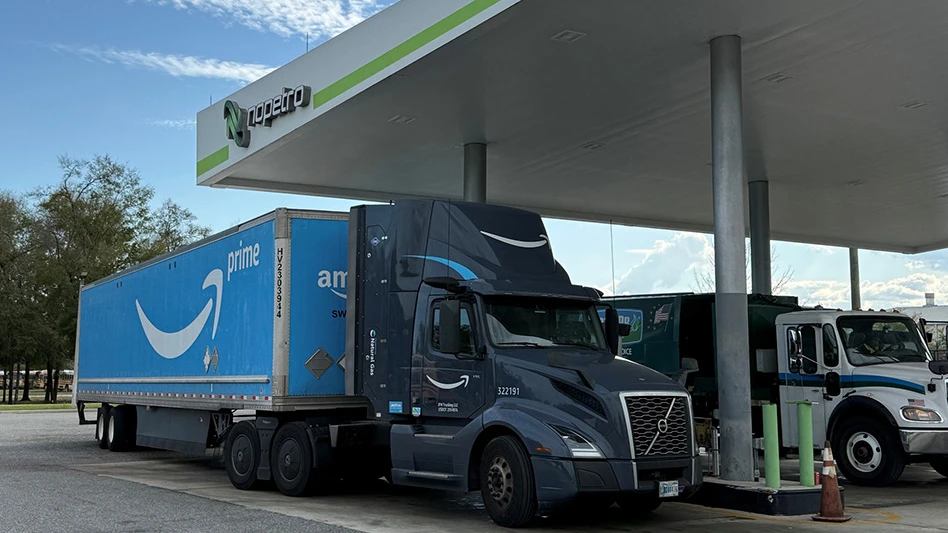
Neste, Espoo, Finland, has reached an agreement with Amazon to provide 7,500 metric tons, or 2.5 million gallons, of unblending Neste sustainable aviation fuel (SAF) for Amazon Air’s cargo operations at San Francisco International Airport and Ontario International Airport in California.
The agreement, which is active through the end of 2025, makes Amazon the first company to purchase and use SAF at the Ontario International Airport. This commitment is part of Amazon’s ongoing efforts to reach net-zero carbon emissions by 2040, and Neste says SAF is a “key lever” to decarbonize its air cargo operations.
Neste’s SAF is blended with conventional jet fuel and will be supplied to the Amazon Air network at both airports. The first volumes were delivered earlier this year.
Leveraging Neste’s SAF supply capabilities established in California in 2020, the fuel is delivered to San Francisco International Airport via existing pipeline infrastructure. For Amazon Air’s operation at Ontario International Airport, the SAF is delivered by trucks via Diesel Direct, a long-term partner of Neste.
Diesel Direct uses Neste’s renewable diesel to fuel trucks dedicated to SAF deliveries to reduce greenhouse gas emissions from SAF transportation.
Neste says its SAF is made from waste and residue raw materials, such as used cooking oil and animal fat waste, according to the company. The SAF is certified for commercial use and can be blended up to 50 percent with conventional jet fuel before use.
“We are excited to provide SAF to Amazon Air at two major airports in California,” says Carl Nyberg, senior vice president for commercial renewable products at Neste. “This milestone sends a positive signal that SAF is available to airlines and cargo operators, like Amazon Air, at these airports.
“Our supply chain solution for these California gateways builds on our existing SAF supply capabilities on the West Coast in the U.S. ... [and] demonstrates how renewable fuels can help our customers easily reduce greenhouse gas emissions across different transportation modes.”
Mergers & Acquisitions
Veolia acquires 3 hazardous waste management companies
Veolia North America, a Boston-based subsidiary of France-based Veolia group, has announced actions to expand its hazardous waste treatment and disposal business in North America through investment, acquisitions and capacity expansion. The company announced $350 million in global investments worldwide, including three new U.S. acquisitions in Massachusetts and California, and reaffirmed plans to expand existing facilities.
In Massachusetts, the company has acquired New England Disposal Technologies, a Sutton-based full-service industrial and hazardous waste management company, and Middleton-based New England MedWaste, a regulated medical waste management company. With these acquisitions, Veolia now operates the state’s only permitted medical waste disposal facility, as well as two of the state’s three permitted household hazardous waste disposal sites. The acquisitions also expand Veolia’s leadership in serving the Massachusetts health care and life science industries.
In California, the company has acquired Ingenium, an Escondido-based waste management service firm specializing in packaging, transportation, recycling and disposal of hazardous, nonhazardous, biological, universal and radioactive waste. The acquisition builds on a prior strategic partnership between the two companies to lock in guaranteed high-temperature treatment capacity for customers at Veolia incinerators.
“Our team is proud to be at the forefront of Veolia’s plans to lead the hazardous waste industry by investing in growth, expanded capacity and new environmental technologies,” says Bob Cappadona, president and CEO of Veolia’s North American Environmental Solutions and Services business. “The teams at New England Disposal Technologies, New England MedWaste and Ingenium are outstanding performers and are aligned with our GreenUp strategy, our purpose-driven and customer-centric approach. Together, we are positioned to make a real difference for the industry and the planet.”
Veolia North America, which owns six high-temperature incinerators at three sites in the United States—Port Arthur, Texas; Gum Springs, Arkansas; and Sauget, Illinois—also provided an update on the expansion of its high-temperature hazardous waste treatment facility in Gum Springs. The facility has been undergoing a multiyear expansion that will make it one of the most technologically advanced and environmentally sustainable facilities of its kind in the world, the company says.
The new incinerator design incorporates energy recovery to produce power for the site and, therefore, is subject to the U.S. Environmental Protection Agency’s recycling designation of H050 for wastes received for treatment.
The company says this designation, coupled with multiple environmental awards already received by the project, further reinforces its position as a provider of environmentally sustainable waste management solutions.
In addition to these high-temperature incinerators, Veolia also owns 49 transport and transfer platforms in 29 states, as well as significant capacities for the recycling of hazardous liquid waste and electronic waste.

Organics
NRDC releases model municipal policy for community composting
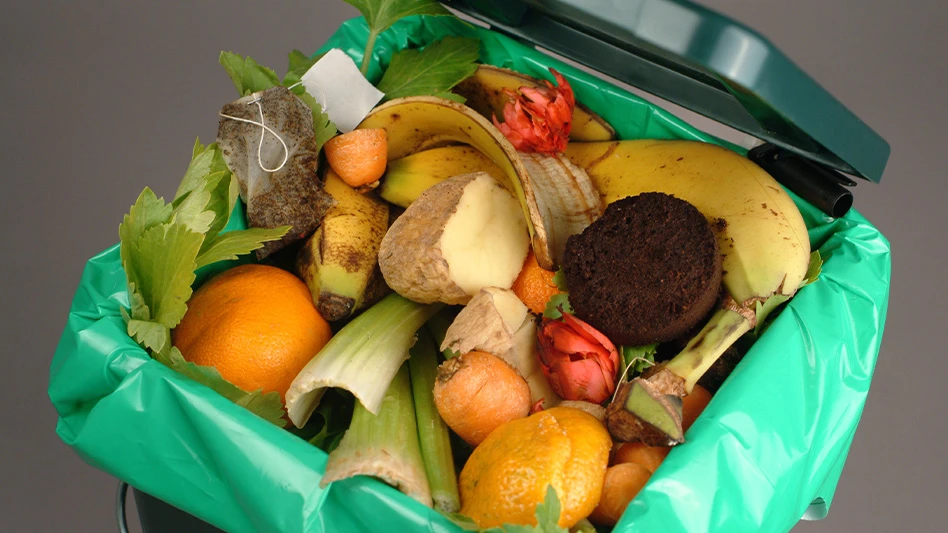
The Natural Resources Defense Council (NRDC), headquartered in New York City, has released a new model policy designed to help municipalities advance composting to meet climate and waste reduction goals.
The policy guide, developed in partnership with the NRDC, the Environmental Law Institute (ELI) and the Institute for Local Self-Reliance, is a template ordinance designed to reduce regulatory barriers and provide opportunities for community composting.
This model is a companion to the NRDC/ELI Model Municipal Zoning Ordinance on Community Composting, which reduces zoning barriers by establishing community composting as a permissible land use under a municipality’s zoning code.
Together, the organizations hope these models can advance community composting, which, in turn, can help municipalities cut solid waste management costs and meet their economic development, climate and waste reduction goals while achieving various additional related benefits.
Specifically, the model requires a municipality to inventory municipal ordinances and regulations that could apply to community composting operations and to determine whether any of them present an unreasonable barrier. For any municipal ordinance or regulation that is determined to present a barrier, the model requires the municipality to reduce or eliminate the barrier to the extent practicable. The model also directs the municipality to identify any state laws that could present unreasonable barriers, such as solid waste permitting requirements.
In addition, the model addresses specific barriers: nuisance determinations; floodplain management; licensing of haulers and collection of organic material; regulation of the distribution and sale of compost; and procurement of compost and composting services.
The model also addresses how a municipality can provide opportunities for community composting, including promoting public awareness and education, offering technical assistance and committing to financial assistance.
The off-the-shelf version of the model is accompanied by a version with commentaries and a background memorandum, which offer alternative approaches and additional information to help municipalities tailor the model to their local circumstances.
For example, because community composting can take many different forms and operate at varying sizes, its definition in the model is intentionally flexible; a municipality could choose to include a quantitative threshold, such as throughput volume or site area, to determine what qualifies as a community composting operation.
A slide deck also is provided to help municipal staff or community members share the model with decision-makers and other stakeholders.
The model is part of an ongoing effort to provide municipalities and advocates with tools to reduce the time and resources associated with taking food waste reduction actions, NRDC says.
Municipal, IC&I
Audit urges Atlanta officials to create ‘targeted strategy’ for waste diversion
An audit completed in June shows the city of Atlanta’s recycling program is improving, but auditors recommend implementing a targeted strategy for waste diversion to improve recycling participation.
Overall, the audit results show Atlanta recycles about 23 percent of disposed material, but participation varies by service area.
“The city aims to divert waste but has not defined a specific waste diversion goal, which could improve the effectiveness of the program,” a summary of the audit results says.
Results also reveal that recycling tonnage reporting in the department’s tracking system was “inaccurate” and invoices reportedly were not reconciled to tonnage records, leading to overpayments.
One of the major findings was that the city’s public works department has reportedly not enforced a multifamily recycling ordinance requiring property owners of multifamily dwellings to provide recycling services for tenants, including space for recycling containers in construction plans, and report recycling tonnage to the city annually. According to the audit, about 50 percent of the city’s occupied dwellings are multifamily residences.
“As more landfills are being closed and the state and city run out of disposal locations, recycling should be convenient for multifamily residents,” the audit says. “If the ordinance for multifamily residence property owners is not enforced, about half of the city’s residences may not have access to recycling services”
The report says neither the Department of Public Works nor the Mayor’s Office of Sustainability and Resilience is monitoring property owners’ recycling tonnage reports. According to the audit, the portal to report tonnage is linked to an unmonitored mailbox, resulting in “an ineffective process” and leaving the city without accurate insights into multifamily recycling.

Sustainability
LRS diverts 330,000 tons of recyclable material in 2024
LRS, Rosemont, Illinois, has released its 2024 sustainability report, detailing improvements in the company’s employee safety, environmental sustainability and community engagement.
Now in its second year of reporting, LRS says it aims to build a long-term sustainability strategy rooted in measurable action and public accountability.
“At LRS, we believe sustainability isn’t a department, it’s a mindset that shows up in every part of the business,” LRS CEO Matt Spencer says.
“This report highlights the progress we’ve made but also where we’re headed as we work to be a safer, cleaner, more responsive company for the people and communities we serve,” he adds.
Among the report’s findings, LRS improved employee safety in 2024 by reducing its lost time injury frequency rate by 67 percent, its total recordable incident rate by 45 percent and its accident frequency rate 39 percent.
The company also worked to enhance driver safety measures last year, which included advanced training programs and vehicle safety audits.
LRS diverted more than 330,000 tons of recyclables from landfills through its network of material recovery facilities in 2024. Of the total diverted from landfills, LRS reclaimed 107,269 tons of paper, cardboard and cartons; 13,259 tons of plastic; 30,827 tons of glass; 25,257 tons of metal; and 42,739 tons of food and yard waste.
The company also diverted construction and demolition materials, including 57,060 tons of shingles; 24,789 tons of brick, concrete and aggregate; and 30,254 tons of wood.
In 2024, LRS renewed and won 24 municipal contracts, including the city of Elgin, Illinois, one of its largest municipal contracts to date.
The company also held more than 175 community events and hosted facility tours with residents and students to provide recycling education.
In addition, the Exchange, LRS’ flagship material recovery facility, was named Recycling Facility of the Year by the National Waste and Recycling Association.
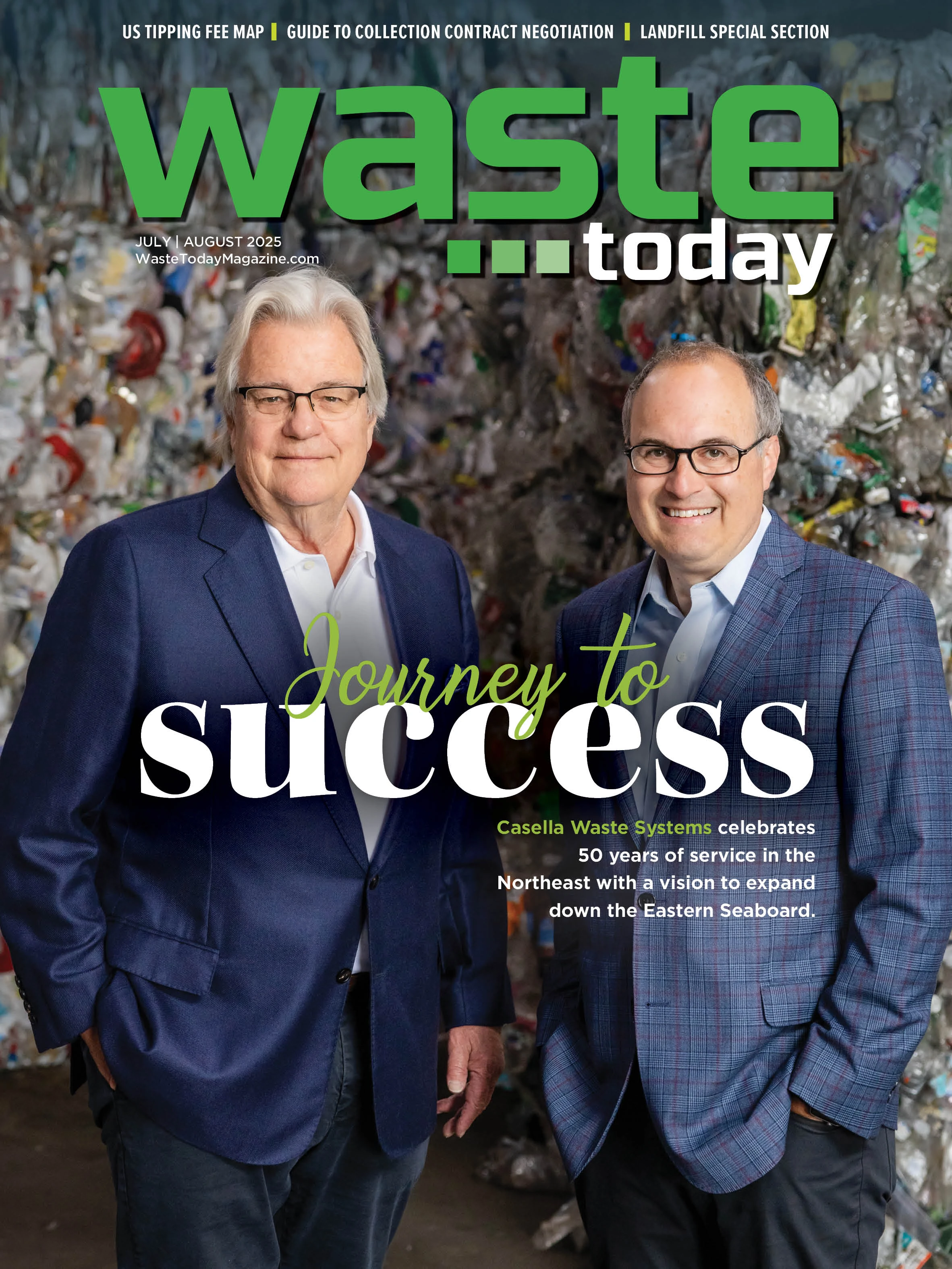
Explore the July/August 2025 Issue
Check out more from this issue and find your next story to read.
Latest from Waste Today
- Fleetio launches AI capability to accelerate fleet maintenance approvals
- Recycle Ann Arbor extends drop-off station operating hours
- Sybilion seeks to help manufacturers confidently address volatility
- Ecowaste Solutions partners with city of Trinity, Texas
- Bristal Hauling acquires G&R Garbage Disposal
- Baltimore trash collection expected to slow as WTE facility closes for maintenance
- Landfill Insights | Connecting the dots: Policy to practice
- FCC Environmental Services awarded collection contract in Florida