Waste-to-Energy
SWANA releases report on aging WTE facilities

The Applied Research Foundation (ARF) of the Solid Waste Association of North America (SWANA), Silver Spring, Maryland, has released a new research report on waste-to-energy (WTE) plants titled “Aging WTE Facilities: Refurbish or Replace?”
The association says this report provides critical guidance on evaluating whether to refurbish or replace aging WTE infrastructure.
With the average age of the 63 currently operating WTE facilities in the U.S. exceeding 36 years, well beyond the typical service life of 25-30 years, communities are asking whether they should invest in refurbishing older
plants or replace them with new infrastructure, SWANA says.
“This report is extremely timely as many jurisdictions with aging waste-to-energy infrastructure must soon determine the most cost-effective and sustainable path forward,” SWANA CEO Amy Lestition Burke says. “Refurbishment and replacement both carry significant capital implications, and this report provides the data and case studies needed to inform those decisions.”
The report includes case studies from Florida communities, where local governments have taken varied approaches:
- Pinellas County invested $250 million beginning in 2015 to refurbish its 40-year-old facility, extending its life by 25 years.
- Tampa completed a $100 million retrofit of its McKay Bay facility in 2024.
- Palm Beach County built a new $672 million facility in 2015 and plans to spend $1.5 billion on a replacement facility opening in 2034.
- Lee County added a third combustion unit to its existing facility in 2007 to increase processing capacity at a cost of $120 million.
The report also discusses broader considerations, including financing, regulatory compliance, emissions controls and community impacts.
“We encourage facility owners and planners to utilize this research to guide their long-term infrastructure investments,” Lestition Burke says.
“Aging WTE Facilities: Refurbish or Replace?” is available free to SWANA members and for purchase to nonmembers. To access the report, visit https://swana.org/ resources/research.
Legislation & Regulations
New Hampshire governor signs leachate management bill

New Hampshire Gov. Kelly Ayotte has signed into law a leachate management bill requiring waste companies to submit a leachate management plan prior to developing a new landfill or a landfill expansion, the New Hampshire Bulletin reports.
According to House Bill (H.B.) 566, nicknamed the ‘trash juice’ bill, the New Hampshire Department of Environmental Services cannot issue approval for a new landfill or landfill expansion unless the application includes leachate management procedures outlining the safe and effective management of leachate throughout the life of the landfill, including postclosure.
H.B. 566 requires applicants to provide a description of how leachate will be collected and stored on-site; if and how leachate will be treated; how leachate will be transported off-site; the type of leachate disposal facility the applicant proposes to use; a statement of the projected frequency of leachate transports per week; and contingency plans for leachate disposal capacity constraints.
Landfill operators also must provide the Department of Environmental Services with documentation of contractual arrangements with at least two leachate disposal facilities demonstrating how the permittee plans to comply with the leachate disposal provisions of its operating plan.
“New Hampshire’s natural beauty is the bedrock of our quality of life,” Ayotte tells the New Hampshire Bulletin. “We should not let beautiful areas of our state, like Forest Lake in Dalton, become a dumping ground for out-of-state trash. That’s why I supported this law and why I will continue to push for a moratorium on new landfill construction and a revamped regulatory process that includes community input.”
New Hampshire already required landfill operators to outline leachate management and disposal plans. Landfill operators must have at least two locations for leachate disposal, estimate how much leachate they will generate and describe how leachate will be handled at the landfill before being shipped for disposal.
Heavy rain exacerbates leachate levels, and operators also must have procedures in place to bring leachate levels down to 1 foot or lower within one week of a 100-year storm event, according to current requirements.
Mergers & Acquisitions
IWS acquires Seaside Waste Services

Teaneck, New Jersey-based Interstate Waste Services (IWS) has acquired Seaside Waste Services, Hammonton, New Jersey, expanding IWS’ presence across the central and southern regions of the state.
“This acquisition marks an exciting step in IWS’ continued growth strategy,” IWS CEO and founder Mike DiBella says. “Expanding further into central and southern New Jersey allows us to better serve our customers, strengthen our regional presence and bring our high standards of service to new communities. We’re thrilled to welcome the new team members into the IWS family and look forward to building on this momentum together.”
As part of the acquisition, IWS will integrate Seaside Waste Services’ collection and municipal services, its team of employees and a fleet of more than 40 vehicles into its operations.
IWS says the acquisition of Seaside Waste Services marks an important step in its continued growth across the tristate area. The purchase follows a series of acquisitions, including Pinto Service Inc. in northern New Jersey, Oak Ridge Waste & Recycling in southwestern Connecticut and suburban New York and Marangi Disposal, an independent hauler with operations in Orange and Rockland counties in New York.
IWS opened its newest material recovery facility April 22 in North Arlington, New Jersey, which receives in-state waste as well as waste from the five boroughs of New York. The facility can process up to 215,000 tons of material annually and represents a $30 million investment.
Waste Conversion
Convertus finalizes permits for Ontario AD facility

Canadian organics diversion and processing firm Convertus Group reportedly has received all necessary approvals and permits to start building an anaerobic digestion (AD) and biofuels facility in the York region of Ontario.
The company, which has operations in Canada and the U.S., says the approvals signify the advance of “one of Canada’s most exciting green energy projects.”
The facility is on track to begin operations in 2027.
“Finalizing all the permit requirements is a major achievement that allows us to move from planning to construction,” says Arun Gudla, vice president at Convertus who is overseeing the development of the York project.
The York region is north of Toronto and has a population of about 1.1 million people, according to a 2021 census.
Gudla says the project’s approvals resulted from collaboration with local and provincial authorities.
“[The collection of approvals] will ensure we remain on course to deliver a facility that embodies Convertus’ mission to close the loop for a more sustainable and circular approach to waste management,” he adds.
Convertus says its York plant will be the first biofuel facility in Canada to incorporate integrated CO2 liquefaction technology, converting as many as 200,000 tons of organic waste into renewable natural gas (RNG) or nutrient-rich organic fertilizers and avoiding what the company estimates to be 15,000 metric tons of CO2 emissions per year.
At capacity, the plant could generate between 350,000 to 400,000 gigajoules of RNG per year that will be injected directly into the local gas grid.
With permits secured, Convertus says it now will focus on constructing a plant that will set a new benchmark for sustainable organic waste management and clean energy production in Canada.
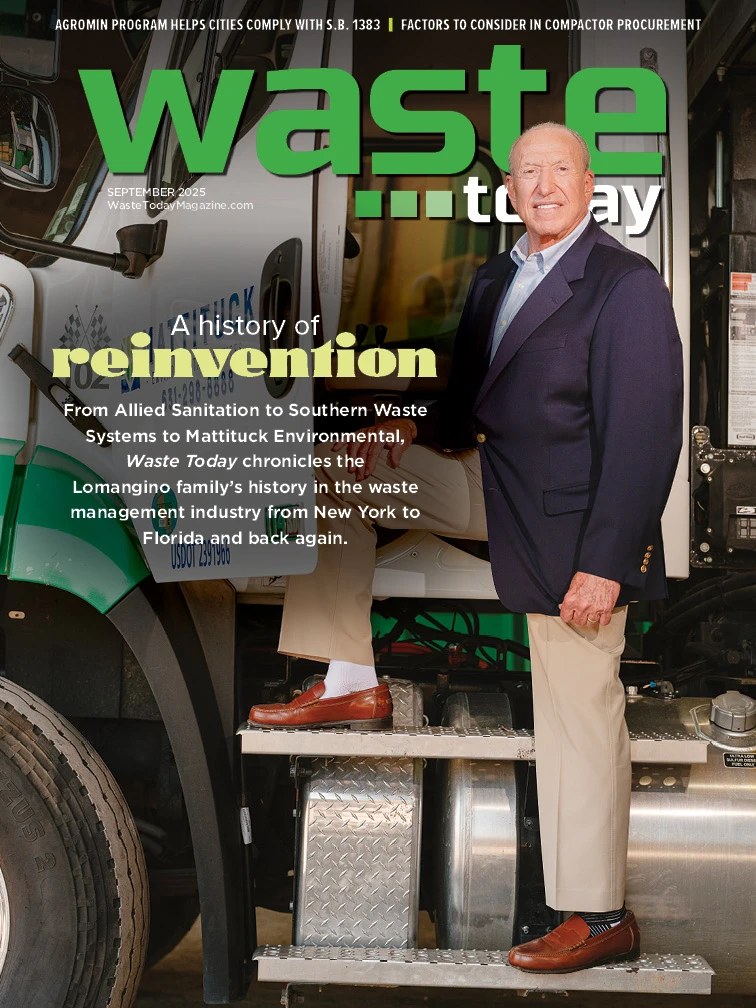
Explore the September 2025 Issue
Check out more from this issue and find your next story to read.
Latest from Waste Today
- Fleetio launches AI capability to accelerate fleet maintenance approvals
- Recycle Ann Arbor extends drop-off station operating hours
- Sybilion seeks to help manufacturers confidently address volatility
- Ecowaste Solutions partners with city of Trinity, Texas
- Bristal Hauling acquires G&R Garbage Disposal
- Baltimore trash collection expected to slow as WTE facility closes for maintenance
- Landfill Insights | Connecting the dots: Policy to practice
- FCC Environmental Services awarded collection contract in Florida