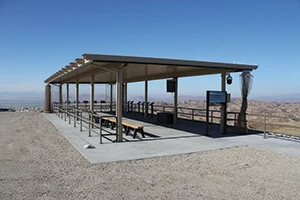
The Waste Resources Department of Riverside County, CA, has a long history of innovation when it comes to landfill operations, efficiency, safety, and now, Public Education.
I’ve had the privilege of working with their team for more than 20 years, during which time I’ve seen them roll out one innovative measure after another. Case in point: Let’s go back nearly a quarter century—to the early 1990s.
At that time, Riverside County operated numerous landfills—from large, regional landfills to very small sites in the Mojave Desert—sites where the only thing scarcer than a rainstorm was inbound tonnage.
But there, in the midst of an industry that was still trying to figure out Subtitle D, the Riverside County team decided they needed to up the ante in terms of landfill training.
Our company was hired to develop and present a department-wide training program for all their landfill staff, including managers, engineers, operators, and laborers. A daunting task, even for an aggressive—and much younger—me. But as we discussed the logistics of taking a multi-day landfill training show on the road, Riverside County revealed that they had an edge. They had custom-built what came to be known (at the time) as the Training Trailer. Not perhaps a tremendously creative name, but bullseye descriptive.
The training trailer was a tandem axle hybrid between a travel trailer and one of those enclosed trailers that some folks use to transport collector cars. The Riverside County version was white and approximately 20 feet long—just long enough to allow four pairs of school-type chairs and desks with a little space up front for an instructor and a screen to show a PowerPoint presentation.
For nearly three months, during a very pleasant winter in southern California, we moved that Training Trailer from one facility to another, diligently training every landfill worker (eight per group) in the department.
Riverside County is also the place where the Emergency Stop System (ESS) was developed. Following a fatality several years ago—during which another operator claimed to have seen the accident unfolding, but was too far away to stop it—the County developed the ESS. Working with a national two-way radio manufacturer, they created a simple and effective system that allowed any worker with a radio—which means every worker—to push an emergency button—a button that would activate an alarm on every other radio.
While in Southern California recently for another project, I had a few hours to spare and was able to touch base with some of Riverside County’s top management team, including Hans, Joe McCann (Assistant Chief Engineer), and Fouad Mina (Principal Engineer). If these guys worked for Disney, they’d be Chief Professional Imagineers or something along those lines, but as it was, they’re just regular guys with normal, unassuming titles. But I think they still have fun.
“I was,” I told them, “looking for an interesting idea for an article—and I thought their new education center would be a good one.”
The upshot was that they set me up to meet with Anselmo “Sal” Ybarra (Engineering Tech I) at the Lamb Canyon Landfill to look over their latest Imagineering project: the Marion Ashley Lamb Canyon Landfill Education Center.
As we drove the winding road to the observation platform, its benefits became obvious. It provided an excellent viewing area, far above the active landfill.
There were benches, full-color educational displays, and for observing the landfill operation up close, an outdoor video camera linked to a large flat-screen TV. So, while seeing the operation from a safe distance, the high-tech outdoor camera can zoom into the operation the same way the massive screen at a football stadium allows fans to see an up-close instant replay.
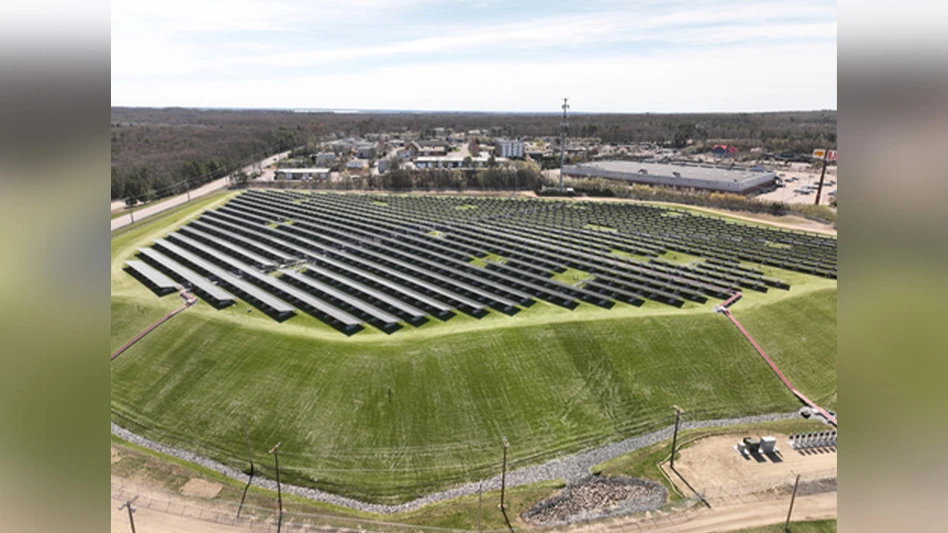
The entire facility is powered by a dedicated array of solar panels, and the facility is protected from birds—and the mess they leave behind—with a full perimeter netting system—a sort of curtain. “The bird netting,” explains Sal, “takes just minutes to retract, and saves us a lot of clean-up time.”
One of the primary goals is to help visitors understand the operational magnitude of a regional landfill like Lamb Canyon.
Now, if you knew this team, you’d understand that having a picture or video of a D9 Bulldozer—cool as it may be—just wouldn’t get it. For these guys, it’s “go big or go home.” So they also included a real D9 dozer. That’s right, parked at the observation area is a D9 Caterpillar Dozer, freshly painted and fully equipped to push 25 tons of trash.
Except that this dozer—because of its tier 0 engine—has been retired and repurposed as a non-operating educational prop. It has access steps and a guard-railed platform to allow visitors to climb aboard and even sit in the cab of this 50-ton giant.
The observation area has a number of full-color (and weatherproof) poster plaque displays providing interesting information about waste disposal in general, and the Lamb Canyon Landfill in particular.
Most landfills do a great job—of landfilling waste. But they often don’t do such a great job of telling their local community about it. Step up your game, and share that message through a cool, interactive education center. No, you can’t be the first one to include a D9 dozer in your display—it’s been done. But you can be close on the heels of one of the most progressive teams in the business: Riverside County’s Landfill Imagineers.
Latest from Waste Today
- Vermeer announces plan to build new facility in Des Moines metro area
- Buffalo Biodiesel shares updates on Part 360 application to DEC, Tonawanda facility progress
- Capstar Disposal expands roll off dumpster rental services
- Supreme Court strikes down IEEPA tariffs
- Casella details facility closures, expansion efforts
- Zero harm: Building a SIF prevention program for waste and recycling operations
- Casella posts a loss in Q4 2025
- McNeilus names Haaker Equipment first Dealer Partner of the Year