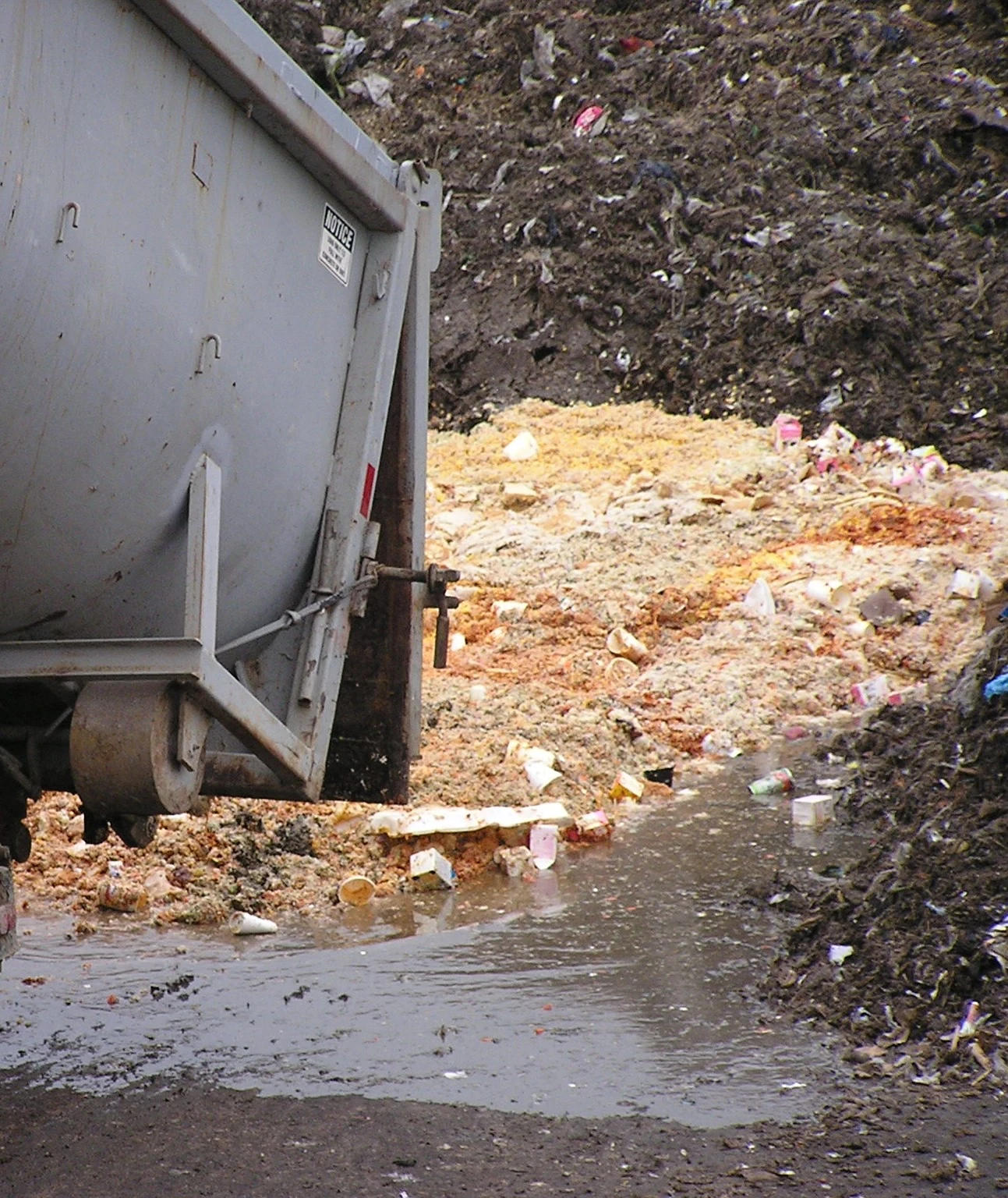
THE ENVIRONMENTAL PROTECTION Agency estimates that more food reaches landfills and incinerators than any other single material in our current wastestream. It is estimated that more than 21% of the remaining wastestream is food waste, and a total of 49.9% is comprised of materials that could be processed as compost.
While lots of folks are trying to figure out how to best address this issue, some have already begun taking steps toward a decision.
In California for example, a recent Senate Bill (SB 1383) mandates organics diversion across the state. With planning and implementation deadlines, the Golden State is moving quickly toward generally banning organics from landfills. And, while it’s not quite as cut-and-dry as banning all organics from all landfills—there is some flexibility—this decision will nonetheless impact virtually every aspect of the solid waste system, from collections to processing and disposal.
There are folks out there that say that SB 1383 is the most significant legislation California has had in 30 years since Assembly Bill (AB 939) set mandates for increasing levels of recycling. Whether you like it or not, no matter where you are, as goes California, so goes the nation—at least to some degree. These are big questions and ones that municipalities in California and beyond are going to be grappling with for years to come.
On a national level as well, organics and food waste are two areas that are starting to gain some momentum and focus. How much does this additional diversion impact your landfill? Well, as it turns out, quite a bit.
Landfill costs are very dependent on volume, and that’s why large (high tonnage) landfills can operate at a much lower cost per ton than a small landfill. It’s all about economy of scale. But as disposal tonnage decreases, the unit cost must go up. It’s a financial teeter-totter. As a result, we must be careful not to put the final chop on that part of the system that has historically paid the bills for the waste industry—landfills.
Many solid waste organizations are still on the ropes after being pierced by the National Sword and hammered by a recycling industry that took landfill revenue to pay for diversion—which of course turned around and reduced landfill revenue. Hundreds of communities then had to deal with a major financial reset that required customers to pay for recycling programs.
The late, great Yogi Berra might have claimed this to be a touch of “Deja vu all over again” because increasing organics diversion will increase overall costs to the entire system. New cans, new trucks, new routes, new facilities to process organics. Whether it’s composting, digestion, or some type of thermal process, be advised that we are creating another family line within this industry.
Processing food waste and other organics will present its own new set of challenges, including issues related to leachate, vectors, potential safety concerns, and the very real potential of nuisance odor complaints. Depending on what you do with that diverted organic material, there’s a good chance it will smell—like decomposing organic material—and that folks downwind will not like it.
In some cases, compost operations may be built alongside existing waste facilities, like a small green waste operation at a landfill, or compost windrows on property adjacent to a transfer station. But in some cases—and for areas that anticipate a high volume of materials to process—an entirely new and separate facility may be required. In either case, just be aware that increased odors could be a problem.
Oh, I almost forgot—the money. Yes, you’ll be looking for ways to pay for these additional programs. For some organizations, this may come out of an already thin landfill budget. In others, it may simply require that you tap your collection customers for another $3 or $5 or $10 per month for those extra routes and extra processing.
Sorry, but that’s not all. Diverting organics will also heavily impact landfill gas (LFG) production rates. For most landfills, the gas production curve probably peaks at about the same time the landfill closes.
But if you start pulling organics off the landfill now, that peak is going to happen immediately, and gas production goes downhill from there. That may be fine for landfills that have a minimal gas collection system…or no system at all. But what about the hundreds of landfills that have invested heavily in future gas generation?
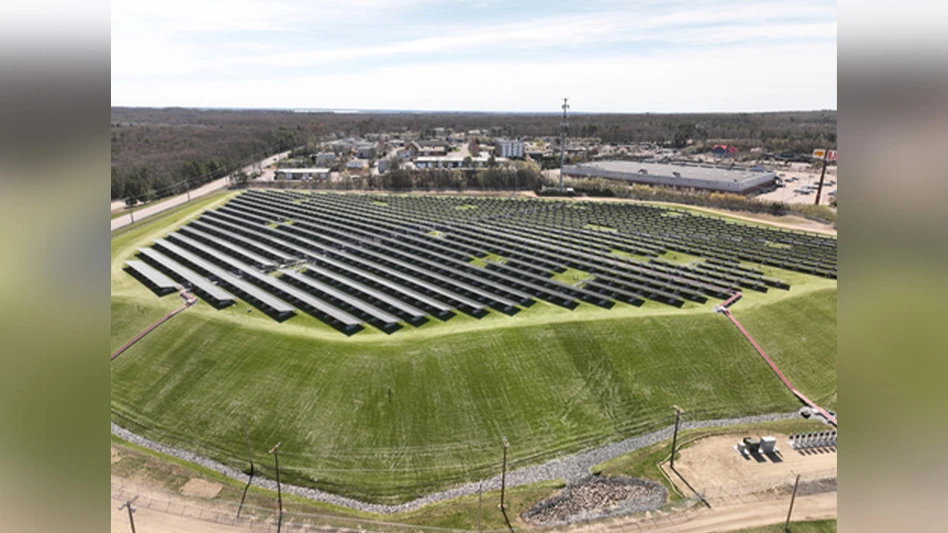
According to the EPA’s Landfill Methane Outreach Program (LMOP), there are close to 600 waste-to-energy facilities in the US where landfill gas is actively being extracted. Many of these facilities have debt from the original construction or contracts with an energy production company, both of which are based on financial models that assume long-term gas production. It doesn’t matter if your system converts LFG to pipeline quality gas, CNG, or electricity; many of those financial models will not work without organics in the wastestream.
You might also think about your fleet of garbage trucks that you recently converted to CNG—CNG that’s derived from landfill gas. What initially was a very green move might fade a bit once you divert the raw feedstock from your primary CNG generator (i.e., your landfill).
Finally, let’s talk about what you’ll be doing with that diverted organic material. Some organizations may create syngas or biofuel through some sophisticated process, but the vast majority will simply try to compost those organics. Certainly it is possible to compost any organic material, but like the recycled commodities we’ve seen stacked at MRFs across the country, diverting it and selling it to a viable market are often two different things.
If it sounds like I’m knocking the idea of diverting the bulk of organics from landfills, probably I am. At least in the context of diverting organics without carefully thinking through the entire process—including the financial impacts.
I strongly believe that for many organizations, diverting the majority of organic material from landfills will make sense, but for others, it most certainly will not. Our industry has paid some heavy tuition to learn some hard lessons. On this next pass, let's just be smart about what we do and how we do it.
Latest from Waste Today
- Vermeer announces plan to build new facility in Des Moines metro area
- Buffalo Biodiesel shares updates on Part 360 application to DEC, Tonawanda facility progress
- Capstar Disposal expands roll off dumpster rental services
- Supreme Court strikes down IEEPA tariffs
- Casella details facility closures, expansion efforts
- Zero harm: Building a SIF prevention program for waste and recycling operations
- Casella posts a loss in Q4 2025
- McNeilus names Haaker Equipment first Dealer Partner of the Year