In our industry, we are all familiar with the phrase “integrated waste management”—a term that is generally understood to include the full spectrum of collections, processing, diversion, transfer, and disposal. In this particular column, I’d like to touch on the topic of diversion—that’s right, recycling.
Yes, I know, most of you think of me as a landfill guy, but our industry is incredibly integrated and we all wear different hats. So even though I have been to over 500 landfills during my career as an operations and safety consultant, along the way I have also worked at hundreds of transfer stations, MRFs, organics facilities, and collection operations. Over those years, recycling awareness and recycling activities have become increasingly integrated into the waste industry.
Managing municipal solid waste is more than landfilling: publicity, education, engineering, long-term planning, and landfill gas waste-to-energy are specialties needed in today’s complex environment. We’ve created a handy infographic featuring 6 tips to improve landfill management and achieve excellence in operations. 6 Tips for Excellence in Landfill Operations. Download it now!
Either by choice or circumstance, recycling has turned a corner—it has crossed the Rubicon. The fact is, recycling is growing up.
For too long, too many recycling programs have been subsidized. Often, these programs didn’t generate enough revenue to be self-sufficient, so they pulled revenue into the system from landfill disposal fees, taxes, grants, or the general fund. In other cases, the extra cost of recycling was just folded into the disposal cost where it could essentially be hidden.
Because even though many people believe that recycling always makes money, it has not been politically correct to point out that some diversion programs may actually cost more than landfill disposal. Did I just say that?
Now before you send me an email or write a letter to the editor to call me out, please hear me out. I have seen many recycling programs that were self-sufficient, generated net revenue, and could stand on their own. These are what I would call mature, self-sufficient recycling programs. But let’s get real: many do not.
Managing municipal solid waste is more than landfilling: publicity, education, engineering, long-term planning, and landfill gas waste-to-energy are specialties needed in today’s complex environment. We’ve created a handy infographic featuring 6 tips to improve landfill management and achieve excellence in operations.6 Tips for Excellence in Landfill Operations.Download it now!
A significant number of recycling programs have only survived through financial subsidy, and if you don’t believe that’s true, you really haven’t been paying attention.
From the organics programs that create a great product yet have no viable market to the glass recycling programs that continue to extract glass while the piles keep growing—some recycling programs simply don’t cut the mustard.
And on a recent note—one category that is decidedly off-key is the mixed paper recyclables we had been sending overseas until finally someone pulled back the curtain and said “Hey, wait a minute, these are not recyclables! This is trash!”
But now, even as the valve closes on the massive pipeline of recycled mixed paper, we are forced to face another important truth: that the processing of certain waste materials is not necessarily recycling— sometimes it’s just processing.
I could manufacture blue, laminated widgets all day long but if I can’t sell them for enough money to cover my costs and generate some profit, I’m not in business, I’m just producing blue, laminated widgets.
But there is good news. A wake-up call can wake us up, and an honest correction can put us back on course. I believe this apparent crisis will get us beyond recycling simply for the sake of recycling. It will take us past regulatory diversion mandates that are applied regardless of a market’s ability to absorb or pay for them. In the end, the smart, innovative people in this industry will find ways to make it work.
Over the years, our team has worked on hundreds of projects that included some form of recycling. As far back as 1984, I was the project manager in the renovation of a large paper and cardboard recycling facility in California. Interestingly, in those days recycling was done only if it could generate positive revenue…if it was a real business. Then gradually, for some reason, recycling became a politicized game of “The Emperor’s New Clothes.”
Of course, there were—and still are—many recycling facilities that take their financial responsibilities very seriously. For example, while conducting a CORE Assessment of a recycling facility, we made some interesting discoveries (CORE is an acronym for Comprehensive Operational Review).
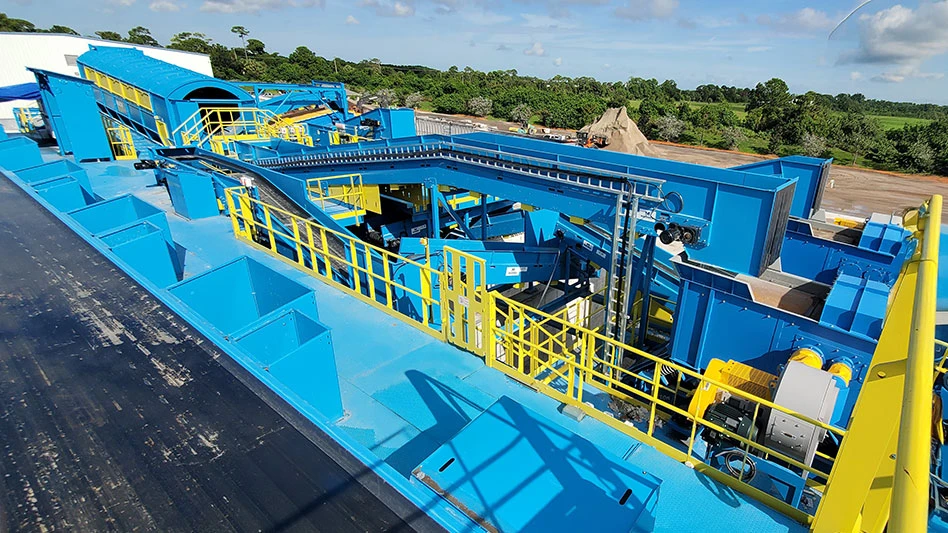
While conducting that CORE, we performed some detailed time-motion studies on all aspects of the MRF pickline. This was a dirty MRF that was attempting to divert every possible commodity in the waste stream, including cardboard, wood, green waste, and several types of paper and plastic, along with glass, ferrous and non-ferrous metal, and aluminum. You name it and they were going after it.
Interestingly though, the results of our CORE indicated that a significant amount of labor (i.e., money) was spent to divert a very insignificant quantity of recycled material. Insignificant, that is, in terms of both percent diversion and revenue.
By helping the MRF correlate the cost and benefit of extracting those recyclables, they were able to maintain a healthy recycling rate—while focusing on commodities that actually made money. What a concept, huh? Their results were dramatic.
By refocusing their effort on the right commodities—and ignoring the wrong ones—they were able to reduce their pickline labor costs by 35% while giving up only a 3% reduction in diversion tonnage. Think about it—would you take a 3% cut in pay if you could reduce your expenses by 35%?
Sure, these improvements all sound simple after the fact, but when you are looking at your operation, it can be difficult to know where to begin. After all, you are so familiar with your recycling operation—and with doing things the same old way—that everything looks normal, or at least it did.
But it’s a new day and a new game, and everything is on the table. You have a great opportunity to re-assess and redirect. In fact, this may be your best chance to implement a mature, self-sustaining diversion program. Let’s not miss the opportunity.
Latest from Waste Today
- Vecoplan to present modular solutions at IFAT 2026
- Terex Ecotec appoints Bradley Equipment as Texas distributor
- My Green Michigan expands depackaging capacity
- Washington selects Circular Action Alliance as PRO
- Ten-8 Industrial opens new central Florida service center
- Triumvirate Environmental acquires Environmental Waste Minimization
- Official NYC Bin availability expands ahead of deadline
- US Food Waste Pact’s 2025 Impact Report shows decrease in food waste