For many years, our industry has been promoting the idea that recycling is the best and most economical alternative to disposal. Recycling good, landfill bad.
On that premise, many states and cities have aggressively increased their mandatory diversion goals, sometimes at all costs—literally. And for many people, this just felt right. In many instances, recycling went way beyond facts and figures to a point where it often became an issue of morality and ethics. In that world, any recyclable materials that went to a landfill were lost forever.
Then, without much finesse, China’s National Sword revealed some, uh, shall we say, structural problems within our recycling system. No, things weren’t quite as rosy as we thought they were. Bummer—we had such a good thing going too.
But for better or for worse, the rules of the game have changed. We get to have a “do-over” regarding how we think about and how we pursue recycling.
Managing municipal solid waste is more than landfilling: publicity, education, engineering, long-term planning, and landfill gas waste-to-energy are specialties needed in today’s complex environment. We’ve created a handy infographic featuring 6 tips to improve landfill management and achieve excellence in operations. 6 Tips for Excellence in Landfill Operations. Download it now!I personally believe that we’ve learned a lot through this process—we’ve certainly paid enough tuition toward life experience in the form of creating systems that worked—and some that didn’t.
So, if you’re in the collections side of the business, or if you operate a MRF, you’ve probably spent a lot of time thinking about how this will play out.
Let’s not forget though, that landfills also offer a major opportunity for diversion. No, I’m not talking about disposing materials—although some very smart people are looking at the opportunity of landfilling organics with the idea of creating oodles of marketable landfill gas. I have not investigated this myself, but the idea is generating some buzz.
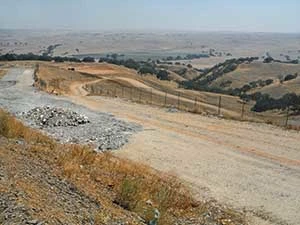
Landfills have a unique opportunity to utilize waste materials that might otherwise be disposed. Landfills can practice recycling too—and often on a very large scale.
Managing municipal solid waste is more than landfilling: publicity, education, engineering, long-term planning, and landfill gas waste-to-energy are specialties needed in today’s complex environment. We’ve created a handy infographic featuring 6 tips to improve landfill management and achieve excellence in operations.6 Tips for Excellence in Landfill Operations.Download it now!
Consider, for example, green waste.
When it comes to green waste, many in the industry believe that creating compost is the only way of bringing green waste to its best and highest use. I agree that creating compost from organic material is a very cool process. But just because a particular waste-stream can be composted doesn’t mean it should be. Many compost operations—while avoiding a direct hit from the National Sword—are still struggling with a recycled product that is unwanted. Over the years I’ve worked at a number of facilities that created beautiful compost, in an area where there was no market. That’s right. There was a lot of time, money, and energy put into creating a product that simply sat in long rows, with no market in sight.We must also consider the cost of creating compost—yes, I know, it always comes back to the money. Consider that in order to bring green waste to compost, the raw feedstock (that’s unprocessed green waste) may be touched a dozen times or more—not counting turning and watering—and all that handling costs money.
Yet, when we integrate cost into the equation, other viable options may appear. What if we ran that material through a grinder—one time, quickly? And then pushed that material onto the landfill’s perimeter slopes where it could work as mulch, controlling erosion and helping to reduce dust? Grind it, push it…period. To make this even more economical, we’d want to periodically and strategically relocate the location of the green waste stockpile, so that each time we grind, the material would be in the correct location for covering the next section of slope.
Or, consider aggregate materials that come into most landfills. We’re talking concrete and asphalt rubble, asphalt millings, tile, brick, and other similar materials that can be used for road base or to construct an all-weather tipping pad. Like mulch used for erosion control, material that can be used to construct all-weather roads and pads is recycled. These materials may generate revenue, they are put to a necessary use, and in the process, the landfill avoids the need to import—and purchase—these materials from offsite. This reduces the amount of raw materials that must be consumed. Works great, costs less. Hey—this makes sense.
This process of utilizing what would otherwise be a waste material in a landfill is termed “Beneficial Reuse”—“Beneficial” because it provides a benefit, and “Reuse” because it is the second use for these materials—as opposed to being used the first time for a similar product that was not derived from a waste material.
There are more examples of waste material being reused at landfills, including such things as rubble for riprap, chipped tires as filter media in leachate sumps or gas wells, or MRF or C&D fines as an alternative to daily cover. There are a host of materials that can effectively be used in lieu of daily cover soil. In our experience evaluating landfill efficiencies throughout North America, every landfill could benefit from using some form of ADC. Often the best choice is a manufactured form of ADC, but we should not discount the integration of beneficially reused waste materials when it makes sense.
Sure, most of us can agree that there are waste materials that can be diverted at the landfill for a necessary and practical use. But it doesn’t stop there. We can’t come to the end without some discussion about process improvement.
So, let’s talk about rubble for road base. Too many landfills think outside of one box by using rubble for road base, but then fall into another by processing that material into the most beautiful road base you’ve ever seen. This just adds to the cost—and creates a product that is not as durable as the unprocessed material. In most cases, unless we’re talking about large concrete columns, pieces of curb-and-gutter, or other big chunks with rebar, rubble can often be used as-is. Minimizing the amount of processing will always minimize the overall cost and carbon footprint by reducing the amount of fuel needed to process materials.
We need to take another look at recycling and understand that recycling can occur any place waste materials can be diverted to another use—including at a landfill.
Latest from Waste Today
- Vecoplan to present modular solutions at IFAT 2026
- Terex Ecotec appoints Bradley Equipment as Texas distributor
- My Green Michigan expands depackaging capacity
- Washington selects Circular Action Alliance as PRO
- Ten-8 Industrial opens new central Florida service center
- Triumvirate Environmental acquires Environmental Waste Minimization
- Official NYC Bin availability expands ahead of deadline
- US Food Waste Pact’s 2025 Impact Report shows decrease in food waste