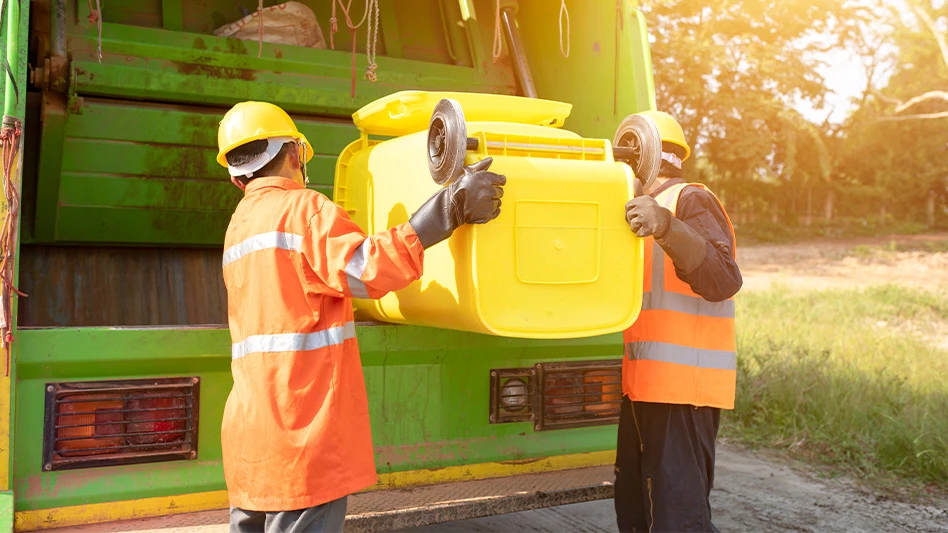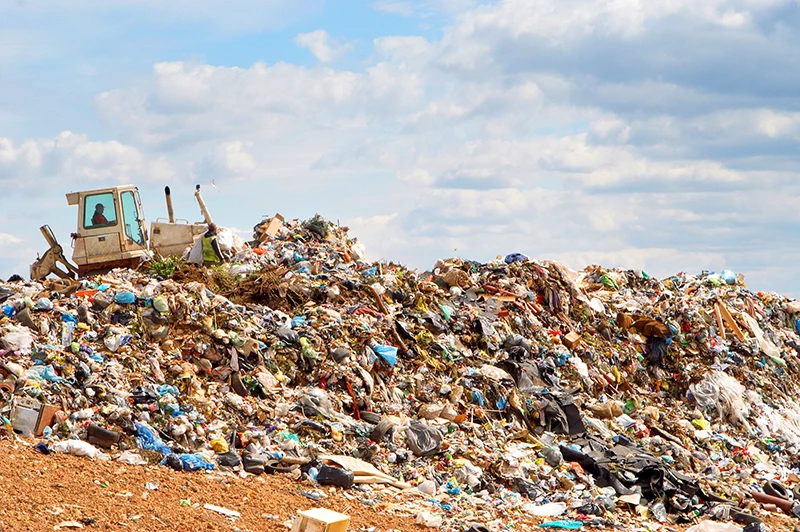
Over 45% of the solid waste disposed of in New Hampshire comes from other states, according to a report published recently by New Hampshire’s Department of Environmental Services. Many states in the New England region send truckloads of trash to landfills in New Hampshire. This includes items that consumers assume will be recycled, as well as materials that are banned from landfills in other states.
The report from NHDES explains, “With three commercial landfills, three limited-service public landfills, and one commercial waste-to-energy facility operating in New Hampshire, the state is somewhat unique among its neighboring states in terms of available disposal capacity.”
In 2020 alone, about 914,000 tons of solid waste from out-of-state sources ended up in New Hampshire facilities. This was 53% of the total solid waste disposed of in the state that year. Municipal solid waste (MSW) and construction and demolition (C&D) make up the majority of solid waste disposed at facilities in New Hampshire.
An article published by the Concord Monitor notes that there is little state oversight for companies profiting from the disposal of trash in New Hampshire. Landfills are required by the NHDES’ Solid Waste Management Bureau to obtain permits in order to make sure that their operations are adhering to safety standards and environmental regulations. However, due to a lack of sufficient resources and funding, it is difficult for the state to carry out regulatory actions.
Another problem is that landfill operators are responsible for inspecting materials prior to disposal and turning away banned materials. This means that the state of New Hampshire is unaware of any prohibited items ending up in landfills.
An environmental advocacy group called the Conservation Law Foundation has urged the state to focus efforts on limiting the disposal of out-of-state solid waste.
“Other New England states have already taken firm steps to address waste disposal,” writes Sruthi Gopalakrishnan for the Monitor. “In November, Massachusetts prohibited the dumping of mattresses and textiles in landfills. In April, Maine passed legislation prohibiting the disposal of out-of-state waste in the state’s landfill.”
Additionally, Gopalakrishnan states, “Vermont has established aggressive standards for what can and cannot be disposed of in its landfills, for both in-state and out-of-state trash.”
Although New Hampshire recently updated its solid waste management plan to maximize recycling and composting strategies, it has not developed a solution to reduce out-of-state wastestreams. It could be beneficial for the state to follow in Vermont’s footsteps and establish strict limits on the types of materials that its landfills can accept.
Latest from Waste Today
- Vermeer announces plan to build new facility in Des Moines metro area
- Buffalo Biodiesel shares updates on Part 360 application to DEC, Tonawanda facility progress
- Capstar Disposal expands roll off dumpster rental services
- Supreme Court strikes down IEEPA tariffs
- Casella details facility closures, expansion efforts
- Zero harm: Building a SIF prevention program for waste and recycling operations
- Casella posts a loss in Q4 2025
- McNeilus names Haaker Equipment first Dealer Partner of the Year