City On Board With Food Waste As Separate Entity
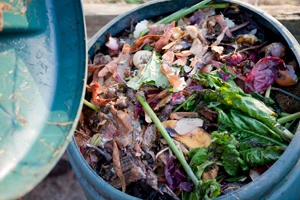
Portland has over 1,000 businesses participating in food waste collection—something that’s been going on a while now. A lack of space for composting has been the biggest factor hampering development of Portland’s food waste program, says Arianne Sperry, coordinator of “Portland Recycles!” However, the city’s food scrap program for residents rolled out in fall of 2011.
“I think we’re starting to get to a point where we are sustainable for our operation,” explains Sperry. “We had weekly garbage collection [and] weekly recycling of comingled paper, plastic, and metal containers—in Portland, we keep glass on the side.”
City On Board With Food Waste As Separate Entity
Portland has over 1,000 businesses participating in food waste collection—something that’s been going on a while now. A lack of space for composting has been the biggest factor hampering development of Portland’s food waste program, says Arianne Sperry, coordinator of “Portland Recycles!” However, the city’s food scrap program for residents rolled out in fall of 2011.
“I think we’re starting to get to a point where we are sustainable for our operation,” explains Sperry. “We had weekly garbage collection [and] weekly recycling of comingled paper, plastic, and metal containers—in Portland, we keep glass on the side.”
[text_ad]
The city also has had a roll cart program for yard waste. In the fall of 2011, garbage collection moved to every other week. Yard waste collection moved to every week, with the food waste added to that collection mix and taken to designated composting area. The city swapped the collection schedule of the garbage with that of the compost. This was really just a trading of containers, according to Sperry.
“The new food waste program itself was very controversial at first,” she says. “A lot of residents were used to having their garbage collected every week—that was just how things were always done. So, when we switched to every other week, there were concerns, because they’d never experienced that before. Folks are generally nervous about change, and in this case, it was something in your daily habits in your kitchen.”
The city did pilot studies before program implementation. Most residents had concerns before it started. They had to try it for 6 months, says Sperry, and, once they tried it, they saw that the new program was no big deal. Those involved in the pilot survey found that they liked it.
“That was very interesting to us, and one of the things especially noteworthy for us was that Portland actually saw the amount of garbage that they collected drop by 37% during the first year of the program—as well as that we went to every other week garbage pickup,” she explains. “Some of this was simply the drop in the weight of the food going from the garbage into the yard waste. They amount of yard waste collected almost tripled. But, in the end, people found having yard waste pickup every week to be a real benefit.
[text_ad]
“While our program is voluntary, people have a strong incentive to participate, because if they want their food waste collected every week, they need to remember to put those out with the yard waste now collected weekly,” she continues. “We’ve seen other programs similar to ours going on much longer, but not [being] as successful as ours. People don’t have as strong of an incentive to make that change in their habits; it’s hard to make changes because people don’t like that.”
There are no issues with food odors, as food scraps are still collected with the same frequency—now the food scraps are in with the yard waste, and they are collected weekly. “The businesses that are composting are leaders that want to be as green as possible,” adds Sperry. “They’ve voluntarily negotiated with their haulers to have that service. Also, not all composting facilities are able to deal with food waste—they have to receive a permit from our state with certain requirements involved, which they must meet. The haulers working for Portland purchase the carts involved in the program with specs from the city of Portland, which must be met by the particular manufacturer involved.”
Beginning January 1, no food waste or compostable paper—including food-contaminated cardboard, paper napkins, and paper towels—will be allowed in the garbage, however Portland Utilities will not begin full enforcement until July 1 of this year.
The city also has had a roll cart program for yard waste. In the fall of 2011, garbage collection moved to every other week. Yard waste collection moved to every week, with the food waste added to that collection mix and taken to designated composting area. The city swapped the collection schedule of the garbage with that of the compost. This was really just a trading of containers, according to Sperry.
“The new food waste program itself was very controversial at first,” she says. “A lot of residents were used to having their garbage collected every week—that was just how things were always done. So, when we switched to every other week, there were concerns, because they’d never experienced that before. Folks are generally nervous about change, and in this case, it was something in your daily habits in your kitchen.”
The city did pilot studies before program implementation. Most residents had concerns before it started. They had to try it for 6 months, says Sperry, and, once they tried it, they saw that the new program was no big deal. Those involved in the pilot survey found that they liked it.
“That was very interesting to us, and one of the things especially noteworthy for us was that Portland actually saw the amount of garbage that they collected drop by 37% during the first year of the program—as well as that we went to every other week garbage pickup,” she explains. “Some of this was simply the drop in the weight of the food going from the garbage into the yard waste. They amount of yard waste collected almost tripled. But, in the end, people found having yard waste pickup every week to be a real benefit.
City On Board With Food Waste As Separate Entity
Portland has over 1,000 businesses participating in food waste collection—something that’s been going on a while now. A lack of space for composting has been the biggest factor hampering development of Portland’s food waste program, says Arianne Sperry, coordinator of “Portland Recycles!” However, the city’s food scrap program for residents rolled out in fall of 2011.
“I think we’re starting to get to a point where we are sustainable for our operation,” explains Sperry. “We had weekly garbage collection [and] weekly recycling of comingled paper, plastic, and metal containers—in Portland, we keep glass on the side.”
[text_ad]
The city also has had a roll cart program for yard waste. In the fall of 2011, garbage collection moved to every other week. Yard waste collection moved to every week, with the food waste added to that collection mix and taken to designated composting area. The city swapped the collection schedule of the garbage with that of the compost. This was really just a trading of containers, according to Sperry.
“The new food waste program itself was very controversial at first,” she says. “A lot of residents were used to having their garbage collected every week—that was just how things were always done. So, when we switched to every other week, there were concerns, because they’d never experienced that before. Folks are generally nervous about change, and in this case, it was something in your daily habits in your kitchen.”
The city did pilot studies before program implementation. Most residents had concerns before it started. They had to try it for 6 months, says Sperry, and, once they tried it, they saw that the new program was no big deal. Those involved in the pilot survey found that they liked it.
“That was very interesting to us, and one of the things especially noteworthy for us was that Portland actually saw the amount of garbage that they collected drop by 37% during the first year of the program—as well as that we went to every other week garbage pickup,” she explains. “Some of this was simply the drop in the weight of the food going from the garbage into the yard waste. They amount of yard waste collected almost tripled. But, in the end, people found having yard waste pickup every week to be a real benefit.
[text_ad]
“While our program is voluntary, people have a strong incentive to participate, because if they want their food waste collected every week, they need to remember to put those out with the yard waste now collected weekly,” she continues. “We’ve seen other programs similar to ours going on much longer, but not [being] as successful as ours. People don’t have as strong of an incentive to make that change in their habits; it’s hard to make changes because people don’t like that.”
There are no issues with food odors, as food scraps are still collected with the same frequency—now the food scraps are in with the yard waste, and they are collected weekly. “The businesses that are composting are leaders that want to be as green as possible,” adds Sperry. “They’ve voluntarily negotiated with their haulers to have that service. Also, not all composting facilities are able to deal with food waste—they have to receive a permit from our state with certain requirements involved, which they must meet. The haulers working for Portland purchase the carts involved in the program with specs from the city of Portland, which must be met by the particular manufacturer involved.”
Beginning January 1, no food waste or compostable paper—including food-contaminated cardboard, paper napkins, and paper towels—will be allowed in the garbage, however Portland Utilities will not begin full enforcement until July 1 of this year.
“While our program is voluntary, people have a strong incentive to participate, because if they want their food waste collected every week, they need to remember to put those out with the yard waste now collected weekly,” she continues. “We’ve seen other programs similar to ours going on much longer, but not [being] as successful as ours. People don’t have as strong of an incentive to make that change in their habits; it’s hard to make changes because people don’t like that.”
There are no issues with food odors, as food scraps are still collected with the same frequency—now the food scraps are in with the yard waste, and they are collected weekly. “The businesses that are composting are leaders that want to be as green as possible,” adds Sperry. “They’ve voluntarily negotiated with their haulers to have that service. Also, not all composting facilities are able to deal with food waste—they have to receive a permit from our state with certain requirements involved, which they must meet. The haulers working for Portland purchase the carts involved in the program with specs from the city of Portland, which must be met by the particular manufacturer involved.”
Beginning January 1, no food waste or compostable paper—including food-contaminated cardboard, paper napkins, and paper towels—will be allowed in the garbage, however Portland Utilities will not begin full enforcement until July 1 of this year.