Northstar Recycling Co. LLC has been busy since bringing on a new private equity partner.
In 2021, the company reached an agreement to sell a stake to Ridgemont Equity Partners, a buyout and growth equity investor based in Charlotte, North Carolina. The deal gave Northstar a foundation of capital and expertise to lean on, allowing it to shift its growth into higher gear without losing sight of its primary mission.
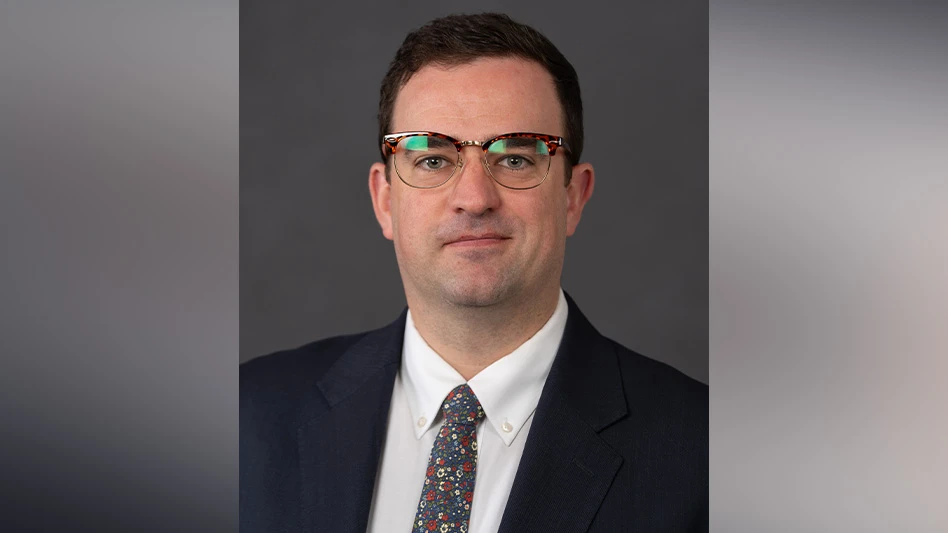
“We are laser-focused on doing what we do,” Northstar CEO Seth Goodman says. “We’re going to continue to pursue new national manufacturing opportunities. We are leaning into automation, artificial intelligence and technology in a very meaningful way.
“But our business model is straightforward. We’re not looking to do anything that is outside of our core competency. We have a huge potential market out there to capture new business, and we’re going to continue to go after new business. More importantly, we’re going to provide the best possible white-glove service to our client base as we can.”
Forging its own path
Northstar Recycling now consists of 325 employees and manages about 4 million tons of recoverable materials and waste per year. The East Longmeadow, Massachusetts-based company was founded by Seth and Noah Goodman in 2011 and grew to 34 employees by 2016. The brothers are the fifth generation of a family that has been in the recycling business since 1896, but they decided to branch out on their own, identifying an opportunity to help manufacturing companies reach their zero-landfill goals by offering managed waste and recycling services.
The family business evolved from a scrap metal recycling facility to Northstar Pulp & Paper Co. Inc., which eventually was sold in March 2022 to Casella Waste Systems Inc., based in Rutland, Vermont. Northstar Recycling always remained a separate entity from the legacy business.
“We just saw a different path for the business,” Seth says. “We had some national accounts. My brother Noah and I really liked that business model, so we decided to leave and pursue this different strategy. My family continued to thrive under the asset-based model; we just had a difference in where we saw the business going and decided to go out on our own and take a stab at the asset-light model.”
That model consists of manufacturing companies outsourcing their waste and recycling programs to Northstar Recycling, which facilitates the services required to implement clients’ programs through a third party. Goodman says manufacturers outsource this work so they can remain focused on making products and delivering them to their customers.
Northstar brings consistent, reliable data and systems that allow its customers to divert as much material from the landfill as possible, Seth says. The firm also works closely with each manufacturing facility to ensure it has a strong sorting and separating process in place to generate the highest possible value.
“We’re able to drive down their costs,” Seth says. “We’re able to provide them with holistic, consistent and reliable reporting—both at the plant level and at the corporate level. And we’re able to help them with their sustainability goals as they relate to diversion from the landfill and greenhouse gas reporting.
“We don’t need our own trucks or facilities to make it work well for our clients. A real advantage that we have is that we’re agnostic. We want to find the best possible solution for our customers’ waste and recycling material. We do not have to send it to a facility that we own.”
Finding a partner

The Goodman brothers reached a point where they realized Northstar’s growth could accelerate with more expertise and capital behind it, so they began searching for an equity partner and ultimately selected Ridgemont Equity Partners.
At the time, Ridgemont outlined that its goal was to expand Northstar’s service offering to existing and new clients while maintaining its focus on asset-light, sustainability-oriented managed waste and recycling solutions.
“Ridgemont has operational experts in all functional areas of the business,” Seth says. “They have sales experts, they have operations experts [and] they have freight experts. And we’re able to tap into the expertise at Ridgemont whenever we want. To have world-class resources at our disposal to help us think about how to organize our business to scale faster has been invaluable to our growth.”
After partnering with Ridgemont, it didn’t take long for Northstar to make its first acquisition. The company bought Complete Recycling in the spring of 2022. Goodman says the San Diego-based company brought strong contracts but mostly served single facilities within a larger, national company. Northstar saw this as an opportunity to use its reach and expand those accounts to more facilities under the customers Complete Recycling already served.
The firm’s second deal came in 2023, acquiring Sonoco Sustainability Solutions (S3), a Hartsville, South Carolina-based provider of customized waste diversion programs and managed recycling services. Seth says S3 ran a business model that was similar to Northstar’s.
Like Complete Recycling, S3 brought some single-facility accounts that Northstar expanded. But S3 also brought national accounts that Northstar took in and enhanced with its service delivery model.
“What Northstar is really good at is growing our footprint within clients once we have a portion of the business,” Seth says. “S3 brought a lot of great customers to us, and we were able to help grow those businesses and deliver excellent customer experiences once they came under the Northstar fold.”
Entering a new market
Northstar’s third deal occurred in October 2025, adding Lewiston, New York-based Waste Technology Services (WTS). Seth says while WTS was similar to its other deals, the big distinction was that it brought hazardous waste expertise.
WTS serves chemical, pharmaceutical and technology end markets with solutions to manage manufacturing and processing waste streams.
Seth adds that Northstar wasn’t actively looking for a hazardous waste business, but WTS aligned with the company’s services and adding those capabilities opened up its addressable market even further. The firm now can target more industrial clients that generate more hazardous waste compared with its current base.
“We believe that bringing on WTS helps complete our service offering so that we are able to offer 100 percent of the services that our clients need, including hazardous waste,” Seth says. “So, while Complete Recycling and S3 were integrated into Northstar, at this point, WTS is going to be a stand-alone company underneath the Northstar umbrella. It’s a very complementary opportunity to what we currently do.”
Seth adds that Northstar will continue to pursue partnerships with leading providers of managed waste and recycling solutions that demonstrate a commitment to organizational culture, waste diversion, service delivery and data-driven outcomes, but only if they are the right fit.
“The most important thing for Noah and me was making sure that we were buying businesses that had people and a culture that were congruent with how Noah and I have built Northstar,” Seth says. “It’s our philosophy that our business is all about the right people with the right qualities and with the way they do business. We were able to bring on some amazing people from our acquisitions.”
Explore the January/February 2026 Issue
Check out more from this issue and find your next story to read.
Latest from Waste Today
- Wisconsin Senate advances $125M PFAS cleanup funding after years of delay
- New Jersey highlights collection initiative to destroy PFAS firefighting foams
- Recycle Coach partners with Bartec Municipal Technologies
- CPUC conditionally approves RNG procurement contract for Anaergia’s SoCal Biomethane facility
- EPA proposes abandoned tire cleanup plan with focus on energy recovery
- Global Recycling Foundation recognizes Recycling Heroes
- Equipment finance index takes dip in March
- Oregon DEQ issues enforcement order, $3M civil penalty to Valley Landfills