The biggest lesson Ohio University learned in its 16 years of efforts to compost nearly all food waste on campus: Education is crucial to combating contamination.
Contamination is one of the biggest roadblocks to successful composting, says Samuel Crowl, the university’s director of sustainability. Crowl leads the Athens, Ohio, university’s composting program, which uses an in-vessel composting system for nearly 100 percent of its food waste.
The in-vessel system is the largest at any college or university, according to Ohio University, an accolade it’s held since the system was established in 2009.
When composting bins are made available to the public, Crowl says, contamination runs rampant. The university used to collect organic material at the student union, Baker Center.
However, despite multiple attempts to educate students on how to correctly dispose of materials, many non-compostable items still entered the material stream.
“A lot of chip bags, a lot of plastic, a lot of even very obviously recyclable items like plastic water bottles, end up in that compost stream,” Crowl says.
“Because it’s taken directly up to the facility, and it’s not sorted, it ends up in the compost, and obviously, it can be a big problem.”
The university had to remove collection bins from the student union because of the high level of contamination.
Instead, at the university’s dining halls, students place their plates on a conveyor belt to be cleared and cleaned by dining hall employees rather than putting their waste directly in a bin.
“As long as collection is done in the back of house by staff in the dining halls and at the food facility, we have a very clean product,” Crowl says. “But as soon as we introduce the public into collecting this [material], that’s where the problem starts.”
Program history

Crowl says much of the credit for the composting program’s success goes to Sonia Marcus, the first director of Ohio University’s Office of Sustainability.
“At the time, the department was called the Office of Resource Conservation, and so she was really thinking about ways that the university could manage its waste effectively and manage with the resources that the university is producing,” Crowl says.
Marcus reached out to the Ohio Environmental Protection Agency (EPA) to inquire about installing a composting facility at OU. According to Crowl, over the years, two significant grants paid for most of the compost facility.
One grant for $350,000 was issued by the Division of Recycling and Litter Prevention within the Ohio Department of Natural Resources, and the other grant was for $1.09 million from the American Recovery and Reinvestment Act.
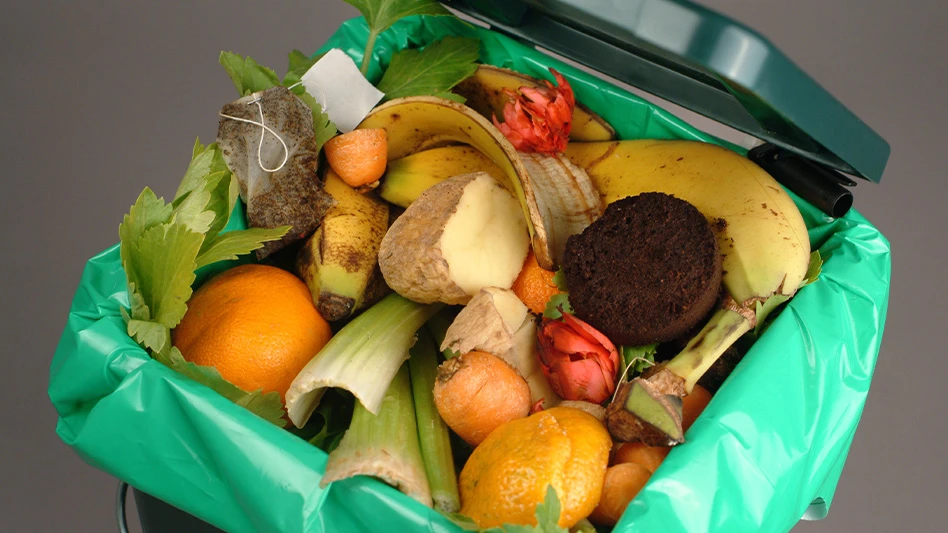
For the in-vessel composting system, pre- and postconsumer food waste is collected from dining halls and the university’s central food facility five days a week. The material is brought to the compost facility and dumped into what looks like a large cargo container.
Inside the container are augers that oxygenate the food scraps, helping to maintain the temperature and ensure it is moist. After approximately two weeks inside the vessel, the material is discharged into a series of piles, called windrows, where it sits for anywhere between 20 to 180 days.
After going through the composting process, the food scraps become soil amendments that can be used across campus. The soil amendments are used around trees, in landscape beds, in intramural fields and occasionally at the Ohio EcoHouse, an off-campus residence that provides students with the opportunity to learn about sustainable lifestyle choices through hands-on experiences.
“We save a lot of money by not having to purchase fertilizers for our beds, and it’s much healthier for people and the planet,” Crowl says. “We’re saving money, and we’re making our campus grounds healthier for all of us. It’s a win-win.”
The composting facility itself incorporates sustainable features, such as solar panels, solar thermal panels and cisterns to collect and store rainwater.
Through OU’s Campus Recycling & Zero Waste program, students can order a personal compost bin to use within residence halls or in off-campus housing. This allows students to continue the university’s mission to collect compostable material while outside of the dining halls.
Crowl uses the composting facility as an introduction to sustainability. Student groups, local community groups and other interested parties who visit the university can tour the facility to learn how composting works, why the university does it and why it is important.
“We’re saving money, and we’re making our campus grounds healthier for all of us. It’s a win-win.” — Samuel Crowl, Ohio University director of sustainability
Other university programs
Ohio University is not the only university making strides in composting.
In early 2024, Lafayette College, in Easton, Pennsylvania, launched a campuswide food waste composting program. The program uses The Earth Flow in-vessel composting system from Green Mountain Technologies, Bainbridge Island, Washington.
According to Green Mountain Technologies, the system automatically processes up to 30,000 pounds of compostable materials per month.
The compost created from the system in place at Lafayette College is used at “LaFarm,” a 3-acre farm and community garden that provides fresh produce for campus dining halls and the local community.
At Iona University, a private university in New Rochelle, New York, a new composting initiative has taken root. Its origins stem from a 2021 survey that identified food waste as the No. 1 concern among students.
According to the university, the feedback shed light on a significant desire for improved waste management and sustainability practices on campus.
Composting at Iona University has expanded since 2021, and the school is engaging students through coursework and service grants that offer hands-on learning experiences.
Iona has established three large, aerated compost bins and five smaller ones that cut down on food waste and generate rich soil for use in campus projects, the university says.
Leading the way
Numerous representatives from other universities have visited Ohio University to learn firsthand about its compost facility and explore options for implementing composting on their own campuses, Crowl says.
He hopes that, ultimately, OU’s composting program will serve as an example of how universities can take the next step in promoting sustainability on campus.
Explore the October 2025 Issue
Check out more from this issue and find your next story to read.
Latest from Waste Today
- Fleetio launches AI capability to accelerate fleet maintenance approvals
- Recycle Ann Arbor extends drop-off station operating hours
- Sybilion seeks to help manufacturers confidently address volatility
- Ecowaste Solutions partners with city of Trinity, Texas
- Bristal Hauling acquires G&R Garbage Disposal
- Baltimore trash collection expected to slow as WTE facility closes for maintenance
- Landfill Insights | Connecting the dots: Policy to practice
- FCC Environmental Services awarded collection contract in Florida