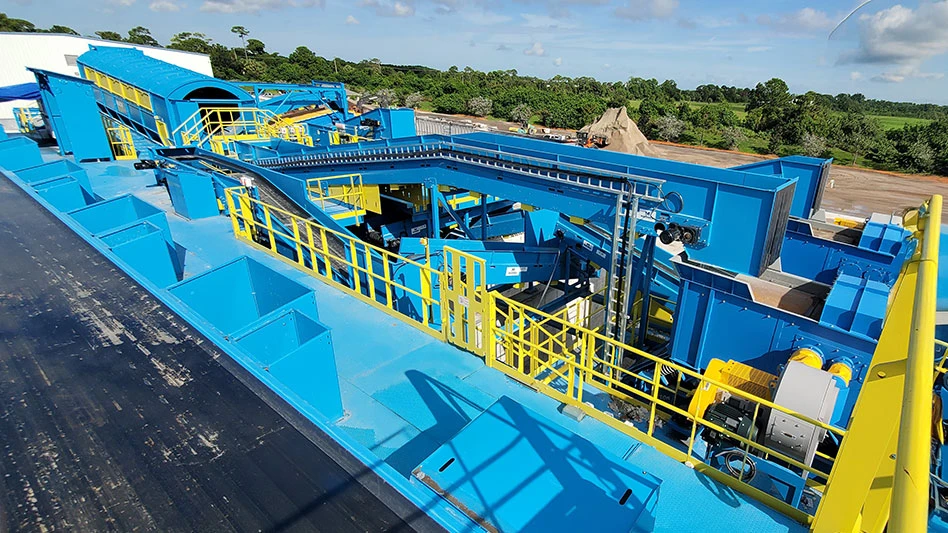
In 1986, the Solid Waste Authority (SWA) officials of Palm Beach County, FL discovered federally-endangered snail kites on property earmarked for a landfill. The SWA took steps to preserve the active rookery, resulting in the development of the SWA Greenway System, offering visitors a natural respite amidst the SWA’s waste management operations. Residents can drive onto Palm Beach Renewable Energy Park, drop off household hazardous waste materials, and then visit the trails to walk, ride a bike, or photograph wild animals. School children visit for guided nature hikes. SWA hosts a 5K through the trails; following the race, participants can tour the Renewable Energy Facility 2, getting a bird’s-eye view from its viewing gallery and award-winning Sky Bridge.
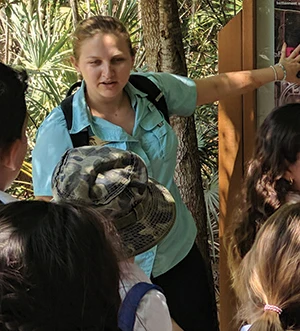
Angelique Giraud, an education specialist with the SWA, leads the effort showcasing the authority’s work in balancing industry and nature: “We have impressive industrial facilities surrounded by a protected 300-acre natural area. These seemingly incompatible spaces co-exist now and will continue to do so. Visitors are surprised by the plant and animal diversity and serenity. Deep into the trails, visitors can completely immerse themselves in the solitude as the trees silence the sounds of industry. We hope residents leave knowing that the SWA works hard to safely dispose of waste and is proud to do its part to help protect our environment.”
What She Does Day to Day
Giraud says she develops and delivers interpretive and educational programs highlighting the importance of the SWA’s award-winning Integrated Solid Waste Management System and trail system with the goal of involving visitors to “feel connected to and understand the bigger waste process.”
What Led Her to This Line of Work
As a child, Giraud witnessed a mother sea turtle laying eggs on the beach at night, a “beautiful moment tempered by our instructor telling us about the natural and anthropogenic dangers baby sea turtles face—something as simple as a street light can lead baby turtles away from the ocean, dooming them in their first hours,” she says. In that moment, she realized the real and immediate impacts of education.
Giraud earned a B.A. in environmental science from New College of Florida. She teamed her love for the environment with a passion for education, stemming from working part-time at the college’s on-campus preschool.
Upon graduation, she pursued research and advocacy. “As a grassroots organizer, I dug through government databases searching for evidence of pollution hidden in tedious reports, using this information to rally local residents to advocate for better environmental protections,” she says. Learning about local and global environmental issues left her feeling both energized and overwhelmed. She decided the “steep, uphill battle” to keeping water, land, and air clean would be better accomplished through education about the impact of human actions on the environment.
She joined the SWA in 2015 during plans for the grand opening of Renewable Energy Facility 2, “the cleanest, greenest, and largest waste-to-energy power plant in North America and its accompanying LEED Platinum Education Center,” she notes, adding that it gave the SWA an opportunity to update its educational programming, focusing on Recycle Right, Renewable Energy, and Industry and Nature themes.
What She Likes Best About Her Work
Giraud says she derives satisfaction from showing and teaching people “the amazing, important aspects of waste management they never knew they wanted to know.” The SWA dates to 1975, but most people have a limited understanding of its functions or what happens after they dispose of their own waste, she notes. “On almost every tour or field trip, I get to watch visitors experience an eye-opening epiphany when they start to connect their actions to the greater impacts on our environment. This is where change takes place.”
Her Greatest Challenge
Managing the SWA’s Interpretive Trail Sign Project with an interdepartmental team of 16 individuals, with each providing a vital role and each piece of the many moving parts requiring team approval to achieve the highest quality of work proves challenging for Giraud. The project’s goal: connect trail visitors to the theme of balancing industry and nature for overall community benefit. Over two years, the team has completed the first mile of interpretive trail signage and is ready to begin the next mile and a half.
Latest from Waste Today
- Vecoplan to present modular solutions at IFAT 2026
- Terex Ecotec appoints Bradley Equipment as Texas distributor
- My Green Michigan expands depackaging capacity
- Washington selects Circular Action Alliance as PRO
- Ten-8 Industrial opens new central Florida service center
- Triumvirate Environmental acquires Environmental Waste Minimization
- Official NYC Bin availability expands ahead of deadline
- US Food Waste Pact’s 2025 Impact Report shows decrease in food waste