Successful solid waste management operations partially depend on someone within that organization to inform and educate the public in a manner yielding positive impacts. Case in point: Ashley Northcotte, the engagement and education coordinator for waste management in the Niagara Region, Ontario, Canada. The entity’s 12 municipalities service 190,000 households and industrial and commercial properties. The Niagara Region claimed three SWANA 2017 awards, including Gold Landfill Redevelopment Excellence for its landfill end-use site development. Community outreach and engagement efforts across multiple media platforms played a significant role in the region’s site restoration efforts to create wooded grassland ecosystems including hiking trails, off-leash dog areas, and viewing areas out of closed landfills.
Another Gold award in the special waste management category recognized its two permanent household hazardous waste (HHW) depots, constructed in early 2016 for $1.5 million. Their modular design is a first in Ontario and yielded improvements including a 15% increase in overall volume, a 98% increase in the number of cars served, an 81% decrease in hourly operational costs, and a 2% capital construction budget decrease. Educational efforts promoting the program center on multi-platform media include social media, web, newsletters, brochures, print publications, and outreach efforts at community events. Residents are given an Orange Box designed to help them safely collect, store, and transport HHW to the nearest depot. A sticker on the box identifies acceptable materials. Drain holes are plugged to safely contain potential leaks.
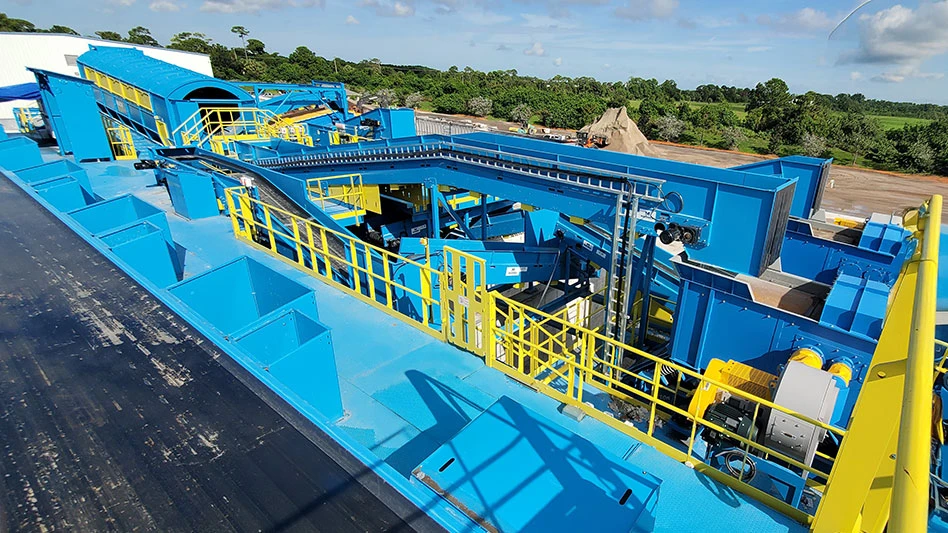
The Niagara Region took a Bronze honor in the Recycling System Excellence category for recycling center improvements. Its two-stream recycling program for containers and fibers focuses on maintaining a cost-effective MRF with a low residue rate in partnership with Niagara Recycling. To meet stricter market specifications, and increase operational efficiencies and revenues, the Niagara Region obtained $1.2 million in funding for MRF upgrades through the Continuous Improvement Fund, a joint effort of Waste Diversion Ontario, the Association of Municipalities of Ontario, the city of Toronto, and Stewardship Ontario. Revenues have increased $1 million annually. An ROI of four months to 2.8 years for four projects has been attained as well as an annual cost avoidance of more than $300,000.
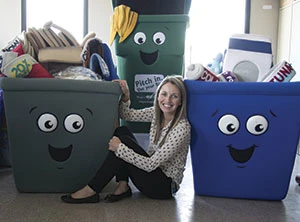
Through community education efforts, Niagara Recycling—which operates as a nonprofit social enterprise—injects funds back into the community, such as more than $2 million in donations to support nonprofit agencies’ efforts for developmentally challenged adults. Niagara Region and Niagara Recycling also facilitate facility tours, produce educational outreach videos, and send recycling mascots Benji the Blue Box and Greycie the Grey Box to community events. Educational materials inform the public on ongoing recycling process and diversion efforts.
What She Does Day to Day
Northcotte coordinates waste management services’ public outreach and education programs, including the development of strategic communication plans and promotion and education materials. She coordinates school and summer camp presentations, event information booths, social media, external web content, and campaign development and implementation.
What Led Her to This Line of Work
Northcotte always held an interest in the environment. She earned a B.A. in geography from Brock University, where she studied a central discipline addressing the spatial patterns and processes as they relate to human and physical environments. Northcotte obtained a BEd from Brock University and a post-graduate certificate in Geographic Information Systems (GIS) from Niagara College to broaden her skill base. “With municipal and solid waste/recycling technology experience, I quickly developed the skills needed to lead projects related to waste management communications, promotion, and education,” she says.
What She Likes Best About Her Work
Northcotte says she “loves educating and engaging with residents and students to promote not only our various programs and services, but the important message of waste diversion. It is my hope this message will help build environmental stewardship to better our communities.”
Her Greatest Challenge
“As is the case with anyone in the solid waste industry, the greatest challenge at this time is dealing with the new Waste Free Ontario Act legislation, which will provide the framework to place full responsibility on the producer for the end-of-life management of products and packaging,” says Northcotte. “This means there is a lot of uncertainty for municipalities and their future role.”
Latest from Waste Today
- Vecoplan to present modular solutions at IFAT 2026
- Terex Ecotec appoints Bradley Equipment as Texas distributor
- My Green Michigan expands depackaging capacity
- Washington selects Circular Action Alliance as PRO
- Ten-8 Industrial opens new central Florida service center
- Triumvirate Environmental acquires Environmental Waste Minimization
- Official NYC Bin availability expands ahead of deadline
- US Food Waste Pact’s 2025 Impact Report shows decrease in food waste