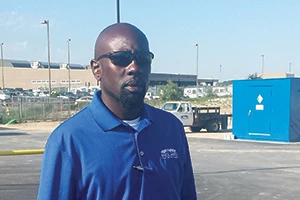
In Midland, TX, an oil boom that’s been going on for about four years has created more waste with which the Midland Solid Waste Management Department has had to accommodate. “We’re dealing with oil field waste, and there is plenty of it,” says Morris Williams, solid waste director, adding that much of it is special wastes and food waste. “We’ve almost doubled the amount of waste coming into our landfill. That presents us with more staffing challenges to ensure we’re handling everything right. We can’t move as fast as a private company and say in the middle of a budget year that we need five more people.”
Additionally, the oil boom is luring away the employees needed to address the increased waste to better-paying jobs. “They can make 50 to 100% more than what we pay,” he says. “Even our direct competition, like Republic Services, offers a much better salary than we do. It used to be a great job here with health benefits, but some of these companies are getting competitive.”
Midland’s growth also entails more development in the residential sector to house oil field workers and the commercial sector for support services. “Midland was once considered a small city,” notes Williams. “We’re now one of the fastest-growing cities in the US. We’re trying to keep up with the growth.”
Midland’s solid waste services include collection, landfill, and recycling for a population of 125,000 and growing. The department also encompasses the “Keep Midland Beautiful program.” Nine years ago, Midland introduced automated side loading trucks and 96-gallon rollout carts in the city’s new developments. That now accounts for a quarter of the city’s trash collection operations. The rest is collected from commercial 3-yard metal containers in the alleys. A fleet of 40 trucks run 26 routes. Drop-off locations enable recycling of paper, plastic, cardboard, and aluminum, which a local recycler processed offsite for shipping to other venues.
Given transportation costs, any ramping up of the recycling program must be financially viable, Williams says. A new recycling effort: pulling plastic pipe from the oilfields’ wastestream. “It tears up the equipment, and it’s recyclable.”
What He Does Day to Day
Williams works to mitigate the staffing challenge—although there are 62 positions among the three divisions, most days, he’s short-staffed. He attends meetings, participates in the litter task force, coordinates with other entities, and endeavors to stay current with changes in laws and trends to ensure an effective and efficient operation.
What Led Him to This Line of Work
Williams was a school bus driver when a friend with a CDL license got a job with the city and encouraged Williams to do so as well. “It’s a different thing to go from kids who talk back and driving trash—both of them smell the same,” he quips, referencing the sweaty football teams he’d transport.
Williams, now 15 years with the city, started off as a driver. Within five years, he was promoted to supervisor in collections. He started to educate himself on landfills. Now when he visits cities, he pops into their solid waste departments to observe their operations.
What He Likes Most About His Work
Williams derives his greatest sense of satisfaction in solving residents’ problems. “I like spending time talking with them about whatever issue they have and trying to come to some type of common ground to help them have a better day than they had before they called,” he says. “I love my job and the citizens of Midland. We’ll continue to do a great job every day that we come in to work.”
His Greatest Challenge
In addressing the staffing problem, Williams has done compensation studies and seeks to find ways to keep costs down, such as insurance. “I try to make our work environment the best,” he says. “We may not pay the best, but we will treat our employees better than anybody else. There are opportunities to advance. We want to make it a place where somebody wants to come to work, and when they go home in the evening, we’re sending them home as safe as they came in that morning.”
Latest from Waste Today
- Interchange 360 to operate alternative collection program under Washington’s RRA
- Waste Pro files brief supporting pause of FMCSA CDL eligibility rule
- New Way Trucks expands US network with Joe Johnson Equipment
- Tire Industry Project publishes end-of-life tire management guide
- Vecoplan to present modular solutions at IFAT 2026
- Terex Ecotec appoints Bradley Equipment as Texas distributor
- My Green Michigan expands depackaging capacity
- Washington selects Circular Action Alliance as PRO