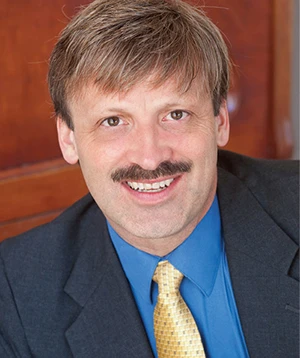
Like many school districts, “we only have so much money to work with and there is a lot more need,” notes Tony Sparks, CxA, LEED AP, BOC, staff project manager for HVAC systems, energy conservation and sustainability standards for Albuquerque Public Schools (APS) facilities design and construction. APS is New Mexico’s largest school district and the 31st largest in the nation. Its 142 schools plus administrative buildings span 1,200 square miles.
Albuquerque is in a dry desert climate, with most of the older buildings running evaporative coolers, atmospheric boilers for heat, and pneumatic controls, says Sparks. When Sparks came on board in 2013, he found a fragmented and siloed system with many old buildings and new buildings and “everyone doing their own thing, but no oversight,” he says. Occupants occasionally complained about temperatures. The system of old and new buildings was fragmented, notes Sparks. He took inspiration from a Kentucky state program placing energy managers in every school, which has successfully generated energy cost savings.
A Water and Energy Conservation Committee was created in Albuquerque, drawing together APS leadership, department heads, utilities, the state energy office, and private consultants monthly to discuss APS sustainability initiatives. Its policy recommendation for the school board to reduce water and energy use by 20% by the school year 2023–24 enabled resources to be allocated to the effort and paved the way for the creation of an energy team of seven staff members working full-time on sustainability to try to “get control everywhere, analyze data, and make changes,” says Sparks.
One change was to swap out manual time clocks with internet-based time clocks, allowing staff to control facilities from a central location in contrast to driving throughout the district to make adjustments. “We can schedule holidays, events, and exceptions from the desktop,” notes Sparks. “It’s made a huge difference in energy consumption.” APS also uses technology that uses an algorithm over time to shut off boiler burners when heat is unnecessary, generating significant gas savings.
New buildings are being constructed to contemporary building standards, notes Sparks. He recently was invited to speak about institutional energy management at the US Green Building Council’s Green Schools Conference. The Association of Energy Engineers named him Energy Manager of the Year in his region in 2017. Sparks says that while he is passionate about what he does, his coordinated efforts are only successful through the support of the district’s executive leadership and the elected officials. A successful approach is based on data, he adds. “By doing that, we’re able to get people on board,” says Sparks. “It takes everyone working together to make substantive change.”
What He Does Day to Day
Sparks spends part of his time crafting projects, checking with personnel to ascertain the location of the district’s biggest problems, getting RFP quotes from contractors, and managing projects. Most of the time, he serves as a liaison between the energy team and executive management to transform suggestions into actionable items.
What Led Him Into This Line of Work
“I grew up in Boulder, Colorado, where being ‘green’ is embedded in the culture,” says Sparks. He earned a B.A. in electrical engineering, applied math, and physics from the University of Colorado Boulder. Prior to coming on board with APS, Sparks served as a sustainability consultant and a business development director for TMCx, which provides building commissioning services tied in with LEED consulting.
What He Likes Best About His Work
“The energy team is a diverse group of passionate people,” says Sparks. “We’re all working together toward one goal. There is nothing more gratifying. I am excited every day to get up and go to work with people making a difference. We put aside our differences to do the best thing and we can see the results. I’m a collaborator—this is the epitome of my joy.”
His Greatest Challenge
Having enough resources to do everything needed to be done is his greatest challenge, says Sparks. “There is so much to do. It takes a long time to chip away at it,” he says. Another challenge: pushing through resistance to change.
Latest from Waste Today
- Vecoplan to present modular solutions at IFAT 2026
- Terex Ecotec appoints Bradley Equipment as Texas distributor
- My Green Michigan expands depackaging capacity
- Washington selects Circular Action Alliance as PRO
- Ten-8 Industrial opens new central Florida service center
- Triumvirate Environmental acquires Environmental Waste Minimization
- Official NYC Bin availability expands ahead of deadline
- US Food Waste Pact’s 2025 Impact Report shows decrease in food waste