Living on an island with its limited footprint calls for creative solutions for handling solid waste. The efforts of Honolulu’s solid waste division—guided by Energy Recovery Administrator Wayne Hamada—earned SWANA’s 2016 Waste-to-Energy Gold Award. Over the years, one of two landfills closed, leaving the other and an incinerator operating, until H-POWER—a facility in Kapolei owned by the City and County of Honolulu and operated by Covanta Energy—opened in 1990.
Hamada oversees the plant’s operations of receiving and processing the daily waste intake, which may include up to 2,000 tons of MSW, 60 to 70 tons of dewatered wastewater sludge, 400 used auto tires, sterilized non-sharp medical waste, and other waste. The waste incinerator closed in 1993, leaving the landfill and H-POWER as Oahu’s disposal sites for all MSW. The city has minimized landfill disposal by diverting as much waste to H-POWER as practicable, notes Hamada. In 2013, H-POWER’s third boiler mass burn unit was put into commercial operation. A wastewater sludge processing system—the first of its kind in the US—was added to the third boiler to divert all city-dewatered wastewater sludge from the landfill to H-POWER. The expansion increased power production by 33%, enabling H-POWER to take in the majority of the island’s MSW.
What He Does Day to Day
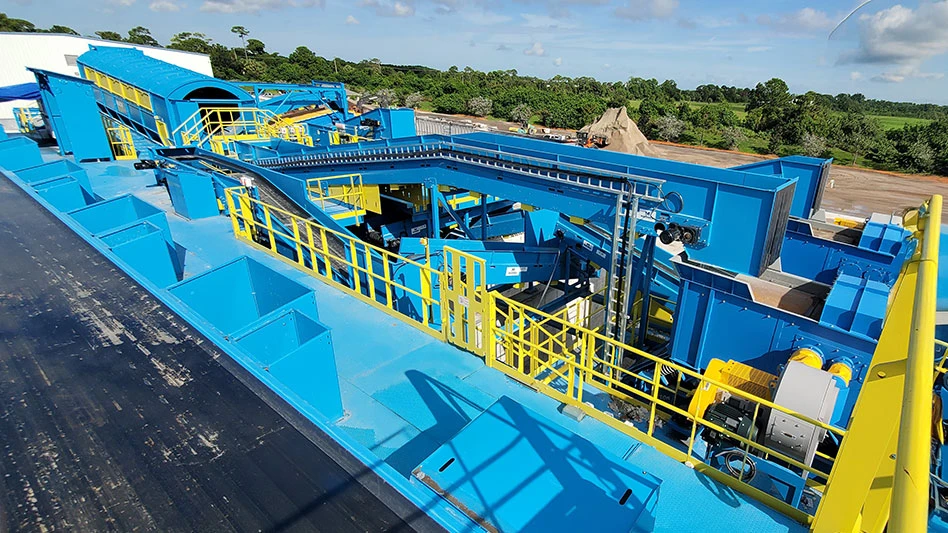
Hamada administers H-POWER’s design, construction, and operating activities. A typical day starts with a facility drive-through inspection to monitor waste/refuse derived fuel (RDF) storage inventories, general housekeeping, and conditions, and he notes concerns to discuss with the plant operator for resolution. Incoming truck traffic is routinely monitored for long lines and delays; issues are reported to the operator for mitigation. Such monitoring is a daily practice due to temporary waste processing delays caused by the current refurbishment of the RDF waste processing facility (WPF), scheduled for completion by late 2017. The refurbishment restores two WPF process lines to original 1990 conditions with various performance upgrades.
“Process lines are being refurbished in sequence, while conveyors, trommels, and associated equipment are systematically replaced,” says Hamada. His other tasks include processing invoices, resolving contract/procurement issues, conducting plant performance reviews, short- and long-term budget planning, and attending refuse division and operator staff planning meetings.
What Led Him Into This Line of Work
Hamada started with the operation as a disposal operations engineer, overseeing three transfer stations, six convenience centers, a 600-ton waste incinerator and two active landfills. He also helped guide the operation through its changes.
“Becoming the administrator at H-POWER was an exciting step in my refuse division career,” he says. “Besides the satisfaction of being a part of a major city facility, my job provides me with the opportunity to utilize my disposal operations experience to keep H-POWER in the loop and coordinated with refuse collection, disposal, and recycling operations.”
What He Likes Best About His Work
“What we accomplish here at H-POWER is remarkable,” notes Hamada. “H-POWER currently processes and converts into renewable energy approximately 710,000 tons per year of MSW, or about 90% of the MSW generated on the island of Oahu. This preserves the landfill for the disposal of ash and residue from H-POWER, and brings in about $67 million yearly for the renewed energy generated that is sold to the local utility. I also thoroughly enjoy working with my counterparts as a team. The entire process could not come to fruition if not for the great teamwork and leadership at H-POWER, in the refuse division, and within the city. Good communication and a commitment to work together for a common good has been our game plan that has made working at H-POWER a winning and enjoyable experience.”
His Greatest Challenge
Availability and productivity define the greatest challenge at H-POWER, notes Hamada. “The non-homogeneity of MSW in itself causes a host of operational issues—including grate bar failures and superheater tube leaks—especially for the third boiler, invariably leading to boiler outages and associated processing delays. Receipt of unacceptable wastes and equipment wear and tear are added realities challenging the desire to keep the plant fully functional and reliable.
“The bottom line is to keep the plant available and productive so we can maximize waste processing and energy production while maintain good public relations.”
Latest from Waste Today
- Interchange 360 to operate alternative collection program under Washington’s RRA
- Waste Pro files brief supporting pause of FMCSA CDL eligibility rule
- New Way Trucks expands US network with Joe Johnson Equipment
- Tire Industry Project publishes end-of-life tire management guide
- Vecoplan to present modular solutions at IFAT 2026
- Terex Ecotec appoints Bradley Equipment as Texas distributor
- My Green Michigan expands depackaging capacity
- Washington selects Circular Action Alliance as PRO