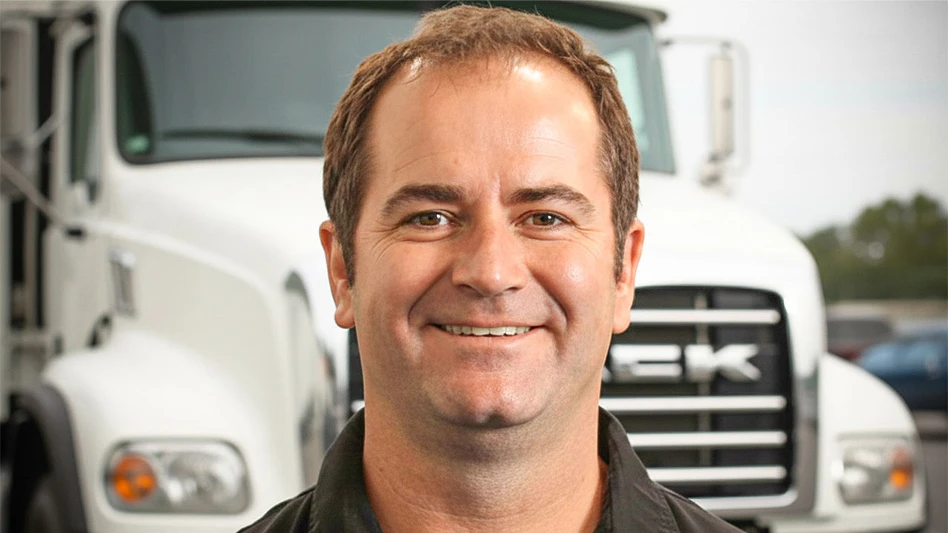
Not many communities in the United States can say they divert 98 percent of their municipal solid waste (MSW) from the landfill. But that is exactly what Lancaster County, Pa., is claiming. Under the direction of CEO James Warner, the Lancaster County Solid Waste Management Authority (LCSWMA) is using both recycling and combustion to reduce the amount of MSW it sends to the landfill to about 2 percent.
For every ten truckloads of MSW combusted at the waste-to-energy (WTE) facility located in the Lancaster County township of Conoy, one truckload of ash is taken to the landfill.
Efforts to reduce waste through recycling and combustion have extended the life of the Frey Farm Landfill by about 18 years, estimates Warner. “It is scheduled to be full in 2019. If we hadn’t done these things, it would have been full in 2001,” Warner says.
The LCSWMA does not take credit for the countywide recycling rate of about 40 percent. Collection is handled by private haulers who have implemented successful recycling programs. “Over the last 20 years, our private sector—whether they be publicly traded or independents—really stepped up,” says Warner. “They made their own investments in processing and marketing.”
The LCSWMA allows private haulers to use its transfer station, which holds materials bound for material recovery facilities (MRFs), the WTE facility and the landfill.
An Integrated System
The combination of recycling and WTE is a vision that Warner says was a goal of community leaders who planned the integrated system of managing waste back in the 1980s. Lancaster County is the sixth largest county of the 67 counties in Pennsylvania with a population hovering at around 520,000.
Keeping with the values of the community was important in developing a plan to handle discarded material that both embraced the preservation of the county’s rich farmland and its frugal way of living, according to Warner. The LCSWMA was designated as the agency that was to implement the plan and achieve the county’s concept and goals.
“Community shareholders wanted to implement a system focused on minimizing land and capturing resources, and that’s what we’ve done,” Warner says.
Warner began his career with the LCSWMA in 1987. He says he was one of the first recycling coordinators in the country. He brought his expertise and management style from what he learned in Gloucester County, N.J., during the perceived garbage crisis at the time.
“The local county units thought that recycling had to be a part of adjusting our way out of crisis mode, so they went about hiring recycling professionals,” recalls Warner.
Warner became CEO of the LCSWMA in 1996 and says his job is never dull. “That’s why I’m still here,” he says. “We continue with endless challenges and that’s what keeps it exciting.”
Converting Waste
The WTE facility in Lancaster County opened in 1991. Covanta Energy, Morristown, N.J., operates the facility, which has the capacity to process 1,200 tons of waste per day.
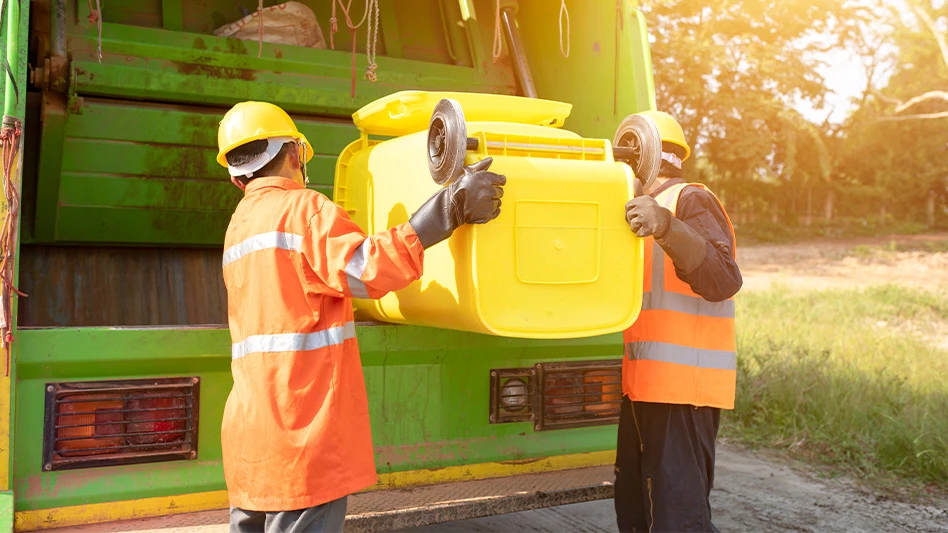
 When trucks arrive at the facility, they dump their loads onto a floor where a compliance operator inspects them and a loader operator pushes the waste into a pit 55 feet deep. On any given day the pit holds 6,500 tons of waste. The system is designed for MSW but also receives supplemental waste in the form of pharmaceutical waste or even evidence from law enforcement agencies or products that need to be destroyed.
The supplemental material is added intermittently to the pit and done so in a way that allows the waste to maintain a consistent British thermal unit (Btu) value. A large grapple mixes the material in the pit to create consistency before grabbing loads and feeding them into one of three bunkers that lead to each of three combustion units.
The waste is then combusted in one of three boilers at temperatures that exceed 1,800 degrees Fahrenheit. “We want complete burnout. It reduces the amount of ash and gets the most energy,” explains Warner.
The steam that is generated from the combustion of non-hazardous solid waste spins a turbine which creates electricity. A small portion of the electricity is used to power the facility and the rest is sold for revenue. The WTE facility generates enough electricity to power 30,000 Lancaster County homes.
“In any given moment we are providing enough power for 1 in 6 homes in Lancaster County and when you are talking about 520,000 people, that’s a real contribution,” says Warner.
The ash produced at the end of the combustion process comes out chunky. That’s because approximately 2 percent of the ashy material is metal that does not burn. To extract the metal, the ash is processed on a conveyor using a series of magnets. The metal recovered can be worth more than typical scrap because paint and chemicals are burnt off during combustion.
 “We market about 7,000 tons per year of post consumer ferrous.” says Warner. “It’s big money.” In 2011, the WTE earned $1.488 million in recycled metal revenue.
Warner says he is pleased with the way Covanta has managed the WTE process over the years. “Covanta has been our partner from the beginning,” he says. “They’ve done a tremendous job over the last 21 years. Their technology has proven very robust, resilient and their expertise to keep the plant operating at optimal performance has been exemplary.”
Air emissions are closely monitored at the WTE facility using a continuous emissions monitoring system (CEM). Control room operators are alerted of any fluctuation in boiler temperature and chemical emissions, and, at any time the Pennsylvania Department of Environmental Protection (PADEP) has the ability to see the monitors.
Several measures are taken to reduce emissions. LCSWMA says source tests at the facility have averaged 96 percent below air permit limits set by PADEP. The gases are treated with aqueous ammonia, hydrated lime, activated carbon and travel through scrubbers and baghouses to remove particulate and clean the gasses before they are emitted into the atmosphere through the stack.
Warner acknowledges that WTE facilities may not be for everyone. “Some government entities just don’t have the appetite for mass burn,” he says, “We think it has been terrific for our community.”
Opportunity to Grow
In 2009 and 2010, LCSWMA began looking at how it could expand its WTE facility, but instead, another opportunity became apparent—about 18 miles away in Harrisburg, Pa.
On June 27, 2012, the City of Harrisburg, Pa., selected the LCSWMA as the winner of its competitive bidding process to enter into immediate negotiations for the purchase of the Harrisburg Materials Energy Recycling Recovery Facility (HMERRF). The HMERRF has had financial woes and is currently under receivership, meaning the state has control of it. It is about $330 million in debt and the LCSWMA plans to make an offer to purchase it soon.
|
On the Horizon The Lancaster County Solid Waste Management Authority (LCSWMA), Lancaster, Pa., continues to look into ways the renewable energy produced at its landfills and waste-to-energy (WTE) facility can be utilized. LCSWMA is working with poultry and feed company, Purdue Holdings, Salisbury, Md., to build a soybean crushing plant on 50-plus acres adjacent to the WTE facility. The plant would use steam produced at the WTE facility to process soybeans. The steam would travel through an extraction valve to the plant to heat the soybeans. The soybeans would be used in feed and also made into soy oil for use in biodiesel.
|

“This is why we decided to put our own expansion on the back burner and bring our expertise [to Harrisburg] and start working on managing their capacity,” says Warner. “As we grow in our county the expanded waste would find its way to the Harrisburg plant.”
The HMERRF processed 280,000 tons of material in 2011 but only 160,000 of those tons were contracted for. The rest of the material, according to Warner, was hauled in from New Jersey and surrounding counties at a minimal price just to allow the facility to reach its capacity to produce energy. Warner explains that unlike a landfill, WTE capacity needs to be utilized immediately.
“Rule number one of a waste-to-energy plant is always have enough waste to process while your boilers are available to do so,” Warner says. With the addition of the Harrisburg facility, LCSWMA will increase its capacity and its flexibility.
“It gives us a lot more flexibility in managing the system,” says Warner. “With the addition of the Harrisburg plant, the Lancaster system will increase from a 600,000 tons per year system to a 900,000 tons per year system.” The way Warner sees it, LCSWMA won’t have to take on debt to expand its Lancaster facility or figure where to get the additional waste.
If the deal does go through, Warner says, “This will be the first time a public entity buys a waste-to-energy plant, which is news in itself. Usually you don’t have one public entity buying another.”
The purchase would also mean an additional 120,000 megawatt hours of energy produced by LCSWMA. There is certainly a long way to go before the deal is final including negotiations with creditors, but Warner says it is a worthwhile endeavor. “We think despite how messy the situation is, it is worth us participating in it.”
This is just one example of how Warner says the LCSWMA operates like a business.
“Just because you are in the public sector doesn’t mean you don’t find yourselves in business development, and that is very much what we are doing,” says Warner. “We are trying to assess beneficial opportunities wherever we see them for our system rather than just sit back and say ‘we just take care of the trash.’”
Beyond WTE
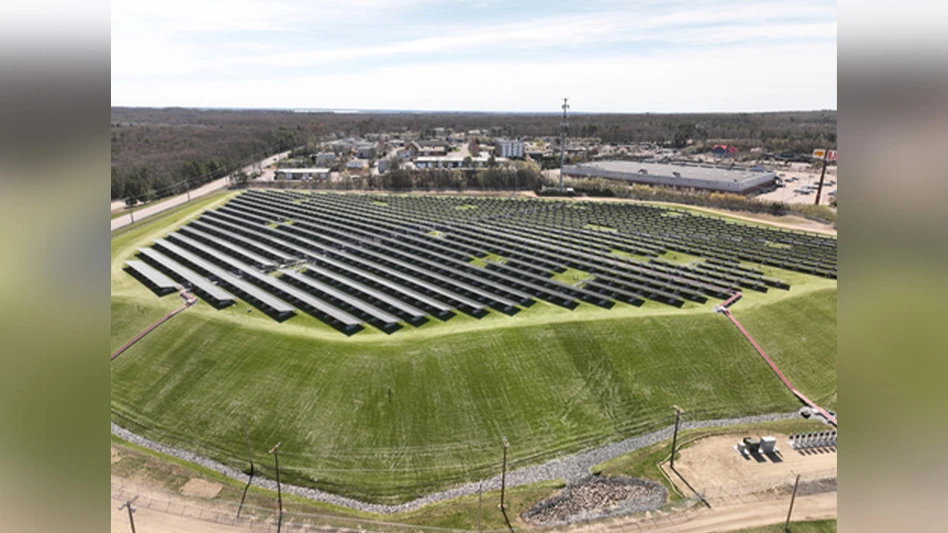
The WTE facility isn’t the only way the LCSWMA produces renewable energy. It also captures energy from the Creswell Landfill in the county, which closed in 1989. LCSWMA partnered with a local utility company to drill wells and install pipes and engines that produce 3.2 megawatts of electricity utilizing the landfill’s methane gas.
The Frey Farm Landfill, adjacent to the closed Creswell Landfill, also produces renewable energy from wind. Through a partnership with PPL Renewable Energy, Allentown, Pa., and Turkey Hill Dairy, wind turbines were installed to harness the wind at the landfill. Located on a bluff overlooking the Susquehanna River, the landfill proved to be an optimal location for wind power. Turkey Hill Dairy operates a plant next to the landfill and uses the electricity for about 25 percent of its power. In 2011, nearly 6.2 million kilowatt hours of energy were produced for the plant.
The LCSWMA also uses solar power at its transfer station and expects to soon power 80 percent of the transfer station with solar. Warner says there are also plans to begin converting fleets to compressed natural gas (CNG).
“Every opportunity we get, we want to put our capital to work, making renewable energy and increasing our return on investment rather than settling for current low-in-treasury yields,” says Warner.
The author is managing editor of Renewable Energy from Waste and can be reached at ksmith@gie.net.
|
Solid Connections James Warner not only serves as CEO of Lancaster County Solid Waste Management Authority (LCSWMA), he also is president of the Solid Waste Association of North America (SWANA). “I began with my local chapter. Here [in Pennsylvania] we have the Keystone chapter,” says Warner. Warner attended SWANA meetings in Harrisburg, Pa., volunteered for a committee, then served on the board and eventually worked his way to chapter president. He got involved on the national level by serving on and leading several technical divisions as well as serving on the international board of SWANA. He then became an officer. This is Warner’s fourth year as an officer. He will serve as president until August 2012 when SWANA will swear in a new president during its annual meeting in Washington, D.C. He will then spend a year as past president. Warner says he got involved in SWANA because it is the industry’s professional group. “If you’re a professional in the solid waste field, you want to participate in your industry’s association so you can measure yourself against your peers, find out what’s going on, and meet others who do what you do,” he says. “I wanted that and leadership, so that is why I took the path that I did.” Warner says he can’t imagine having not been a member of SWANA, citing “all these faces and people that I wouldn’t know.” The best part of being a part of SWANA is the networking, according to Warner. “I’ve just met so many people who do so many neat things in the industry that I’ve taken away and I’ve applied them here,” he says. “SWANA is a great vehicle to become a better waste manager.” |
Latest from Waste Today
- Vermeer announces plan to build new facility in Des Moines metro area
- Buffalo Biodiesel shares updates on Part 360 application to DEC, Tonawanda facility progress
- Capstar Disposal expands roll off dumpster rental services
- Supreme Court strikes down IEEPA tariffs
- Casella details facility closures, expansion efforts
- Zero harm: Building a SIF prevention program for waste and recycling operations
- Casella posts a loss in Q4 2025
- McNeilus names Haaker Equipment first Dealer Partner of the Year