From back-alley route strategy to leadership on the ground level, Star Waste Systems CEO Patsy Sperduto brings decades of industry experience to Boston’s complex commercial waste market.
In the city of Boston, waste collection has never been about merely getting from Point A to Point B. It involves navigating centuries-old streets originally designed for horses and carriages, unpredictable traffic patterns, dense commercial corridors and a maze of alleys that change by the block.
For Patsy Sperduto, CEO of Boston-based Star Waste Systems, those challenges serve not as deterrents but as the reason urban collection still excites him after more than three decades in the waste management industry.
Sperduto talks about walking through a back alley on his first day as a salesperson in the waste industry. “The company I worked for didn’t have many dumpsters there. It’s the same thing now where, when I walk through an alley in Boston, I wonder why Star Waste doesn’t have more customers and have more containers in that alley. I don’t know why—it’s always just enamored me to watch my business build and see it visually.”
Founded in 2018, Star Waste Systems is an independent hauler providing commercial collection, municipal solid waste (MSW) services, roll-off and residential subscription services across New England. While the company is relatively young, Sperduto’s industry background spans nearly 34 years and shapes how Star Waste approaches one of the most operationally demanding markets in the country.
From two routes to a regional footprint
Sperduto launched the company by acquiring existing commercial routes from a legacy operator with deep ties to the city.
“I bought some routes in urban areas of Boston from a company called Jet-A-Way. That was a former large, minority-owned business in the city of Boston that specialized in commercial waste collection,” he says. “We bought two routes and a few hundred customers in the city of Boston.”
From there, growth came quickly and deliberately. Star Waste went on a “run” of 16 different business acquisitions, changing the scope and scale of the company to include rear-load commercial collection in urban areas, front-load collection in suburban areas, roll-off services and MSW collection for Massachusetts towns and cities like Somerville and Chelsea.
Now, Star Waste’s geographic footprint extends from New Hampshire down through Massachusetts’ South Shore and into Rhode Island, with service offerings tailored to the density and constraints of each market.
Photo courtesy of Star Waste Systems;
Designing routes around reality
According to Sperduto, urban collection in a city like Boston presents challenges that routing software alone can’t solve. Traffic congestion, construction, weather and disposal access all complicate the company’s day-to-day operations.
“The biggest challenge for us here is traffic and disposal,” Sperduto says. “The traffic here in Boston is ridiculous—there’s no rhyme or reason for when the traffic happens. There are a lot of accidents, there’s a lot of construction and then there’s the bad weather of the Northeast, being here in New England.”
He says it’s difficult to plan routes, get trucks to customers on time, to the right dump sites and back to the yard.
To work around that unpredictability, Star Waste takes a different approach to route design.
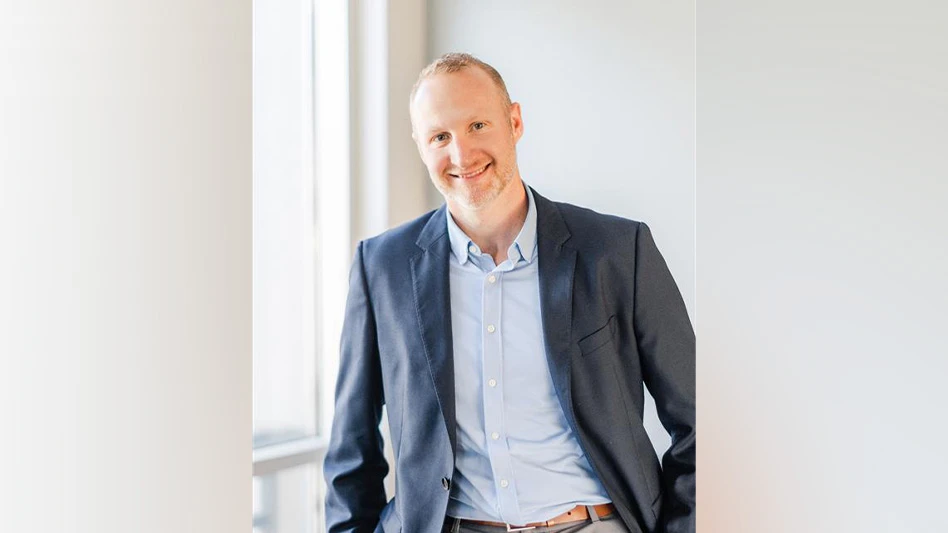
Headshot by Cynthia August Photography
“We go into an area on a straight line and keep on working our way toward the dump site, so that we’re constantly getting closer to the dump site.” — Patsy Sperduto
“We don’t drive around in circles and areas,” Sperduto says. “We go into an area on a straight line and keep on working our way toward the dump site, so that we’re constantly getting closer to the dump site as opposed to driving around an area that’s circled on a map.”
That strategy, he says, allows the company to remain productive while navigating one of the most congested urban environments in the Northeast U.S. “There’s a little different strategy than most, but it’s effective for us, so we’re very productive and efficient,” Sperduto says.
Independence matters
As an independent operator, Star Waste competes daily with national haulers, but Sperduto sees the company’s independence as a structural advantage and not a limitation.
“I’m a lot closer to the ground than a national player,” Sperduto says. “Having a CEO that’s there in the marketplace … allows us to see it, identify it and then respond accordingly.”
That closeness to the street is literal. In Star Waste’s early stages, Sperduto spent time walking Boston’s back alleys in the early morning hours, observing service quality and identifying potential gaps—a habit he maintains to this day.
“I spent a significant point in time in the summer walking through the back alleys and the public alleys in Boston in the early, early morning hours,” he says, “so I can take an assessment of what dumpsters are being serviced when, who’s really good at servicing their customers … and who’s not—figuring out where the opportunities were.”
Balancing efficiency with customer service
Density, while challenging, also creates flexibility, Sperduto says. This rings especially true when routes overlap and service windows are tight.
“The density allows us to figure out a path to being efficient,” Sperduto says. “I think we have enough density and customers in the marketplace now, especially inside of Boston, where we can accommodate almost anybody’s needs.”
That density allows Star Waste to adjust on the fly, shifting drivers and routes without sacrificing service quality.
Sperduto likens the nature of service quality and route efficiency to a puzzle, where the company prioritizes figuring out how its customers fit in with the bigger picture.
“Our slogan is to provide great service, period,” he says. “The customers that we have are so accustomed to how efficient we are and how timely we are in providing those collection services that we’ve been able to do a great job retaining our customer base and growing it.”
Technology challenges
While technology plays a role in Star Waste’s operations, Sperduto says he remains clear-eyed about its limitations in Boston’s uniquely complex environment.
“It’s really unfortunate that the technology for routing in Boston doesn’t work as well as it would in most other cities,” he says. “Boston’s roads were designed for horse and carriage.”
With multiple collection types, access points and disposal variables, routing requires more than algorithms. “It takes a lot more planning, boots-on-the-ground type work and feedback from your drivers than it would in any other marketplace,” Sperduto adds.
At the same time, Star Waste has embraced artificial intelligence (AI) and camera systems across its operations.
“We use AI in all facets of the business,” Sperduto says. “We have the cameras. We’re actually installing the cameras next year into our MRF [material recovery facility], as well, so that we can integrate that operation into AI. But even administratively, all our conference calls are recorded by an AI assistant.”
Control at the curb
Sperduto’s approach to Star Waste is shaped by his decades of experience across the waste industry’s consolidation era. “I started out in the ’90s, and every company at the time kept on getting bought out by Waste Management or USA Waste,” he says.
After spending nearly a decade with Houston-based Waste Management (now WM), he launched his own Rhode Island-based operation in 2006, later selling pieces of it before returning to Boston to develop Star Waste.
Despite technological change and increased investment in the sector, Sperduto believes the fundamentals remain the same today versus decades ago.
“One of my mentors told me that it’s about control at the curb,” he says. “You’ve got to be able to collect it, to get it to your facility, to get it to your landfill, and it doesn’t go in reverse.”
Looking ahead
Today, Star Waste’s growth strategy is tied closely to construction and development across Greater Boston. While Sperduto says Star Waste loves the geographic footprint it’s in, the company is not opposed to expanding farther north and northwest.
As for what’s next, Sperduto says organics also are on the horizon. “We haven’t gone into food waste yet and organics, and there seems to be a lot of chatter about opportunities there,” he says. “It’s one of the things that we’re exploring in 2026.”
Sperduto says the future remains strong and bright for independent urban haulers, especially those with leaders who are willing to stay close to the ground.
The author is associate editor of Waste Today and can be contacted at eandrus@gie.net.