Serving 1.3 million people in the metro Columbus area, the Solid Waste Authority of Central Ohio (SWACO) continuously is looking for new ways to push its message.
SWACO Executive Director Joseph Lombardi says the agency’s mission is to use data to drive decision-making and continue to foster close relationships with the 41 urban and suburban communities it serves. Having an urban landfill, a unique predicament for most municipal waste districts, means being a good neighbor is an utmost priority for SWACO.
“Over a million people are relying on us to help them divert that material away from our landfill,” Lombardi says of the agency. “We’re sitting up in the backyard of a suburban community. We have a great relationship with [Grove City], and we continue to work with them. We want to be a good partner; we want to be a good neighbor.”
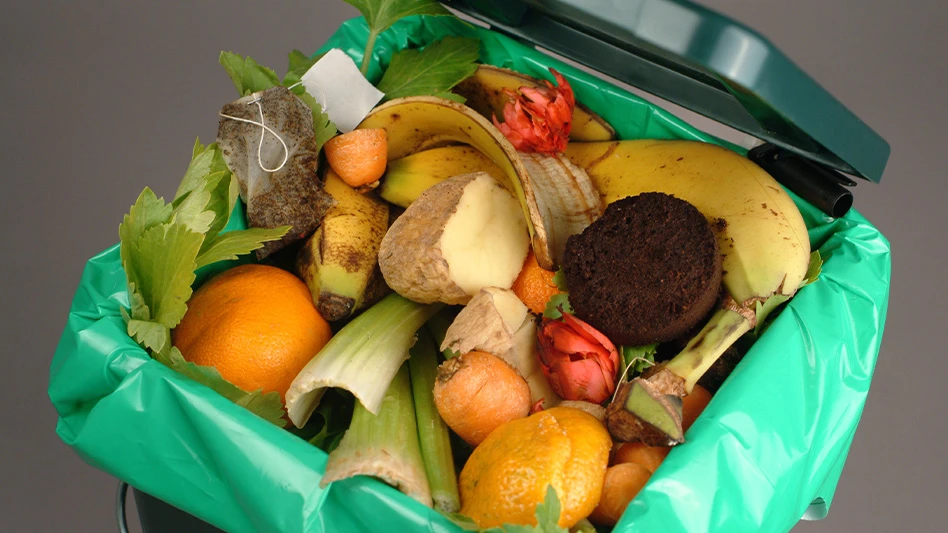
To reduce the region’s reliance on the landfill and increase diversion efforts, SWACO programs focus on reduction, reuse and recycling, with the agency spearheading initiatives such as the Choose to Reuse campaign, an education and outreach initiative to reduce materials sent to landfill, and the Save More than Food program, a resource hub for food donation, composting and food waste reduction.
SWACO’s most recent initiative is its Greenprint road map to divert hard-to-recycle materials. The one-year, five-year and 10-year plans outline strategies to target mattresses, textiles, batteries and more.
The program is an example of what Lombardi describes as “thinking boldly,” something he says is necessary when tackling complex waste streams.
“I think a lot of what I’ll call ‘legacy’ programs, … they’re doing a great job, but to really move the needle, and to really make sure that our mission and our vision get accomplished, you have to think boldly,” he says. “You have to think outside of your normal day-to-day program … and what more can you do to provide that service to your customers.”
The most impactful method of raising recycling rates and preserving landfill space, Lombardi says, is consistent communication with residents and businesses.
“You have to just continue to pick everybody off one at a time,” he says. “We have our champions, right? You have those folks who you know are going to really home in on what we’re trying to do here. … Then, you have that middle group that … want to do well, they just want to know how [to] do better. And so, you have to work with them.
“Obviously, there are skeptics everywhere, and you have to just continue to push the message and to show proof and to show the data … that this is real.”
Through its programs and services, SWACO has stood true to its goals, achieving a 53 percent diversion rate in 2024. By 2032, the agency aims to reach a 75 percent diversion rate.

History of SWACO
Prior to House Bill 592 (H.B. 592) passing in 1988, Ohio’s solid waste regulatory program was limited, having been based on a law adopted in 1967 and regulations adopted in 1976.
According to the Ohio Environmental Protection Agency (Ohio EPA), a lack of comprehensive regulations led to several issues regarding the state’s waste management practices, such as decreased landfill capacity, a lack of planning for new facilities and limited public involvement.
As part of H.B. 592, the boards of county commissioners for each of Ohio’s 88 counties were required to establish a solid waste management district, either individually or with other counties. This decision led to the formation of SWACO, one of the state’s 52 solid waste districts.
Based in Columbus, SWACO’s operations include a landfill, two transfer stations and a recycling convenience center for hard-to-recycle materials. The landfill, spanning 535 acres with 335 acres permitted for disposal, handles 1.25 million tons annually, while the two transfer stations handle a combined total of roughly 560,000 tons. Opened in 2023, the recycling convenience center diverted 132 tons of recyclable materials in 2024.
“We’re unique in the fact that we actually own and operate the landfill and also provide the programming and education portion,” Lombardi says. “A lot of the districts do just the education and the programming, and their landfills are usually owned and operated through a private company.”

A homegrown team
Lombardi, Assistant Executive Director Scott Perry and Director of Communications Hanna Greer-Brown are at the helm of these efforts. With 32 years of experience with the city of Columbus in various administrative and executive positions, Lombardi came to SWACO in 2022. Before this, he served as the director of finance for Mayor Andrew Ginther’s administration.
Perry has been with SWACO since 2007. He held various positions across the agency’s operations, including equipment and vehicle maintenance manager and senior landfill and equipment manager, before transitioning to executive leadership 11 years ago. Most recently, Perry served as director of operations and maintenance before taking on his current role in 2022.
Having built her career in the public sector, Greer-Brown came to SWACO in 2015. She worked as a public affairs director for Franklin County before handling communications within SWACO’s Innovation and Programs department. About a year-and-a-half ago, she was promoted to her current role of director of communications. Together, alongside a staff of 140 employees, the team actively works to preserve airspace at the Franklin County Sanitary Landfill, situated outside SWACO’s office.
Every five years, SWACO commissions a solid waste characterization study to better understand the region’s waste stream. Since beginning these routine studies, the agency has discovered that 76 percent of waste landfilled can be diverted through reuse, recycling or composting.
“The largest material by percentage of all [central Ohio’s waste] is food waste,” Lombardi says. “That is what we found in our latest waste characterization study, … that food waste made up 15 percent of all the material that came [to the landfill].”
Cardboard and hard-to-recycle materials such as mattresses follow close behind and are areas SWACO aims to address through its services and community outreach and education.
“We … see our ownership of the landfill and [the] mandate to help residents reduce the reliance on landfill as a holistic approach to the waste stream,” Greer-Brown says. “We’re able to monitor what’s coming to the landfill—essentially what’s being thrown away—and develop diversion programs to help capture more of that.”

A community approach
For recycling, SWACO works closely with the private sector, including Rumpke Waste & Recycling, an Ohio-based waste management firm. In 2024, Rumpke opened a $100 million material recovery facility in Columbus capable of processing up to 250,000 tons of materials per year, to which the agency sends its recyclables.
SWACO also oversees Rumpke’s Recycle Right campaign, which was launched in 2018 to help residents and companies understand what materials are accepted through curbside recycling programs.
SWACO partners with local composters to process food and yard waste collected through its Save More Than Food campaign, an effort launched in 2021 as a pilot with the city of Upper Arlington. Through an Ohio EPA grant and a partnership with Ohio State University, SWACO collected data from the campaign, finding that households in targeted communities reduced food waste by 21 percent and participation in the food waste drop-off program increased by 40 percent.
In addition to diverting food waste from landfill, a priority of the Save More Than Food campaign is reducing food waste at the source.
“We received nearly a million pounds of food waste [at] the landfill every single day; it’s quite significant. And we know a large portion of these materials are leftovers,” Greer-Brown says.
Using this data, SWACO developed its Fresh Takes initiative, aimed at reducing waste through prevention and donation. The initiative’s webpage, found on the SaveMoreThanFood.org website, offers information on how to reduce food waste at home through food storage tips, meal planning and encouraging the use of leftovers.
The agency also has several programs for central Ohio businesses, including the Business Recycling Champions program in partnership with the Columbus Chamber of Commerce. Through the program, local businesses can tap experts at SWACO for technical assistance on how to set up recycling programs.
To encourage participation, SWACO provides financial incentives such as paying for new containers or arranging for six months of free hauling with a third-party provider of the business’ choice. The agency also will provide signage and other materials to help prevent contamination.

Moving the needle
To further a more circular approach to waste management, the Franklin County Sanitary Landfill hosts a landfill gas-to-renewable natural gas unit. The unit was commissioned by Archaea Energy, a business unit of BP, in 2013.
The landfill also is one of the first in Ohio to conduct an overfill pilot in coordination with the Ohio EPA to examine whether waste settles back down to permitted heights over a set time interval at sites nearing capacity. With only 40 years of capacity left at SWACO’s landfill, Perry says it can help prolong the site’s life.
“We started that conversation a few years back, and Ohio EPA was a little leery for us to do that,” Perry says.
“We’ve never done it here in Ohio; other states have done it. So, we have confidence that what we did will work, and we think it’ll be a model for other landfills throughout Ohio,” he adds of the pilot.
SWACO’s sweeping initiatives to reduce waste can be seen firsthand in the results of its most recent waste characterization study.
Completed in 2022, the results documented that 89 percent of central Ohioans surveyed support the agency’s goals to increase diversion, 87 percent of residents reported that recycling is easy and convenient and 2 out of 3 residents correctly identified what’s accepted for recycling.
“I think that’s a testament to the work that we’re doing and speaks to the value that central Ohioans place on their ability to … recycle,” Greer-Brown says.
“[While] not 100 percent, we still have some work to do there, … we felt pretty good that [most] residents are able to identify what’s accepted.”
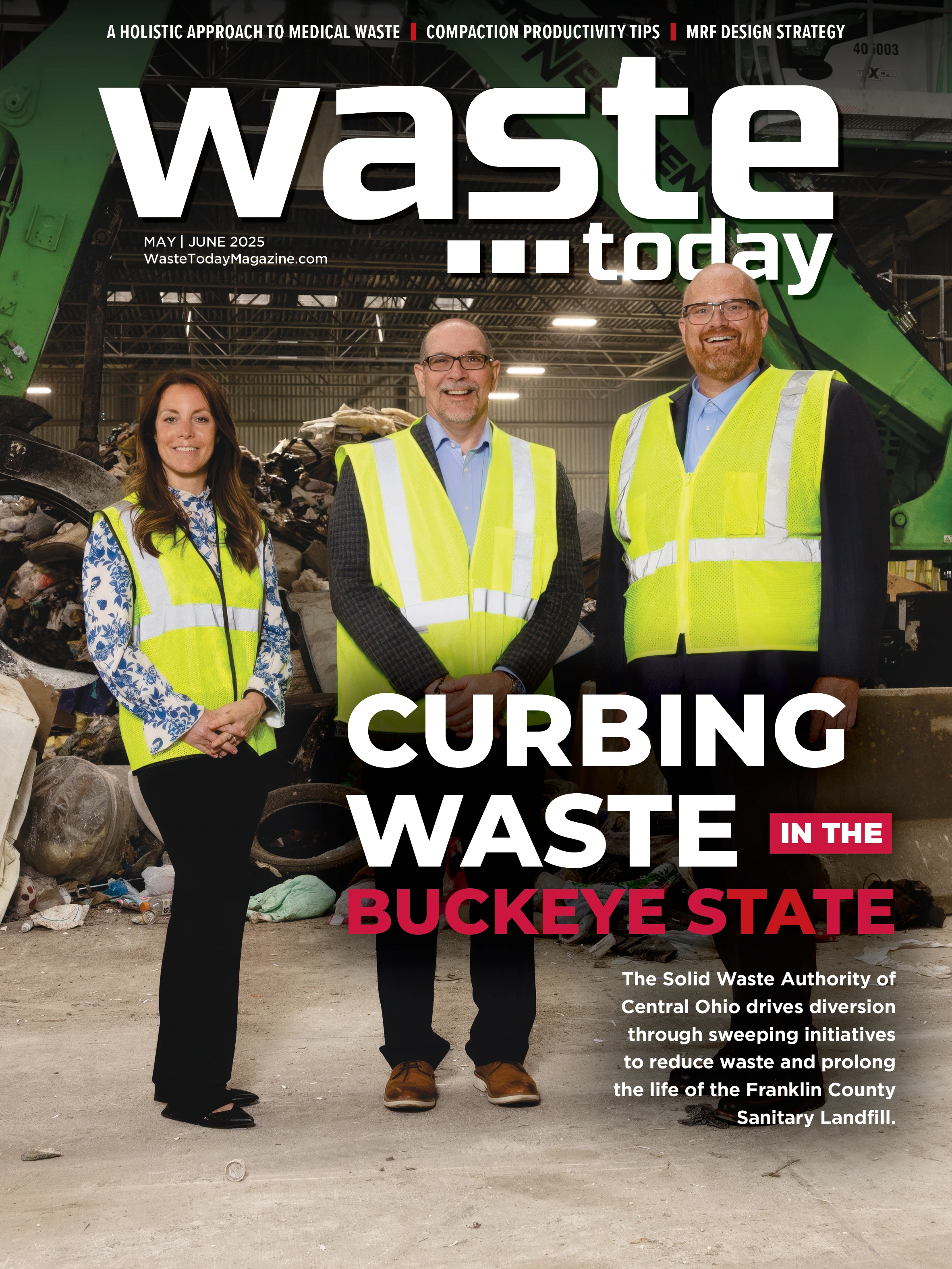
Explore the May/June 2025 Issue
Check out more from this issue and find your next story to read.
Latest from Waste Today
- Fleetio launches AI capability to accelerate fleet maintenance approvals
- Recycle Ann Arbor extends drop-off station operating hours
- Sybilion seeks to help manufacturers confidently address volatility
- Ecowaste Solutions partners with city of Trinity, Texas
- Bristal Hauling acquires G&R Garbage Disposal
- Baltimore trash collection expected to slow as WTE facility closes for maintenance
- Landfill Insights | Connecting the dots: Policy to practice
- FCC Environmental Services awarded collection contract in Florida