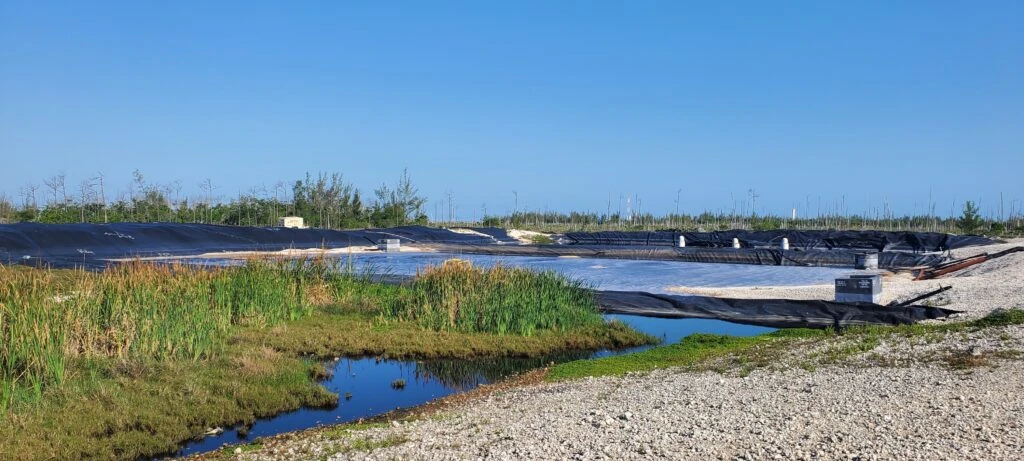
A study published earlier this year in the Journal of Hazardous Materials highlighted the potential uses for landfill leachate in industrial and agricultural sectors, and the value of incorporating integrated systems to treat leachate before it is discharged. Based on analysis of the leachate pollution index (LPI), higher amounts of organic waste present in landfills increase the potential for pollution resulting from leachate. Countries with high levels of pollution from leachate also tend to lack higher-level techniques for waste management.
Read more about the "Progress and prospects in mitigation of landfill leachate pollution" study here.
A review of electrochemical methods for landfill leachate treatment was also published this year, in Science of The Total Environment. The article compares different electrochemical methods for landfill leachate treatment and explains how the shape of electrodes can increase the efficiency of the electrocoagulation method. The electrocoagulation process uses an external power source and a reactor to remove suspended solids in leachate to sub-micrometer levels and it also breaks down emulsions such as oil and grease.
The authors suggest that electrooxidation can actually offer an even more efficient process for treating landfill leachate. Also known as electrochemical oxidation, this method uses a supporting electrolyte along with an energy input to encourage the formation of strong oxidizing species that will degrade the contaminants.
A third study published this year appears in the 2022 edition of Current Pollution Reports. Researchers analyzed leachate samples from 145 waste disposal sites within a tropical climate zone. They found negative correlations between pH of leachate and concentrations of heavy metals. This is because heavy metals have lower solubility at higher pH levels. The study also includes an analysis of LPI; engineered landfills had lower LPI than did open dump sites.
The review proposes that optimal leachate treatment at stabilized landfills includes physical and chemical approaches like membrane separation methods rather than biological processes due to limited biodegradability of stabilized landfills.
A biological treatment method could be more effective with landfill leachate that has a higher ratio of biochemical oxygen demand (BOD) to chemical oxygen demand (COD), according to the study.
Latest from Waste Today
- Vecoplan to present modular solutions at IFAT 2026
- Terex Ecotec appoints Bradley Equipment as Texas distributor
- My Green Michigan expands depackaging capacity
- Washington selects Circular Action Alliance as PRO
- Ten-8 Industrial opens new central Florida service center
- Triumvirate Environmental acquires Environmental Waste Minimization
- Official NYC Bin availability expands ahead of deadline
- US Food Waste Pact’s 2025 Impact Report shows decrease in food waste