Energy recovery from waste—i.e., waste-to-energy—involves the conversion of predominantly non-recyclable waste material into usable energy in the form of electricity, heat, or fuel. This process is achieved in several ways, such as combustion, anaerobic digestion, landfill gas recovery, gasification, or pyrolization (thermal decomposition).
Considered a renewable and reliable energy source, WTE is becoming standard practice for many solid waste management companies as one of the most common waste disposal methods. Often an expensive process, WTE suffered from emissions issues in the past, but those are largely resolved.
Hiroshan Hettiarachchi and Chandrashekar Kshourad write in their 2019 book Current Developments in Biotechnology and Bioengineering that they consider WTE underutilized. They also believe that increasing waste flow from a growing population will make WTE the only practical waste disposal option, particularly in large cities—with the added attraction of making the process carbon-neutral by restricting incineration to non-fossil-fuel-derived waste materials. This allows WTE to outperform landfills as a form of waste management and coal- and oil-based energy production as a form of renewable energy, according to them.
Differences Defined by Policy
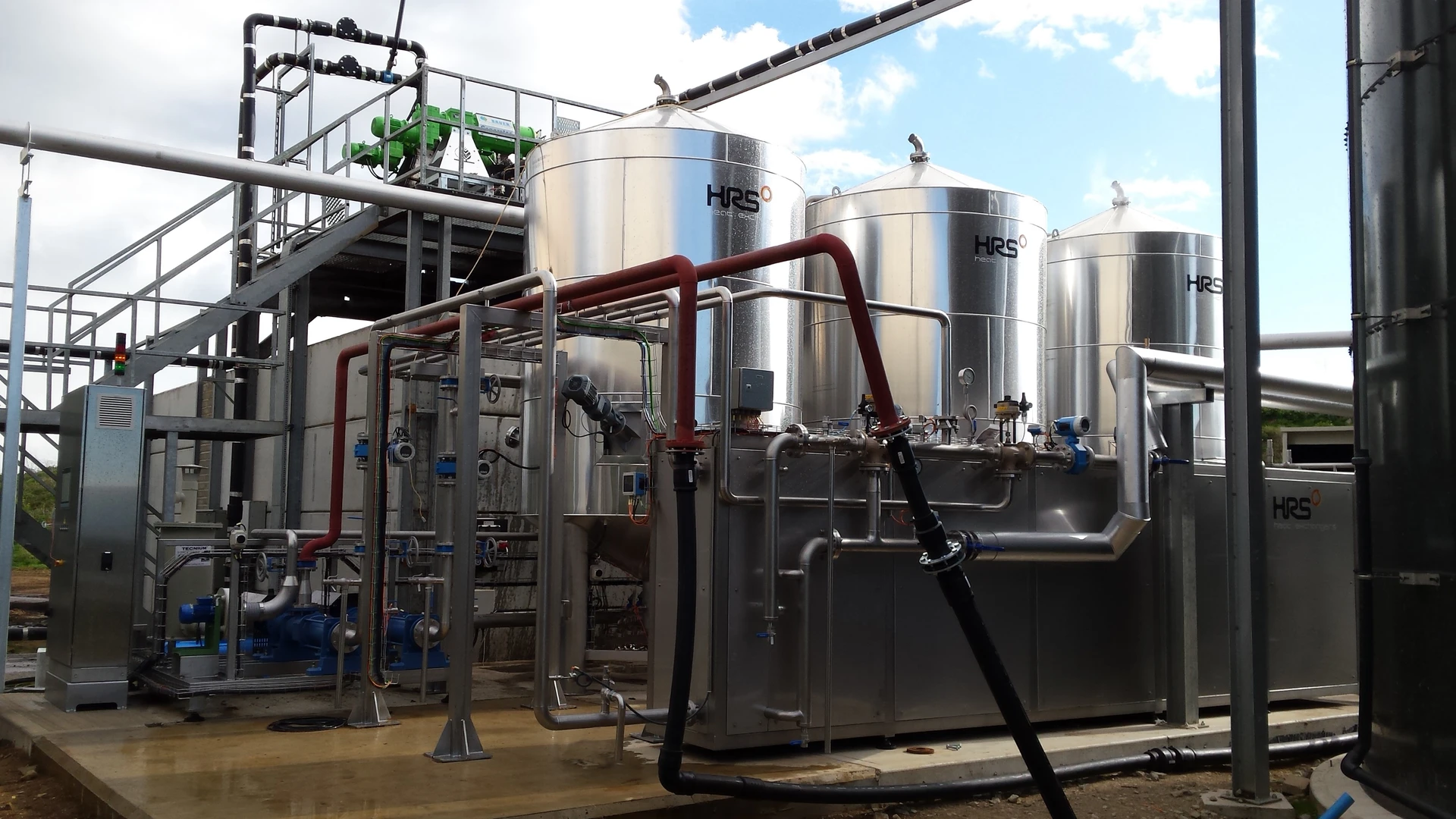
Different renewable technologies have very different challenges, says Matt Hale, international sales and marketing director for HRS Heat Exchangers. “However,” he adds, “with any renewable technology it is important to maximize the environmental and economic benefits, usually by making sure that the technology used is as efficient as possible.”
For example, utilizing heat from a biogas combined heat and power engine at an anaerobic digestion plant will not only increase the efficiency of the plant but may also allow the use of technology to pasteurize and/or concentrate digestate, which improves the economic value and makes it easier to handle.
It isn’t always about using the newest equipment, Hale continues. “What we often find is that technology that is well-established in some markets, such as Europe or Australia, is not always exploited elsewhere. This is often due to differences in government policies, which aim to support renewable energy.”
One example is the difference in the way that digestate from anaerobic digestion is perceived around the world. Where it is seen as a valuable, renewable organic biofertilizer, treatment systems such as the HRS Digestate Pasteurization System and Digestate Concentration System have been adopted, but markets such as the United States are just beginning to see its benefits, due to the historical views of digestate.
Hale says the DCS has been successfully used in Europe, where its benefits include reducing the volume of digestate, along with the associated infrastructure and handling costs, and, because of the way it works, an increase in the nutrient content of the treated digestate while losses of ammonia to the atmosphere are minimized.
California Dreaming of Anaerobic Digestion
Fortunately, says Andrew Benedek, chairman and CEO, Anaergia, the US has “good incentives” for renewable net gas. California has become a major focal point for incentives and requirements. New regulations to get organics out of landfills were implemented in late 2020,” he notes.
Organic waste—food, green waste, lumber, and other organic materials—is the single largest disposal stream in California, at about 41% of the 31 million tons of material sent to landfills annually. That’s why CalRecycle prioritized “Moving Organics Out of the Landfill” as a strategy to reach a 75% reduction of organic waste going to landfills by 2025. Under SB 1383, signed by Governor Brown in 2016, CalRecycle attained regulatory authority in reaching that target and an additional target to reduce pollutants such as methane, along with a third target to recover 20% of disposed edible food for human consumption. The state legislature also passed the Mandatory Commercial Organics Recycling law requiring commercial generators of organic waste to recycle it rather than sending it to a landfill.
In addition to establishing benchmarks, the Golden State invested in recycling infrastructure such as in-vessel digestion operations to transform food and other organics into carbon-neutral renewable energy. California Climate Investments has already allocated $72 million to the waste sector and additional grants of $5 million have contributed to various projects.
Policies regarding organics at the local level have also been implemented in cities such as Los Angeles. Waste Management and Republic Services have joined the movement by purchasing Anaergia’s Organics Extrusion Press pre-processing technology or sending material to the Rialto Bioenergy Facility, the largest anaerobic digester of its kind. One of Anaergia’s projects, Rialto has the capacity to transform up to 700 tons of food waste and 300 tons of biosolids into renewable natural gas and fertilizer every day.
“Anaerobic digestion can be more expensive,” Benedek says, "but you get good value." But he believes the cost is the only downside. Anaergia’s system captures all gas that escapes from landfill diversion, so there are fewer environmental issues.
What they’re doing in Rialto is extracting food waste from trash. No source separation. No separate collection. “Organics in American waste is 30%,” Benedek estimates. “Food waste is 85%.” By extracting food waste, he believes they capture 85-90%, as opposed to only 25% if they required residents to source-separate. There's a cost-saving gained by not having to pay for separate collections.
Once extracted, the food waste goes into an anaerobic digester for the energy transformation, leaving the undigestible parts of the green waste for another wastestream. Benedek says that this separation results in the “maximum amount of energy and quality fertilizer.”
Anaerobic digestion is a simple process, he continues. But he admits that it can be pricey, particularly with upfront costs. However, it produces renewable natural gas, which nets a profit that can pay for the plant.
Besides, he says, in-vessel composting isn’t cheap, either, and there’s a limit on how much food waste can be composted. Composting also requires energy, whereas anaerobic digestion creates energy—energy that can be sold for a profit. “It’s a painless way of handling organics and improving the environment at the same time,” Benedek concludes. “And we’re not asking consumers or waste management companies to change their behavior.”
Calling it a win-win-win for government, people, and the environment, Benedek says, “This is doable.” He’s willing to put his money where his confidence is by offering to finance it, making it a no-risk investment, but he’s noticing a “stronger push than five years ago” and says the pandemic accelerated it.
A Better Biomass
To eliminate some of the wood and vegetative waste that anaerobic digesters don't deal with, Air Burners, Inc. has created the PGFireBox, a new option for biomass energy generation. “Some studies estimate that 20% of the total world waste is comprised of wood and vegetation,” says Brian O’Connor, president. Sometimes considered a “forgotten waste,” it is often open-burned or dumped and left to decompose. Both practices significantly impact our environment and are among the predominant contributors to climate change.
One difficulty with biomass energy in today’s systems is the necessary pre-processing—specifically, grinding. “All of the waste must run through very large grinding machines,” O’Connor explains. Sometimes it has to go through twice to reduce the size of the material sufficiently for conveyors to accommodate it.
“The irony is that we have now taken a naturally burnable product and turned it into a non-burnable product,” O’Connor continues. Ground chips don’t burn; they smolder because they’re too dense to support combustion. As a result, 10-20% natural gas must be introduced to support combustion. “Now we have a grinder consuming upwards of 100 gallons of diesel fuel per hour to pre-process the waste, and then added hydro-carbon fuels to support combustion, which is far from ideal environmentally and the main reason biomass energy has been so expensive.”
Instead, New Technology Air Burners’ machines allow clean wood and vegetative waste to combust naturally, without pre-processing. As O’Connor explains, the machines called Air Curtain Burners use a technology known as Air Curtain to trap and control the smoke particulates. These machines are not incinerators; they don’t have any appliances to promote combustion. The waste material they burn must be able to support combustion naturally.
"The Air Curtain machine is a pollution-control device for open burning," O'Connor summarizes. They've been used for more than 24 years and have been tested by environmental agencies such as the U.S. Environmental Protection Agency.
From this time-tested technology, Air Burners developed a new type of biomass energy system: the PGFireBox, which O’Connor believes will revolutionize the battery-powered industrial vehicle market. It eliminates waste created by equipment at construction clearing and forestry sites by capturing heat and routing it through the Power Module, where it expands a working fluid and spins a turbo generator, thus creating electricity.
The electricity created throughout the day is stored in onboard batteries. At the end of a shift, the vehicles can be plugged in and charged overnight. "We have eliminated the waste," O'Connor states. They have also eliminated the need for diesel fuel.
Alternatively, the machines can operate via a connection to the grid, like a standard biomass energy plant, but do not require pre-processing of the waste and don’t need a permanent structure. Because they can be easily relocated, there is no “waste travel zone”—the distance waste must travel to be eliminated. “Typically, this cannot exceed a 50-mile radius, as the cost and emissions will reach an unacceptable level,” O’Connor notes.
The Air Burners PGF100 costs about the same as a grinder, O'Connor estimates. It can eliminate up to 13 tons of waste per hour or more than 500 tons per week, and power three or four industrial machines a night, providing an impressive return on investment. O’Connor says it’s usually a lower cost option for local waste than grinding and hauling to a landfill or large biomass facility.
Cleaning Energy
No matter what you’re doing with the energy produced from waste, you have to clean it of H2S. H2S—hydrogen sulfide—is a chemical compound that is colorless but definitely not odorless. It smells like sulfur or rotten eggs. Poisonous, flammable, and corrosive, it is found in drywall and wastewater and is a product of natural gas and crude oil.
Interra Global, a desiccant supplier, has created a product to remove H2S from gas streams, digestors, and landfills. Their proprietary granular media changes H2S into sulfur as part of the removal process. “It’s an important step,” states Gary Byers, director of the biogas division.
Emissions rules state that sulfur must be removed. “You could be fined by the EPA if sulfur is not removed,” Byers advises. Besides, if you don’t remove sulfur, it becomes sulfuric acid, which corrodes piping and equipment.
It’s a simple process of running a pipe into a tank filled with 1/8th of an inch of Interra Global’s pellets, which capture the H2S. “The gas flows out, clean,” Byers says, carefully pointing out that the product doesn’t remove other chemicals: just H2S.
A vacuum truck removes the used pellets, which can then be disposed of safely in the landfill because they are nonhazardous when disposing. The removal rate of Interra Global’s product is 40-50%, compared with a removal rate of 10-30% for their competitors. “This is more efficient because it lasts longer,” Byers states.
In addition to lasting longer between change-outs, the product offers removal efficiency. It’s an easy process to vacuum out. That saves costs, labor, and downtime. He references one landfill that generates $100,000 a day in electricity. “They don’t want to be down for maintenance.”
There are biological ways to remove H2S, Byers reveals, but if they go down, Interra Global offers a temporary mobile unit. A roll-off on wheels, this mobile unit can be situated by a cell at a landfill. “We can put them anywhere,” he confirms. “There’s no need for a whole gas plant. We remove H2S at the source.”
They currently have enclosed vessels at five landfills for temporary use. The simple process involves filling the vessel with the pellets and using PVC piping to convey the gas. “It removes all the H2S,” Byers emphasizes. “Not all products do.” That eliminates the need for a secondary removal system, saving even more money.
Latest from Waste Today
- Vecoplan to present modular solutions at IFAT 2026
- Terex Ecotec appoints Bradley Equipment as Texas distributor
- My Green Michigan expands depackaging capacity
- Washington selects Circular Action Alliance as PRO
- Ten-8 Industrial opens new central Florida service center
- Triumvirate Environmental acquires Environmental Waste Minimization
- Official NYC Bin availability expands ahead of deadline
- US Food Waste Pact’s 2025 Impact Report shows decrease in food waste