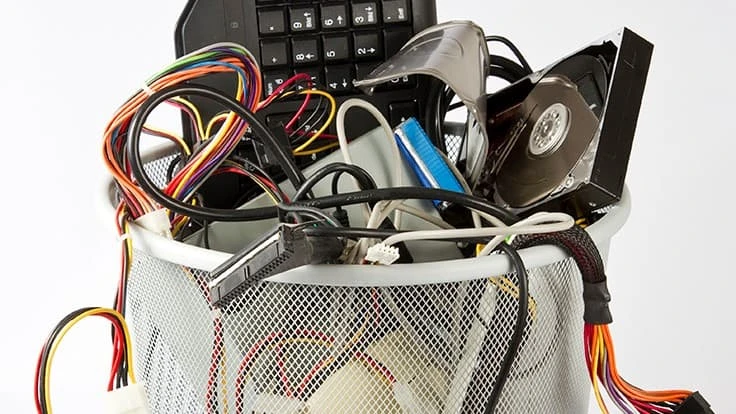
The world’s mountain of discarded flat-screen TVs, cellphones and other electronic goods grew to a record high last year, according to a study released by The Global E-Waste Statistics Partnership.
As reported by the Associated Press, the U.N.-backed study estimated the amount of e-waste that piled up globally in 2019 at 59.1 million tons—almost 2 million metric tons more than the previous year.
The authors of the study calculated the combined weight of all dumped devices with a battery or a plug last year was the equivalent of 350 cruise ships the size of the Queen Mary 2.
Among all the discarded plastic and silicon were large amounts of copper, gold and other precious metals — used for example to conduct electricity on circuit boards. While about a sixth of it was recycled, the remainder of those valuable components — worth about $57 billion — weren’t reclaimed, the study found.
Discarded electronic equipment also poses a health and environmental hazard, as it contains substances such as mercury that can damage the nervous system.
The authors of the study, which is produced by the U.N. University, the International Solid Waste Association (ISWA) and others, predicted that global e-waste could grow to 74 million metric tons by 2030.
Latest from Waste Today
- The BDP compost system
- WM opens 2 new MRFs in Ontario
- Liberty Waste Solutions acquires AJ Disposal
- RecycleNation helps people find nearby recycling facilities
- Hoffman Sanitation Services acquires Lake Texoma Trash Service
- Ecowaste Solutions acquires Howie’s Enterprises
- Fornnax appoints new sales partner in Germany
- Super Bowl LX will implement reusable cup program, AI recycling systems