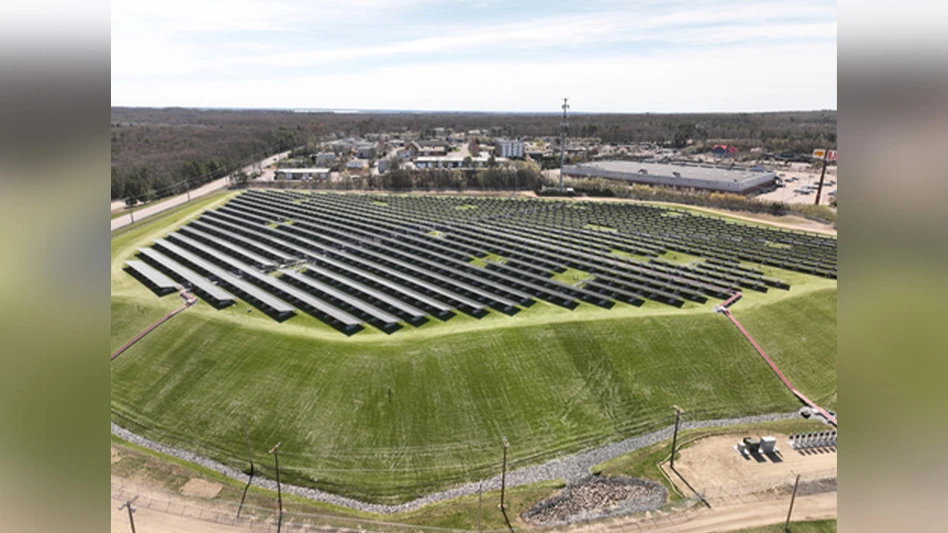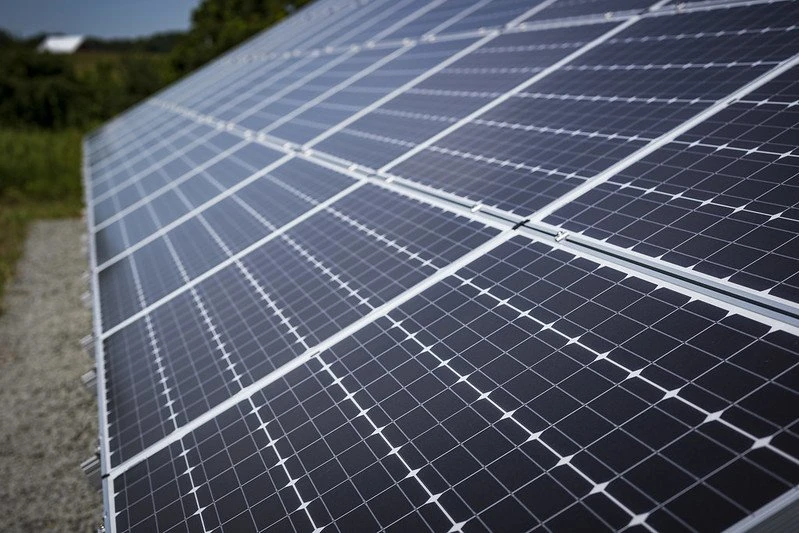
In the mid-2000s, California’s Public Utilities Commission began incentivizing the installation of solar panels by offering $3.3 billion in subsidies through the California Solar Initiative. Solar power now provides 15% of the state’s overall power, compared to 3% of U.S. electricity that is generated from solar energy. However, the state never established a plan to dispose of these solar panels at the end of their life cycle—usually about 25 years. And even though 80% of a standard solar panel, or photovoltaic panel, consists of recyclable materials, it can be tricky to take apart a panel and recover glass and other materials.
More and more solar panels will reach the end of their life cycle in the 2030s, and if they can’t be recycled, they will end up in landfills. There, they run the risk of groundwater contamination from toxic heavy metals like lead in the photovoltaic panels.
“The industry is supposed to be green,” said solar expert Sam Vanderhoof of Recycle PV Solar, quoted in an LA Times article on the topic. “But in reality, it’s all about the money.”
Estimates indicate that only 10% of solar panels actually end up being recycled. The state of California has a rigorous permitting system for toxic materials, meaning that solar panels will likely have to be transported to another state to be recycled.
AJ Orben of We Recycle Solar remarked that the economics of the process of recycling solar panels do not make a compelling case. It costs anywhere from $20 to $30 to recycle a single solar panel, and the recovered materials are worth just $2 to $4. Meanwhile, sending a solar panel to a landfill only costs a dollar or two.
The California Department of Toxic Substances has predicted that California will see hundreds of millions of solar panels installed over the next 10 years. The problem of what to do with these solar panels is becoming increasingly more urgent.
Rachel Kisela writes in the article for the LA Times that one strategy to solve this problem is extended producer responsibility. This means that the producer of a product has to build the cost of recycling into its price. The concept has already been applied in Europe, where companies manufacturing solar panels must finance collection and recycling for the products’ end of life. The only similar legislation in the U.S. will not take effect until 2025, when the state of Washington will require solar panel manufacturers to finance end-of-life recycling.
Silver and silicon are two of the most valuable materials that can be recaptured from solar panels, according to an article published by the MIT Technology Review. ROSI Solar is one of a few companies aiming to recycle solar panels and extract the materials that have value. The company expects to open a new recycling plant in France by the end of this year. Another company, Veolia, opened a recycling facility that accepts solar panels and uses a mechanical recycling process to extract materials that can be sold for use in industrial applications.
The Solar Energy Industries Association has created a member-based program called the PV (photovoltaic) Recycling Working Group to compile a list of approved recycling partners, simplifying the process for members to find and contract a recycling vendor. Many of the manufacturers recommended by SEIA also offer product take-back and recycling programs.
Latest from Waste Today
- Vermeer announces plan to build new facility in Des Moines metro area
- Buffalo Biodiesel shares updates on Part 360 application to DEC, Tonawanda facility progress
- Capstar Disposal expands roll off dumpster rental services
- Supreme Court strikes down IEEPA tariffs
- Casella details facility closures, expansion efforts
- Zero harm: Building a SIF prevention program for waste and recycling operations
- Casella posts a loss in Q4 2025
- McNeilus names Haaker Equipment first Dealer Partner of the Year