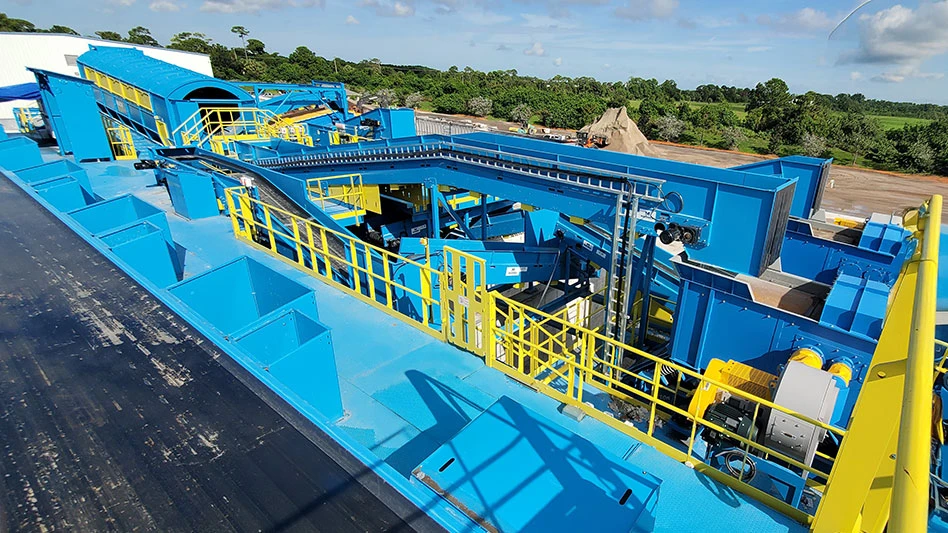
Alliance BioEnergy Plus Inc., West Palm Beach, Florida, has highlighted its research on the economics of its patented Cellulose to Sugar (CTS) conversion process compared with traditional corn-based cellulosic ethanol production and the financial benefits of its recent efforts to establish a local cellulosic ethanol production plant.
The company says its competitive industry research found that using corn stover as feedstock for the enzymatic conversion process projected the cost of a gallon of ethanol to be well above $3.50. Alliance’s patented CTS process eliminates the need for pre-treatment, enzymes, liquid acids, applied heat and pressures, by utilizing a mechanical/chemical system which processes multiple cellulosic feedstocks continuously, bringing the projected cost down by approximately 74 percent to $0.91 per gallon.
The company is negotiating to acquire the first plant of its own and intends to retrofit the facility to the patented CTS process by early 2018. With an initial capacity of 8 million gallons per year of cellulosic ethanol, this new facility should generate profits upwards of $25 million in year two, increasing to $55 million in year five as capacity is doubled and $112 million in year seven as it is brought to maximum capacity, says the company.
“We’re excited to be leading the research and plant development efforts that could steer our society in a direction where we’re no longer dependent on petroleum and can instead turn to noncorn-based ethanol,” says Daniel DeLiege, CEO, Alliance BioEnergy Plus Inc. “We have a groundbreaking solution that allows us to create the fuel we need from the waste we don’t, all at a cost that is significantly cheaper for commercial purposes. Ultimately, consumers will pay less to be more environmentally friendly.”
The company is working with the county landfill to reuse organic commercial and residential green waste for ethanol production. The ability to shift away from carbon and to ethanol reduces a producer’s carbon footprint by 80-90 percent however, with the company’s ability to reuse waste, the carbon footprint is negated, creating a positive impact on the surrounding environment while supplying fuel.
Latest from Waste Today
- Vecoplan to present modular solutions at IFAT 2026
- Terex Ecotec appoints Bradley Equipment as Texas distributor
- My Green Michigan expands depackaging capacity
- Washington selects Circular Action Alliance as PRO
- Ten-8 Industrial opens new central Florida service center
- Triumvirate Environmental acquires Environmental Waste Minimization
- Official NYC Bin availability expands ahead of deadline
- US Food Waste Pact’s 2025 Impact Report shows decrease in food waste