Konstantin Kulikov | stock.adobe.com
The Aluminum Association, Arlington, Virginia, has released the white paper “Scrap the Exports, Save U.S. Supply: Treating Aluminum Scrap as a Strategic Asset,” outlining what it describes as “the urgent need for federal action to keep more aluminum scrap at home to support America’s manufacturing base” by restricting the export of high-quality scrap.
The Aluminum Association is not the first organization to call for such restrictions on aluminum scrap exports. Joe Quinn, executive director of the Center for Strategic Industrial Materials at SAFE, also calls for “narrowly scoped export restrictions on high-grade, processable aluminum scrap” in an essay he wrote this summer.
According to the Aluminum Association, the U.S. consumes 5-6 million metric tons of aluminum scrap annually while exporting more than 2 million metric tons as well as domestic and imported primary aluminum, two-thirds of which is from Canada. This primary aluminum often is used in national security applications such as body armor, tanks and fighter jets. Increasing domestic scrap supply would free up more primary aluminum to support the American warfighter, the Aluminum Association says.
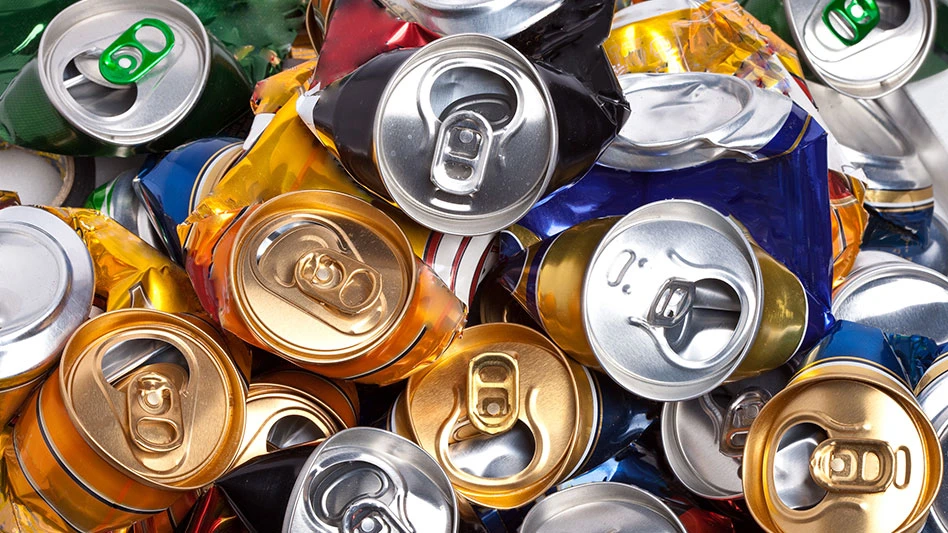
The Aluminum Association is calling for export restrictions on used beverage cans (UBCs) and similarly high-quality scrap that can be used by the industry today, not on lower-quality scrap streams like zorba and twitch. It says such an approach would minimize disruption to the current market and provide time for the industry to improve domestic sorting and processing technology to better use other types of scrap.
“By focusing only on the scrap we can use and value most, we make sure that American recyclers win and that lower-grade scrap still finds a market abroad until we’re ready to process more of it here,” says Charles Johnson, president and CEO of the Aluminum Association.
The organization is calling for trade-specific controls for aluminum scrap generated in the U.S.:
- An immediate ban on UBC exports outside of North America, where the free flow of UBCs is essential to regional industry.
- Updated U.S. Harmonized Tariff Schedule (USHTS) codes and other tracking mechanisms to better monitor aluminum scrap flows and enforce restrictions.
- Investment in new technology to improve scrap collection and sorting, including passing the bipartisan CIRCLE Act.
- Potential expansion of export controls to other types of mill-ready scrap over time as tracking and infrastructure improve.
Scrap exports have increased in recent years and often end up in nonmarket economies such as China (either directly or through third countries), where they become new products that unfairly compete with American-made goods, the Aluminum Association says. Today, the U.S. runs an approximate 1.3 million metric ton trade deficit in aluminum scrap, though that gap has narrowed recently given trade and tariff policies.
However, in recent years, the U.S. industry has invested more than $11 billion in new and expanded operations, including two, new multibillion-dollar aluminum rolling mills from Steel Dynamics Inc.'s Aluminum Dynamics and Novelis. According to the Aluminum Association, these rolling mills will consume “an enormous amount of scrap aluminum,” and keeping more of this material at home will support these investments.
“Scrap aluminum is a vital feedstock for American manufacturers, especially at a time when U.S. aluminum firms are investing and need reliable and affordable access to metal like never before,” Johnson says. “Smart, targeted export controls that keep our highest quality scrap, like used beverage containers, within our borders will help to build a stronger U.S. aluminum industry and support American manufacturing in general. Otherwise, we’re giving up our competitive edge and letting nonmarket economies like China dominate yet another aluminum market.”
According to the white paper, export controls are needed in the United States for a number of reasons:
- Aluminum scrap is a strategic asset and vital to national security, infrastructure and everyday manufacturing. The U.S. industry already uses scrap to support the nearly 85 percent of domestic production in secondary metal. UBCs are a particularly valuable and usable scrap stream that should be prioritized under any scrap export restriction.
- China is expanding its aluminum recycling capacity rapidly, having more than doubled its aluminum scrap imports since 2020. The country aims to produce more than 15 million metric tons of recycled aluminum by 2027. U.S. scrap exports fuel this growth, risking a repeat of the collapse of U.S. primary aluminum production and providing a direct boost to a strategic competitor.
- Recycling aluminum saves energy, using only 5 percent of the energy needed for primary aluminum production, and reduces manufacturing costs. If the United States recycled all of the scrap it currently exports, America could save around 31 billion kilowatt hours of energy, the same power used by about 3 million U.S. homes during a time of record energy demand.
- Aluminum, which is used in everything from jets to drones to tanks to satellites, is essential for U.S. defense systems. Securing more domestic scrap frees up limited primary aluminum supply to support the defense industry.
- Scrap can address the U.S. metal supply gap of roughly 3.5 million metric tons in raw, unwrought aluminum metal supply through imports. Scrap export controls coupled with efforts to collect more aluminum for recycling and infrastructure investment could close 25-50 percent of this gap reasonably quickly and at a low cost.
- Restricting scrap exports is consistent with global trade reciprocity. Major economies, including China, India, Russia and Saudi Arabia, restrict UBC scrap exports. The European Union similarly is considering action to restrict aluminum scrap exports. The United States should follow suit to maintain reciprocity and competitiveness.
The recycling industry responds
Robin Wiener, the president of the Recycled Materials Association (ReMA), Washington, has responded to such calls for aluminum scrap export restrictions in an essay in the October issue of Recycling Today, saying, “Without reliable access to global markets, recyclers would be forced to make decisions resulting in decreased investments in U.S. operations, their workforces and local communities.
“Restricting global market access through export controls not only would disrupt the industry’s ability to operate efficiently but also weaken the ability to provide valuable recycled inputs for domestic manufacturers.”
Wiener says the aluminum scrap exported from the U.S. is primarily in the form of lower-grade mixed materials, adding, “Our domestic facilities focus on the premium grades that keep U.S. manufacturing running strong.”
She adds that “the data and facts do not support the imposition of export restrictions for this material. Recycled aluminum already plays a critical role in our country’s manufacturing supply chains, critical infrastructure, national security and economy.”
Latest from Waste Today
- Fleetio launches AI capability to accelerate fleet maintenance approvals
- Recycle Ann Arbor extends drop-off station operating hours
- Sybilion seeks to help manufacturers confidently address volatility
- Ecowaste Solutions partners with city of Trinity, Texas
- Bristal Hauling acquires G&R Garbage Disposal
- Baltimore trash collection expected to slow as WTE facility closes for maintenance
- Landfill Insights | Connecting the dots: Policy to practice
- FCC Environmental Services awarded collection contract in Florida