Photo provided by American Organic Energy
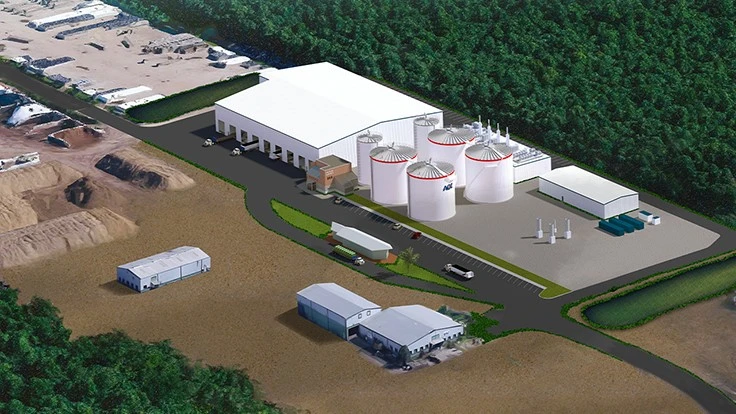
American Organic Energy (AOE), headquartered in Westbury, New York, has announced the beginning of construction for its new anaerobic digestion facility. The upcoming facility—to be built in Yaphank, New York—will transform Long Island’s food waste into convertible energy, vehicle fuel, fertilizer and nutrient-rich water.
“This project is a culmination of years of collaborative efforts on the part of the local community, environmental advocates, government officials and private industry,” says Charles Vigliotti, the company’s CEO, in a statement. “It represents the best of what public/private cooperation looks like and will put Long Island center stage in designing a sustainable future.”
As reported by the Long Island Business News, Vigliotti has long worked in Long Island’s green economy, having also co-founded Long Island Compost. AOE has partnered with energy and engineering firms with the aim to “significantly reduce greenhouse gas emissions by reducing both the number of diesel transport vehicles and the volume of organic waste currently disposed of in landfills,” according to a press release about the groundbreaking.
When fully operational, the facility is expected to reduce carbon emissions by 40,000 tons annually, produce 2.0 MW of electricity and approximately 1.9 million diesel gallons equivalent of compressed natural gas, according to the press release.
The new facility would “change the way we manage food waste on Long Island,” says Adrienne Esposito, executive director of Citizens Campaign for the Environment, in a statement.
Esposito adds that New York “generates more than 4 million tons of food waste” each year. By transforming food scraps into "a resource and non a waste product,” she believes the facility is more beneficial than traditional disposal methods.
She also points out that with the Brookhaven Landfill expected to close in two years, “there is no plan for waste disposal on Long Island after 2024,” she says.
AOE aims to accept about 180,000 tons of food waste per year, sparing the need for transporting that waste, which would be dumped into distant landfills.Latest from Waste Today
- Recycle Coach partners with Bartec Municipal Technologies
- CPUC conditionally approves RNG procurement contract for Anaergia’s SoCal Biomethane facility
- EPA proposes abandoned tire cleanup plan with focus on energy recovery
- Global Recycling Foundation recognizes Recycling Heroes
- Equipment finance index takes dip in March
- Oregon DEQ issues enforcement order, $3M civil penalty to Valley Landfills
- Sierra International Machinery adds to sales team
- Vernon County, Wisconsin, landfill expansion remains stalled amid DNR delays