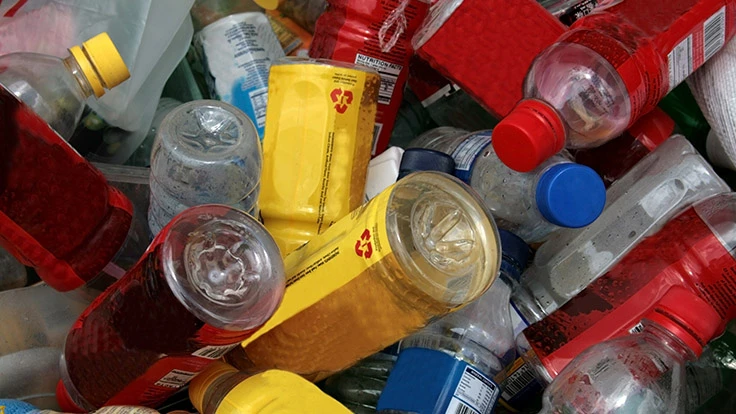
Researchers have found a bacterium that can feed off polyethylene terephthalate, according to a report from NPR. The bacterium degrades the PET and uses the material to make its body.
The species, called ideonella sakaiensis, was found in the Japanese city of Sakai. The bacterium was growing on plastic debris in a landfill, according to a report from NPR. It has two enzymes that slice the plastic polymer into smaller pieces and convert it into carbon dioxide and water.
Once the bacterium was isolated, researchers found it was able to disintegrate plastic film in about six weeks, according to a report from NPR. But while it grows fast, it eats slowly.
This does not mean hope is lost on the bacterium, according to the NPR report. With more research, scientists believe ideonella sakaiensis may have the ability to be engineered for use in landfills. While certain species of fungi have been found previously to degrade plastics, bacteria are easier to work with and engineer.
Another possibility, Uwe T. Bornscheuer, a biochemist at Gerifswald University in Germany, told Fast Company, is to use the bacterium to break the plastics down to its monomers and make new polymers.
Latest from Waste Today
- My Green Michigan expands depackaging capacity
- Washington selects Circular Action Alliance as PRO
- Ten-8 Industrial opens new central Florida service center
- Triumvirate Environmental acquires Environmental Waste Minimization
- Official NYC Bin availability expands ahead of deadline
- US Food Waste Pact’s 2025 Impact Report shows decrease in food waste
- Coastal Waste & Recycling expands recycling operations with Machinex
- Reconomy acquires German-based GfAW