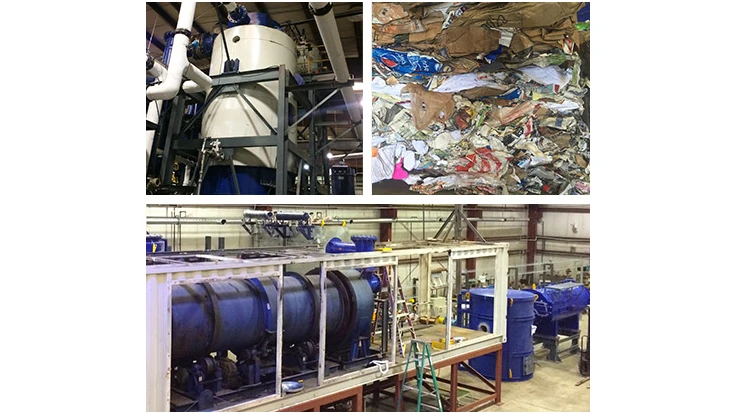
University Park, Illinois-based Biomass Energy Systems Inc. (BESI) says it has completed construction of a “turnkey, two-ton per day waste-to-energy research facility” in University Park.
The research facility has been funded by the United States military, according to BESI, and features waste-to-energy (WTE) produced via BESI’s patented TURNW2E Gasification System. The unit has the capability to produce different types of final energy output types, including steam, hot water and air conditioning, in addition to electricity.
“The pilot facility represents a unique opportunity for the military to experiment with a variety of applications for the TURNW2E core, integrated with specially designed equipment to use specific waste types and produce specific power outputs, and at a scale comparable to what an installation at a base or forward operating position might be,” says Renee Comly, president and CEO of BESI. Comly says the full scale WTE research and development facility is now open for evaluation for not only the military but also for visitors interested in municipal and commercial evaluation.
The BESI system can provide a way to dispose of materials including wood, biomass, packaging, paper, plastics, cardboard, yard, and demolition debris, says the company, and it also can handle traditionally difficult to dispose of materials or residues including tires, dewatered sewage sludge green waste, oils, rags, gloves, apparel, used engine filters, organic solvents, paints and other nonhazardous chemicals.
By enabling different forms of energy to be evaluated and produced at the research facility, all branches of the military can evaluate how to best implement a WTE system at their respective bases, says BESI. The facility is modular by design, with components skid-mounted to facilitate a variety of waste scenarios and energy output types.
“For military or municipal purposes, electricity is not always the best-case energy output,” says Comly. “For instance, forward operating bases, especially those situated in extreme weather climates, may have alternate energy requirements such as in the form of air conditioning or steam. By using the system to convert waste directly into a specified energy type, we’re providing a vivid picture of how a WTE gasifier will realistically perform for an array of scenarios.”
BESI says it also is in discussions with regional universities to use the research facility as the basis for developing education programs for military and civilian engineers, as well as hands-on training. “We look forward to continuing our work to support the military’s energy resilience and waste reduction goals,” says Comly.
Latest from Waste Today
- Vermeer announces plan to build new facility in Des Moines metro area
- Buffalo Biodiesel shares updates on Part 360 application to DEC, Tonawanda facility progress
- Capstar Disposal expands roll off dumpster rental services
- Supreme Court strikes down IEEPA tariffs
- Casella details facility closures, expansion efforts
- Zero harm: Building a SIF prevention program for waste and recycling operations
- Casella posts a loss in Q4 2025
- McNeilus names Haaker Equipment first Dealer Partner of the Year