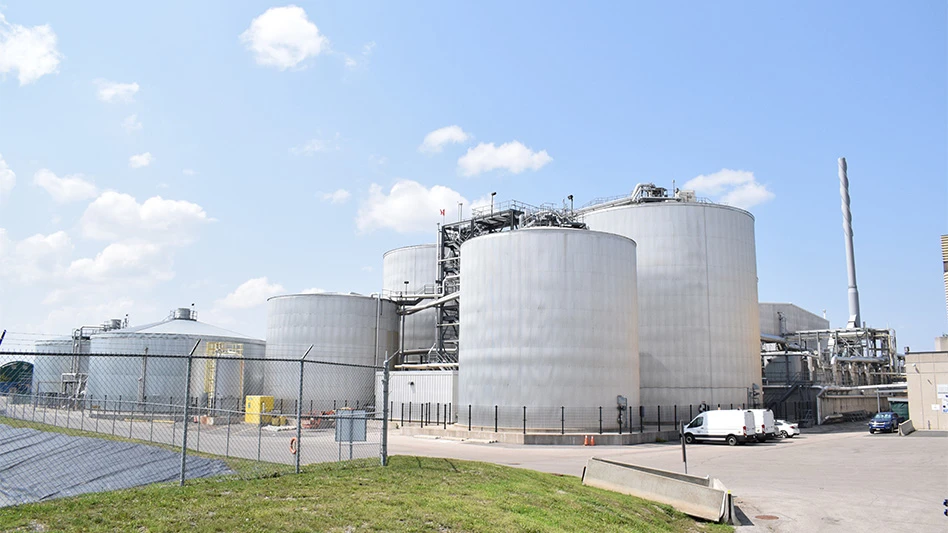
Photo courtesy of Buffalo Biodiesel Inc.
Buffalo Biodiesel Inc., a collector and processor of fats, oils and grease based in Buffalo, New York, says the company has officially met all criteria and submitted its Part 360 application to the New York State Department of Environmental Conservation (DEC).
Founded in 2005, Buffalo Biodiesel currently serves more than 28,000 restaurants across 15 states, operating one of the largest used-cooking-oil collection networks in the northeastern U.S.
As part of the Part 360 permitting process, Buffalo Biodiesel originally budgeted $1 million in a series of environmental and engineering upgrades to the company’s Tonawanda, New York, facility. To date, the company says it has implemented improvements exceeding $2 million, while improvements are expected to reach $3 million.
RELATED: Buffalo Biodiesel claims progress on permit
Through the course of applying for the permit, Buffalo Biodiesel hired four engineers—two mechanical and two chemical—all of whom were graduates of the University at Buffalo School of Engineering. The company says it has the expectation of hiring an additional six engineers over the coming months in addition to outside consultants as a result of the Part 360 burden.
The announcement follows a recent update from Buffalo Biodiesel in which the company shared it had renewed its Part 364 Waste Transporter Permit from the DEC, allowing the company to transport used cooking oil across New York State to be processed at its Tonawanda facility.
“The permit represents an important step forward for Buffalo Biodiesel and our suppliers who rely on us each and every day,” Buffalo Biodiesel President and CEO Sumit Majumdar said in a Feb. 11 statement regarding the Part 364 permit. “We’ve worked closely to meet regulatory expectations and strengthen operational safeguards. With this permit in place, we’re positioned to deliver even greater consistency, sustained growth and environmental stewardship throughout New York.”
Latest from Waste Today
- Vermeer announces plan to build new facility in Des Moines metro area
- Capstar Disposal expands roll off dumpster rental services
- Supreme Court strikes down IEEPA tariffs
- Casella details facility closures, expansion efforts
- Zero harm: Building a SIF prevention program for waste and recycling operations
- Casella posts a loss in Q4 2025
- McNeilus names Haaker Equipment first Dealer Partner of the Year
- NWRA, SWANA issue responses to BLS fatality data