cn0ra I stock.adobe.com
The California Air Resources Board (CARB) approved updates to its Landfill Methane Regulation (LMR) Nov. 20.
CARB says the changes will improve monitoring and reporting, enabling quicker detection and repair of methane leaks at landfills. They also will enhance public data transparency and facilitate stronger action for recurring issues.
“This is another example of California’s leadership in reducing emissions and harmful climate-warming pollutants across all sources,” CARB Chair Lauren Sanchez says. “With these updates, California will be able to more efficiently and effectively monitor methane sources to detect and remedy leaks quickly. Regardless of what’s happening in Washington, CARB will press ahead on our mission following the science and using the latest research and technology to protect Californians from climate change and harmful air pollution.”
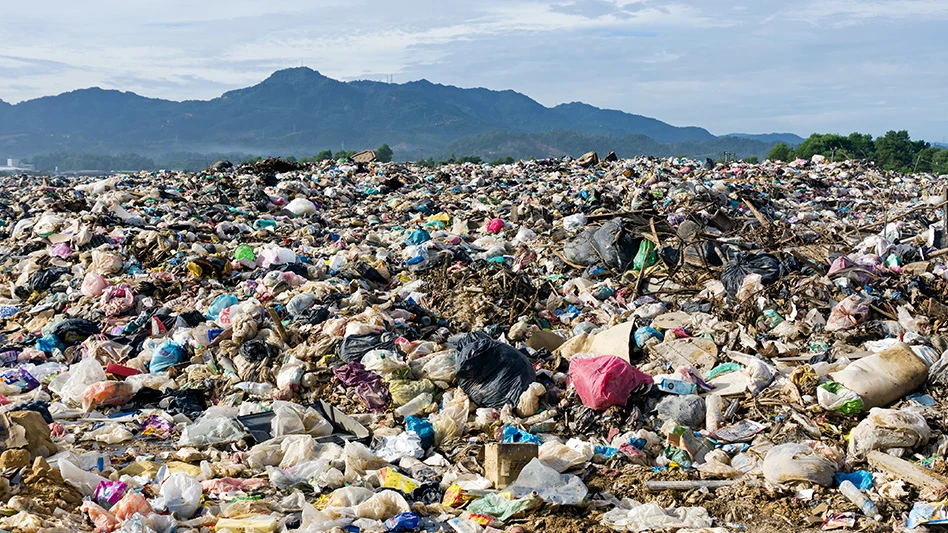
California’s LMR requires municipal solid waste landfills to reduce methane and other air pollutant emissions through emissions monitoring and capturing fugitive methane. CARB says landfills are the second-largest source of methane in the state, adding that advanced technologies, such as satellite monitoring, are key to improved methane emissions reductions.
Findings from research and the development of new technologies provided opportunities to update the regulation to improve the collection and control of methane emissions at California’s 188 landfills subject to the LMR. CARB says updates include a greater role for the use of satellite imaging, among other advanced technologies, to detect methane leaks across the landfill.
“Taking action to reduce methane emissions will rapidly reduce concentrations in the atmosphere, slowing the pace of temperature rise in this decade,” CARB says.
The regulatory body added that emissions reductions will also come from improved gas collection system performance, more frequent monitoring and quicker resolution when a leak is detected, stronger action for recurring issues and improved reporting for enhanced transparency and oversight. The LMR updates are also designed to reduce co-pollutants like toxic air contaminants, volatile organic compounds and odorous compounds.
Amendments will apply to active, inactive and closed landfills operated by both public and private entities.
In addition to CARB, landfills are regulated by federal, state, and local agencies. CARB says the LMR allows cooperative agreements between it and the air districts, enabling the air districts to implement and enforce the regulation and assess fees to cover costs. Currently, 22 local air districts are implementing and enforcing the LMR.
CARB says the LMR was adopted in 2010 in response to California’s Global Warming Solutions Act, which was passed in 2006 and aimed to reduce methane emissions from municipal solid waste landfills. The LMR requires owners and operators to install and optimally operate landfill gas collection and control systems to minimize emissions, monitor surface methane concentration and other performance parameters, repair emission exceedances and other performance issues, conduct source testing of combustion devices used to destroy methane, keep records of these actions and data and report compliance information to CARB and local air districts.
Latest from Waste Today
- Fleetio launches AI capability to accelerate fleet maintenance approvals
- Recycle Ann Arbor extends drop-off station operating hours
- Sybilion seeks to help manufacturers confidently address volatility
- Ecowaste Solutions partners with city of Trinity, Texas
- Bristal Hauling acquires G&R Garbage Disposal
- Baltimore trash collection expected to slow as WTE facility closes for maintenance
- Landfill Insights | Connecting the dots: Policy to practice
- FCC Environmental Services awarded collection contract in Florida