thanapun | stock.adobe.com
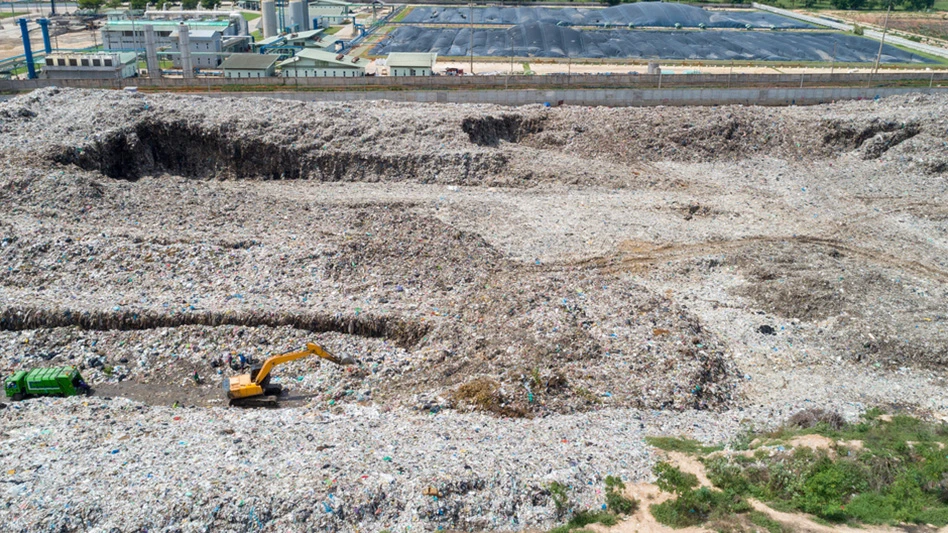
The California Air Resources Board (CARB) will conduct a public hearing to consider approving the adoption of proposed amendments to the regulation on methane emissions from municipal solid waste landfills.
The hearing is scheduled at the Byron Sher Auditorium in Sacramento at 9 a.m. Nov. 20, with Nov. 21 earmarked for a possible extension date. According to CARB, the proposed amendments are “designed to improve methane control at (municipal solid waste) landfills by leveraging technologies, research and lessons learned over a decade of implementation experience.”
Members of the public can present comments orally or in writing during the hearing or submit comments electronically or in writing prior to the hearing. Written comments not submitted during the hearing must be received no later than Nov. 10.
According to the notice, CARB seeks to:
- require inspection and repair when operators are notified of a remotely detected methane emission plume;
- increase the stringency of landfill surface and component leak monitoring procedures, including increasing coverage by removing exemptions from monitoring, reducing corrective action timelines, and increasing frequency at certain landfills;
- establish a process to evaluate and approve emerging alternative technologies for leak detection and require tools such as hand-held or drone-mounted laser scanners to identify leaks in inaccessible areas that are currently excluded from monitoring;
- require earlier installation and operation of gas collection infrastructure in areas of new waste deposition;
- limit periods of gas collection and control systems (GCCS) downtime and mitigate emissions from unavoidable downtime;
- expand wellhead monitoring parameters and analysis and require response actions for out-of-range values or large changes in values;
- require more frequent monitoring, analysis and mitigation measures, including cover improvement in areas with persistent leaks or other issues;
- better manage declining gas generation at closed landfills through clearer standards for requests and approvals to operate a GCCS semi continuously or shut down a GCCS;
- clarify responsibilities of third-party gas control system owners and operators;
- reduce barriers to using continuous wellhead monitoring technologies by defining how regulatory thresholds apply to that data;
- standardize, streamline and digitize reporting to support compliance monitoring; and
- miscellaneous clarifications, updates, and improvements to processes and enforceability.
CARB adds that it could consider other changes to the scope of its notice during the rulemaking process.
“The proposed amendments are expected to reduce emissions of methane and co-pollutants like toxic air contaminants, volatile organic compounds and odorous compounds,” CARB writes in its notice. “Methane emission reductions reduce the impacts of global climate change that affect Californians as well as the global population. Co-pollutant and odor reductions can improve air quality on and around the landfill, benefiting the health of workers and residents of nearby communities. Additional wellhead monitoring may also lead to earlier detection and prevention of subsurface elevated temperature events that can damage the GCCS and increase emissions.
"The proposed amendments also contain significant improvements to reporting that will allow CARB and local air districts to better oversee compliance and improve public transparency.”
The Landfill Methane Regulation was adopted in 2010 under California’s 2006 greenhouse gas emissions mitigation law, Assembly Bill 32. According to CARB, the regulation requires owners and operators to install and optimally operate landfill GCCS to minimize emissions, monitor surface methane concentration and other performance parameters, repair emission exceedances and other performance issues, conduct source testing of combustion devices used to destroy methane, keep records of these actions and data and report compliance information to CARB and local air districts.
Latest from Waste Today
- Fleetio launches AI capability to accelerate fleet maintenance approvals
- Recycle Ann Arbor extends drop-off station operating hours
- Sybilion seeks to help manufacturers confidently address volatility
- Ecowaste Solutions partners with city of Trinity, Texas
- Bristal Hauling acquires G&R Garbage Disposal
- Baltimore trash collection expected to slow as WTE facility closes for maintenance
- Landfill Insights | Connecting the dots: Policy to practice
- FCC Environmental Services awarded collection contract in Florida