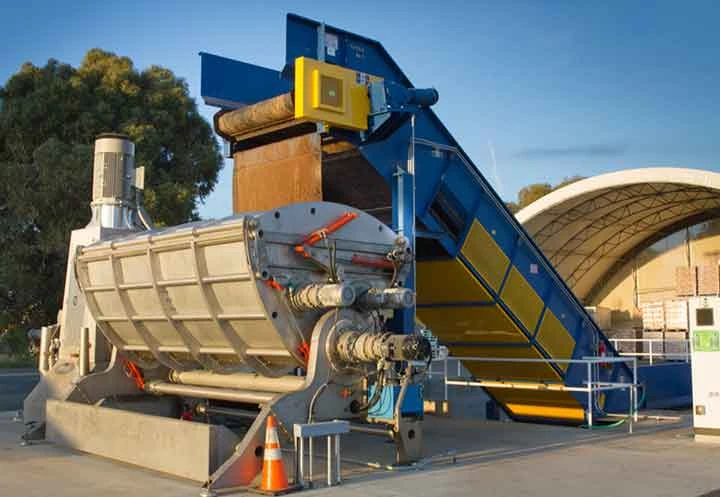
On the heels of the successful launch of its Sacramento biodigester in December, 2012, Clean World Partners broke ground on an expansion project that will boost the 10,000-tons-per-year facility by 300 percent to 40,000 tons per year, making it the largest commercial high-solids food waste digester in the United States. The official groundbreaking was held June 24, 2013.
Upon completion in December, 2013, the Sacramento biodigester will convert 100 tons per day of food waste into renewable energy in the forms of heat, electricity, natural gas and fertilizer enhancements.
 |
| The Sacramento biodigester is expected to produce 700,000 gallons per year of renewable CNG. |
The Sacramento biodigester received attention last year when Clean World announced that the first phase of the project, which broke ground June 2012, began accepting food waste in early December. In June 2013, the biodigester began providing compressed natural gas (CNG) to an adjacent CNG fueling station operated by Atlas Disposal.
In addition, in May 2013 Clean World broke ground on a 20,000-ton-per-year biodigester at the University of California, Davis. That project has been designed to blend landfill gas and digester gas to produce electricity for UC Davis. In 2012, the company also placed into service the American River Packaging biodigester in Natomas, Calif., which produces electricity for the box plant.
When complete, the Sacramento biodigester is expected to produce 700,000 gallons per year of renewable CNG. The Clean World facility will produce 8 million gallons a year of organic soils and fertilizer products and generate 1 million kilowatts of electricity to be used to power the facility and the adjacent fueling station.
“With the Sacramento biodigester, Clean World has taken an historic step forward in developing innovative and cost effective waste management and energy solutions,” says Shawn Garvey, Clean World’s vice president of communications and public affairs.
 |
| Clean World’s anaerobic digestion technology, developed at the University of California, Davis, and built in California, uses natural microbes to break down organic waste, generating biogas and other forms of renewable energy. |
Clean World’s anaerobic digestion technology, developed at the University of California, Davis, and built in California, uses natural microbes to break down organic waste, generating biogas and other forms of renewable energy. Clean World’s biodigesters are pre-fabricated, value-engineered and modular-by-design, and require no additional water – meaning the system is less expensive, significantly shortens construction time and has a much smaller footprint.
“California leads the way in implementing cost-effective and sustainable waste management solutions that solve renewable energy and environmental problems,” Garvey adds. “Clean World is working hard to put our U.S.-made technology to work in every city and state in the United States.”
Latest from Waste Today
- Vermeer announces plan to build new facility in Des Moines metro area
- Buffalo Biodiesel shares updates on Part 360 application to DEC, Tonawanda facility progress
- Capstar Disposal expands roll off dumpster rental services
- Supreme Court strikes down IEEPA tariffs
- Casella details facility closures, expansion efforts
- Zero harm: Building a SIF prevention program for waste and recycling operations
- Casella posts a loss in Q4 2025
- McNeilus names Haaker Equipment first Dealer Partner of the Year