Ind studio | stock.adobe.com
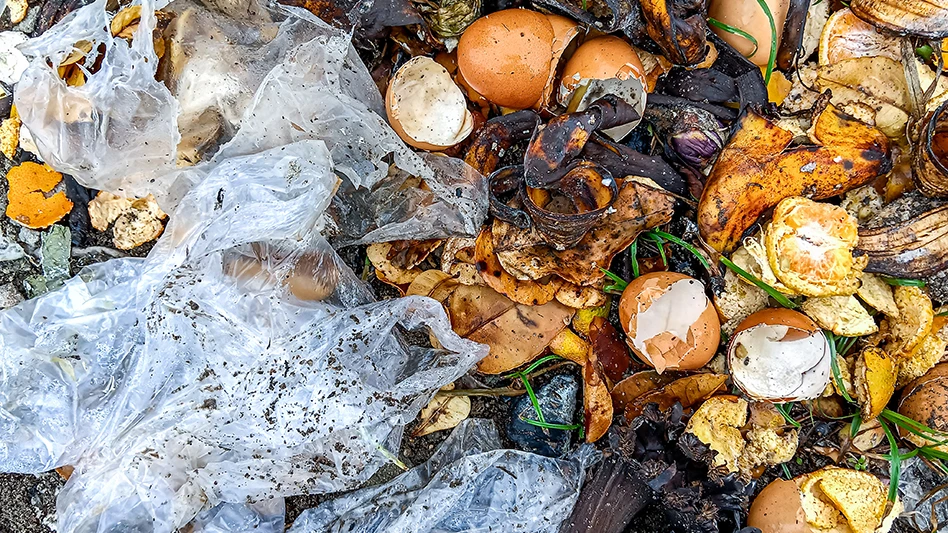
Contamination can cause numerous problems for composters, from diluting feedstock volumes to creating safety risks for employees.
In the Contamination Control from the Ground Up: Practical Strategies at Green Mountain Compost session at Compost2026 in Sacramento, California, Feb. 3, Kim Stacey, assistant manager of organics recycling at Chittenden Solid Waste District’s (CSWD’s) Green Mountain Compost in Chittenden County, Vermont, shared how CSWD has worked to control contamination in its organics stream.
When Vermont’s Universal Recycling Law, Act 148, took full effect in 2020, the county saw an increase in organics disposal. Residential organics drop-off is free for individuals disposing of less than 30 gallons of material, and CSWD charges a $70 tipping fee for its approximately 25 commercial organics haulers. Once collected, material is brought to the county’s organics recycling facility (ORF) for processing.
“[Act 148] also had a learning curve for all the newbies that wanted to get into the game and comply with the new regulation,” Stacey said. “That was a huge factor that led to some of our decision-making processes.”
CSWD accepts food and yard waste but banned compostable products in 2022 due to issues with lookalike products and confusing or vague packaging specifications.
In 2024, the district implemented its Organics Recycling Facility Contamination Policy, which aims to remediate contamination of incoming loads; improve communication between organics haulers, customers and personnel regarding material specification requirements; maximize ORF operational efficiency; and minimize employee exposure to potentially harmful materials.
“Our contamination policy is a huge factor,” Stacey said. “It cleaned up our loads … and has led to a great improvement in the quality of incoming feedstocks.”
The cost of contamination
CSWD’s contamination policy contains three specifications for contaminated loads, all of which result in a punitive fine billed to the hauler.
“We spent a lot of time collecting data,” Stacey said. “How do you visualize volumes in a feedstock that’s so inconsistent? We just went out there, and we have the known tons, and then we measured the volume of every single load, and then we created a field-tested equation that helps us visualize.”
A load of material received at the ORF containing more than 5 percent contamination by volume is considered a contaminated load, resulting in a $75 per ton fine, while loads with more than 10 percent are considered excessively contaminated and result in a $150 per ton fine. The policy defines incidental contamination as a load containing particularly problematic materials, including trash bags, glass, hazardous waste, medical waste or personal hygiene products, resulting in a $50 fine, regardless of the amount of problematic material in the load.
“When you’re talking about contamination thresholds, you really have to dive deep into what your facility can handle,” she said.
To accurately track and document instances of contamination in the organics stream, CSWD standardized an online load report.
“This is where using the categorized contamination fields came in really helpful,” Stacey said. “We’re able to document in this portal all the different contamination that we find in the load. It’s then linked to the actual scale ticket, and then we’re able to add photos to that document.”
This information is then shared with the haulers. The district also has a contamination email hub, which has made connecting with haulers much easier, according to Stacey.
“If a staff member is out of the office and I’ve already contacted a hauler, the next staff member is able to see that that hauler has been communicated [with],” she said.
CSWD gives its haulers access to a tailored year-end review, highlighting areas of improvement for each hauler.
Stacey explained that this punitive policy is not without its challenges and has been a learning curve for CSWD’s commercial haulers, some of whom have been upset by the increase in fines.
“We stopped accepting compostable products in 2022, [and] that was huge for [the haulers] to have to then go and educate their customer base,” she said. “But, the biggest issue was that … we don’t have access to the generators as much as they do. … We’ve offered to draft up communications to all their customers to let them know what’s going on at out facility. What the haulers do with those drafts after we offer them is up to them.”
Latest from Waste Today
- USCC announces annual awards at Compost2026
- Nebraska cities receive $7 million in waste, recycling grants
- Waste Connections reports margin gains, acquisition growth in Q4, full 2025 earnings report
- GFL profits decrease from prior quarter
- Al-Jon veteran staff member announces retirement
- Premier expands national rental fleet
- Aduro Clean Technologies achieves operational milestone for NGP pilot plant
- DSNY proposes to amend rules for CWZ implementation schedule