Photo courtesy of Closed Loop Partners
The Composting Consortium, managed by the Center for the Circular Economy at Closed Loop Partners, New York, has announced municipal and compost producer-led projects that will receive grant funding to advance composting infrastructure and the recovery of food-contact compostable packaging.
The grants were made possible through the consortium’s funding partnership with the Biodegradable Products Institute (BPI), New York, and technical support from the U.S Composting Council (USCC), Raleigh, North Carolina. The organizations are working together to scale circular outcomes for certified compostable packaging and food scraps across the U.S.
“The deployment of these grant dollars is a critical part of Closed Loop Partners’ Center for the Circular Economy’s broader work to develop local circular systems,” says Kate Daly, managing partner and head of Closed Loop Partners’ Center for the Circular Economy. “Our partnership with BPI and USCC on this inaugural grant program showcases the power of industry leadership and collaboration to deliver outsized impact, accelerate infrastructure upgrades and advance food waste and compostable packaging diversion goals.”
Eight projects were selected for the funding opportunity, from municipal efforts expanding composting access and education to infrastructure upgrades at compost facilities that increase regional processing capacity. The selected projects demonstrate scalable models for compostable packaging recovery, according to the consortium.
The following selected projects focus on increasing access to composting infrastructure and services, specifically in areas or populations that lack them:
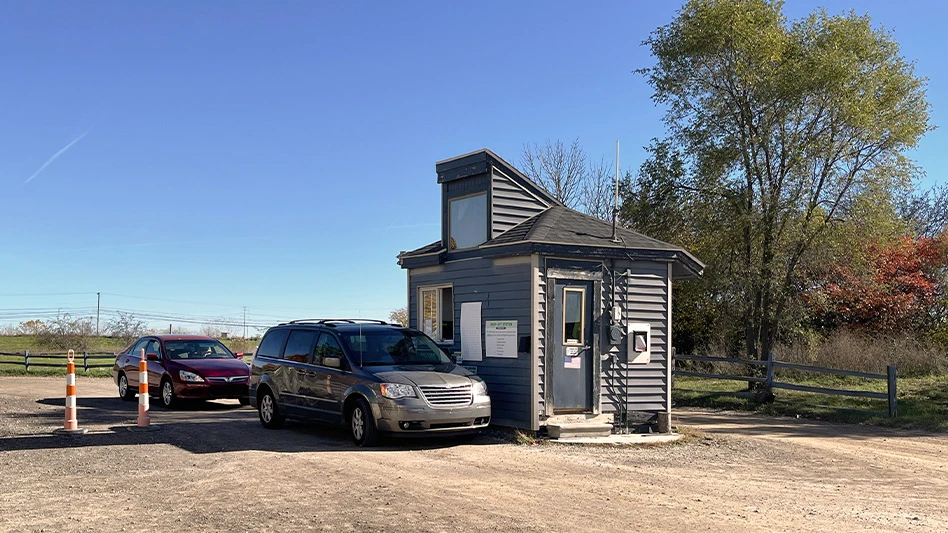
Washtenaw County, Michigan, will pilot two to three drop-off sites to serve households without access to curbside food waste collection, with the potential to divert up to 45,000 pounds of food waste and compostable packaging.
Takoma Park, Maryland, will install organics collection infrastructure in low-income, multifamily housing, paired with outreach and data collection to aid citywide expansion.
- Rubber City Reuse, Akron, Ohio, will launch 15 organics drop-off sites across four counties, serving up to 1.2 million residents.
Four of the selected projects increase the ability for compost facilities to accept and process certified compostable packaging:
Compost Colorado, Denver, plans to double processing capacity at a front-range compost producer.
Veteran Compost, Alexandria, Virgina, will install new infrastructure to double processing capacity to 2 million pounds per year.
Bennett Compost, Philadelphia, will update its site to begin accepting certified food-contact compostable packaging.
Skagit Soils, Mount Vernon, Washington, will add new equipment to prepare for increased volumes of food waste and compostable packaging.
The grant awarded to the city of Modesto, California, focuses on education and community engagement to maximize certified compostable packaging diversion and create compost. The city plans to update its educational, outreach and marketing materials to bring consistency to the community, highlighting certified compostable packaging as a part of successful composting programs.
Following the deployment of these grants, the Composting Consortium says it will continue to test, validate and scale solutions across the compostable packaging value chain.
Latest from Waste Today
- Organics Recycling Conference 2026: Q&A with keynote speaker Andy McNeill
- Google purchases carbon removal credits generated by Amp’s organic waste processing
- Vermont bill proposes prohibition on discharge of PFAS
- Martin County is first Florida municipality to commit biosolids to Indiantown upcycling facility
- Redrock Environmental Group sanitation workers join Teamsters Local 431
- OhioHealth receives SWACO grant to purchase digester
- Casella appoints senior vice president and chief revenue officer
- WeSort.AI recovers critical raw materials from recycling plants