A federal court settlement between Persimmon Lane LLC, the Commonwealth of Virginia and the U.S. Environmental Protection Agency (EPA), will help fund the cleanup and encourage the reuse of the Hidden Lane Superfund Site, a 150-acre property in Sterling, Loudon County, Virginia.
This agreement, filed in federal court in Richmond, Virginia, requires Persimmon Lane to reimburse the federal and state governments for cleanup costs with proceeds from the future sale of the property. Persimmon Lane was established by the estate of the former property owner to facilitate the sale or transfer of the property.
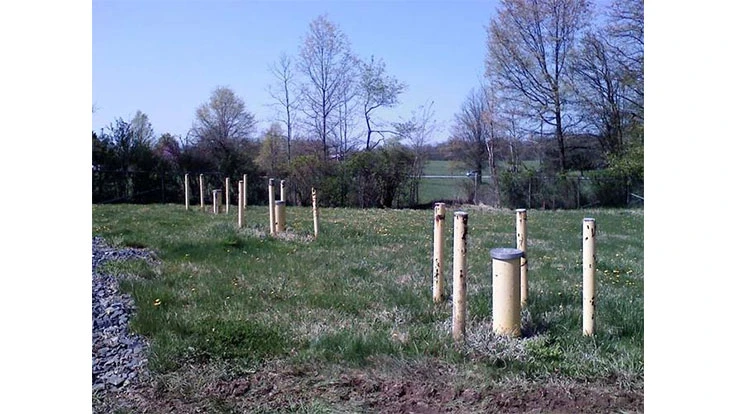
The former waste disposal landfill, located north of Virginia Route 7 and adjacent to the Potomac River, was added to EPA’s Superfund list of the nation’s most contaminated sites in 2008.
Beginning in 1971, the private landfill accepted a variety of wastes including construction and demolition (C&D) debris, land clearing wastes and other items. Loudon County closed the facility in 1984 pursuant to a state court order after testing of groundwater and drinking wells revealed the presence of several landfill-related contaminants, including a common degreasing solvent trichloroethylene (TCE).
As part of the settlement, Persimmon Lane must make efforts to generate proceeds from the transfer of the property for potential development and/or wetlands mitigation credits, which can be used by purchasers to compensate for the impact of lost wetlands on other locations. Persimmon Lane must then pay a portion of those proceeds to EPA and Virginia to cover cleanup costs.
The agreement settles a case filed under the federal Superfund law, formally known as the Comprehensive Environmental Responsibility, Compensation and Liability Act (CERCLA), which requires landowners, waste generators and waste transporters responsible for site contamination to either clean up the site or reimburse the government or other parties for cleanup costs.
This agreement, filed in federal court in Richmond, Virginia, requires Persimmon Lane to reimburse the federal and state governments for cleanup costs with proceeds from the future sale of the property. Persimmon Lane was established by the estate of the former property owner to facilitate the sale or transfer of the property.
The former waste disposal landfill, located north of Virginia Route 7 and adjacent to the Potomac River, was added to EPA’s Superfund list of the nation’s most contaminated sites in 2008.
Beginning in 1971, the private landfill accepted a variety of wastes including construction and demolition (C&D) debris, land clearing wastes and other items. Loudon County closed the facility in 1984 pursuant to a state court order after testing of groundwater and drinking wells revealed the presence of several landfill-related contaminants, including a common degreasing solvent trichloroethylene (TCE).
As part of the settlement, Persimmon Lane must make efforts to generate proceeds from the transfer of the property for potential development and/or wetlands mitigation credits, which can be used by purchasers to compensate for the impact of lost wetlands on other locations. Persimmon Lane must then pay a portion of those proceeds to EPA and Virginia to cover cleanup costs.
The agreement settles a case filed under the federal Superfund law, formally known as the Comprehensive Environmental Responsibility, Compensation and Liability Act (CERCLA), which requires landowners, waste generators and waste transporters responsible for site contamination to either clean up the site or reimburse the government or other parties for cleanup costs.
Latest from Waste Today
- Vecoplan to present modular solutions at IFAT 2026
- Terex Ecotec appoints Bradley Equipment as Texas distributor
- My Green Michigan expands depackaging capacity
- Washington selects Circular Action Alliance as PRO
- Ten-8 Industrial opens new central Florida service center
- Triumvirate Environmental acquires Environmental Waste Minimization
- Official NYC Bin availability expands ahead of deadline
- US Food Waste Pact’s 2025 Impact Report shows decrease in food waste