stock.adobe.com
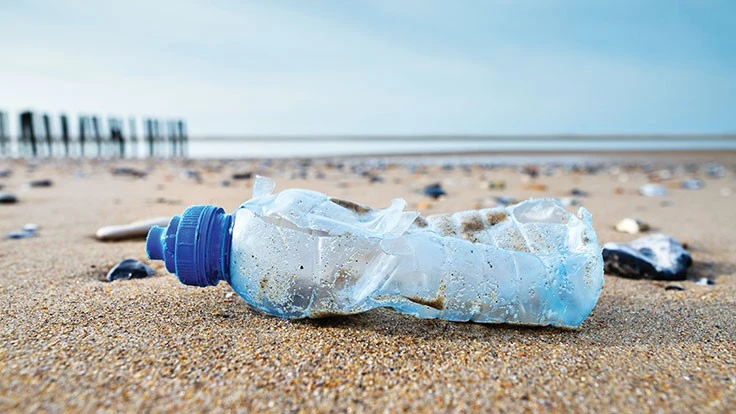
Ocean plastics continue to be on the radar of companies in the plastics value chain, while an investment fund has provided guidance regarding the infrastructure needed to attract investment capital in South and Southeast Asia.
Materials science company Dow and consumer packaged goods company SC Johnson have announced investments in waste management and plastics recycling in South Africa and Indonesia, respectively.
Midland, Michigan-based Dow says it is helping to create jobs and reduce plastic pollution in South Africa through Project Butterfly. Introduced in 2017 in the township of Tembisa, Johannesburg, Project Butterfly works with nonprofit organizations and local communities to tackle poor waste management through education, cleanups
“By joining forces with those who are already making inroads in tackling poor waste management as well as local communities, government agencies
In 2018, Project Butterfly combined its efforts with those of Wildtrust—a leading South African environmental nonprofit with three main subsidiaries—Wildlands, Wildoceans
Dow says it is also funding the expansion of Wildtrust’s Recycling Villages, which include collection points in schools, shopping centers and other public areas that allow consumers to more easily recycle. These locations facilitate the collection of an estimated 2.6 million pounds of material annually from more than 10,000 South African homes.
Additionally, the company is underwriting a cleanup operation in Durban Harbour, the largest shipping terminal in sub-Saharan Africa. The effort is being led by Wildoceans’ Blue Crew, a team of local female entrepreneurs who collect waste accumulating along the coastline.
SC Johnson also is investing to support plastics recycling infrastructure. After more than 20,000 tweets and retweets from people sharing their support for reducing ocean plastic, the Racine, Wisconsin-based company says it will build an additional recycling center in Indonesia. SC Johnson had challenged social media users to tag #SocialPlastic or #SCJRecycles in their social media posts.
SC Johnson will build this new recycling center through its ongoing partnership with Plastic Bank in Indonesia. SC Johnson says it already has sponsored eight recycling centers in the country, increasing the infrastructure that helps stop plastic from leaking into the ocean and helping reduce plastic pollution. Local community members can bring in plastic for recycling and exchange it for digital tokens, providing increased access to needed resources while encouraging plastic collection and recycling.
“The SC Johnson program is really making traction in Indonesia as it educates people on the value of recycling plastic and transfers that value into the hands of the collectors,” says David Katz, CEO of Plastic Bank. “There is no better partner than Fisk Johnson and SC Johnson, and together we are changing lives in Indonesia.”
Indonesia is one area that Circulate Capital, the investment management firm that seeks to incubate and finance companies and infrastructure to prevent ocean plastic in South and Southeast Asia (SSEA), has identified as having readily available investment opportunities in waste management and recycling infrastructure. The firm has released a handbook that describes the infrastructure needed to attract investment capital in the SSEA region.
“Investing to Reduce Plastic Pollution in South and Southeast Asia: A Handbook for Action” is aimed at catalyzing investment in solutions to SSEA’s ocean plastic crisis. Circulate Capital made the announcement March 6 at The Economist World Ocean Summit in Abu Dhabi, United Arab Emirates, and in partnership with Ocean Conservancy, a leading ocean protection nonprofit.
The handbook is a guide to investment opportunities in
According to Circulate Capital, the handbook also provides insight for the many other actors that will play critical roles in scaling these sectors and developing a circular economy in SSEA, including governments, nongovernmental organizations, entrepreneurs and academic institutions.
“We’ve spent enough time pointing at the problem, now we have to focus on the solution. The time to act is now,” said Rob Kaplan, Founder
In October 2018, Circulate Capital announced that it expects to receive $100 million in funding for its investment strategy to combat ocean plastic from several of the world’s leading consumer packaged goods and chemical companies. With funding and collaboration from public and private sources, the firm aims to remove capital barriers to the development of waste management and recycling infrastructure and to support innovative solutions to ocean plastic issues. In parallel, The Incubator Network by Circulate Capital and SecondMuse, which receives philanthropic funding and strategic support, seeks to accelerate solutions to ocean plastic waste by partnering with existing incubators to build ecosystems of waste management and recycling innovators in SSEA.
A number of key findings are presented in the handbook:
- Leveraging support from national governments and establishing an appropriate policy enabling environment while working at a very local level with cities and municipalities are both critical to success.
- Larger investment opportunities are available downstream (processing and reuse) in the plastics value chain, with smaller early stage opportunities upstream (collection and sorting).
- We need systematic investment within a specific
wasteshed as well as discrete investment approaches along the plastic value chain. - India and Indonesia currently provide the most readily available investment opportunities in the region.
- Implementation challenges remain despite comprehensive national solid waste management legislation in several countries.
Latest from Waste Today
- Vecoplan to present modular solutions at IFAT 2026
- Terex Ecotec appoints Bradley Equipment as Texas distributor
- My Green Michigan expands depackaging capacity
- Washington selects Circular Action Alliance as PRO
- Ten-8 Industrial opens new central Florida service center
- Triumvirate Environmental acquires Environmental Waste Minimization
- Official NYC Bin availability expands ahead of deadline
- US Food Waste Pact’s 2025 Impact Report shows decrease in food waste