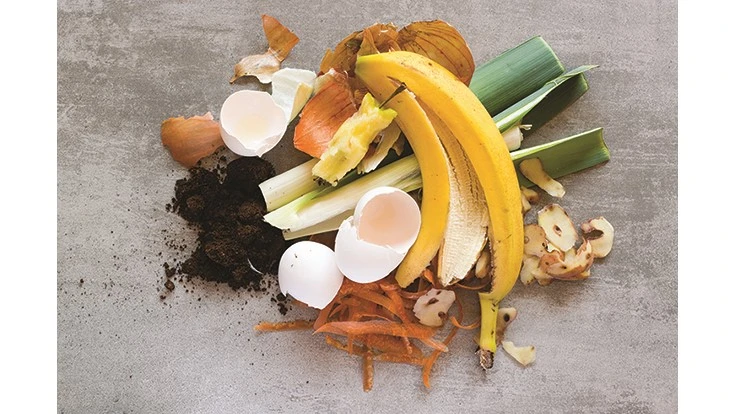
The New York City Department of Sanitation (DSNY) announced a proposal Oct. 3 that would require more food-related businesses than are currently called to separate organic waste to do so. The proposal would cover approximately 8,500 additional businesses and is expected to keep about 100,000 tons of food waste out of landfills every year. The proposed rules build on the city’s previous organics separation requirements for large food-related businesses.
Food scraps and other organic waste make up more than one-third of all commercial waste. Diverting this material from landfills to be used as a natural soil amendment through composting or as clean renewable energy through anaerobic digestion is a key component of the city’s goal for sending zero waste to landfills. Keeping food scraps and other organic waste out of landfills also reduces the emissions of methane gas, which is a harmful greenhouse gas and major contributor to climate change. Encouraging businesses to reduce, rescue and recycle organic waste is critical to meeting the city’s greenhouse gas emissions reduction goals.
“Businesses in New York City produce more than 650,000 tons of food waste annually, much of which is sent to landfills where it emits harmful methane gas,” Sanitation Commissioner Kathryn Garcia says. “Thousands of businesses in New York City, from coffee shops to baseball stadiums, separate their organics for composting or to create renewable energy. Today’s announcement begins the final phase of implementing the city’s landmark law requiring large businesses to separate their food waste, and it represents an important step toward our zero waste goals.”
The proposed rules would require the following types of businesses to separate and ensure beneficial use of their organic waste:
• Food service establishments larger than 7,000 square feet, such as restaurants
• Chain food service establishments with two or more locations in New York City
• Retail food stores larger than 10,000 square feet, including grocery stores
• Food prep spaces larger than 6,000 square feet
• Food service establishments in hotels with 100 or more rooms
• Catering establishments hosting events with attendance of more than 100 people
• Sponsors of temporary public events
Businesses covered by this proposal would be given the option to arrange for collection by a private carter, transport organic waste themselves, or manage it on-site using in-vessel composting, aerobic or anaerobic digestion systems.
The proposed rules will be subject to a public comment period and hearing on Nov. 20. They would take effect six months after they are adopted, which would be followed by a 6-month grace period before any fines could be imposed.
In landfills, food scraps and other organic waste decompose and generate methane gas, which the U.S. EPA estimates has a global warming potential 28 to 36 times greater than carbon dioxide. The city has recently taken more aggressive steps to slash greenhouse gas emissions, including reducing emissions by 80 percent by 2050 and working with businesses, municipalities and other nations to limit global temperature increase to 1.5 degrees Celsius.
In 2015 and 2017, the Department of Sanitation proposed rules designating the first and second set of businesses required to comply with commercial organics separation requirements according to Local Law 146 of 2013. The final adopted rules cover:
• Food service establishments larger than 15,000 square feet
• Chain food service establishments with 100 or more locations in NYC
• Retail food stores larger than 25,000 square feet
• Food service establishments in hotels with 150 or more rooms
• Arenas and stadiums with a seating capacity of at least 15,000 people
• Food manufacturers larger than 25,000 square feet
• Food wholesalers larger than 20,000 square feet
For more information on existing commercial organics separation requirements, visit http://on.nyc.gov/commercial-organics.
To develop the new proposed rules, DSNY surveyed organics processing facilities, including composting sites and anaerobic digestion facilities, across the region. The department determined that sufficient processing capacity exists to manage the organic waste generated by the proposed covered establishments. Since 2017, several facilities have opened or expanded available processing capacity, and others are at various stages of development.
Latest from Waste Today
- Vermeer announces plan to build new facility in Des Moines metro area
- Buffalo Biodiesel shares updates on Part 360 application to DEC, Tonawanda facility progress
- Capstar Disposal expands roll off dumpster rental services
- Supreme Court strikes down IEEPA tariffs
- Casella details facility closures, expansion efforts
- Zero harm: Building a SIF prevention program for waste and recycling operations
- Casella posts a loss in Q4 2025
- McNeilus names Haaker Equipment first Dealer Partner of the Year