Photo courtesy of Ecomaine.
Portland, Maine-based Ecomaine says it will “continue to build on the success” of its curbside recycling education program by expanding the project into more communities in Maine this summer and fall.
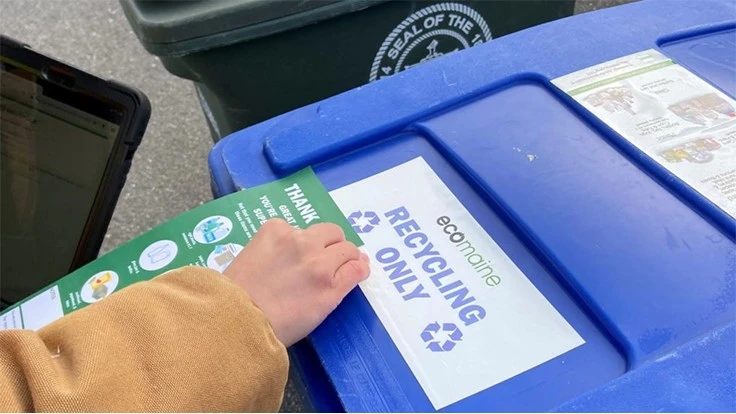
To provide what it calls greater public awareness of acceptable recycling materials, Ecomaine hired staff in the two previous summer and fall seasons to examine recyclables collected in Maine communities. The program “focuses on the education of residents on the topic of recycling contamination,” Ecomaine says.
This year, neighborhoods in South Portland, Sanford and Saco, Maine, have been added to the program.
During cart reviews, inspectors evaluate the contents of carts and then issue green tags for acceptable recyclables within the cart or bin, yellow tags for loads that have a handful of items that are not recyclable, and red tags for loads with too many items that cannot be recycled by Ecomaine.
The bins with red tags are considered overly contaminated and increase costs for the municipality, and the taxpayers, says Ecomaine, and “therefore, they will not be picked up by the collection company.”
The tags identify item(s) that do not belong in the recycling cart for individualized education.
“The impact of the program has been growing, and you can see the difference in the recycling,” says Michelle Radley, Ecomaine acting communications manager. “As a staff member that formerly worked tagging bins, I can say providing this education is beneficial for the municipality, the residents, and us alike.”
When Ecomaine staff ran the program previously, gains were made in reducing contamination from impacted loads of recyclables. In one case, the agency says, the contamination rate was reduced from higher than 80 percent down to 25 percent.
On average, after inspections in neighborhoods in Portland, Scarborough, South Portland, Westbrook, and Yarmouth, Maine, with data collected and analyzed weekly, green tags have increased by 52 percent, while yellow and red tags have decreased 62 percent and 69 percent, respectively, according to Ecomaine.
Latest from Waste Today
- Vermeer announces plan to build new facility in Des Moines metro area
- Buffalo Biodiesel shares updates on Part 360 application to DEC, Tonawanda facility progress
- Capstar Disposal expands roll off dumpster rental services
- Supreme Court strikes down IEEPA tariffs
- Casella details facility closures, expansion efforts
- Zero harm: Building a SIF prevention program for waste and recycling operations
- Casella posts a loss in Q4 2025
- McNeilus names Haaker Equipment first Dealer Partner of the Year