U.S. Environmental Protection Agency (EPA) Acting Administrator Bob Perciasepe joined U.S. Department of Agriculture (USDA) Secretary Tom Vilsack June 4, 2013, to announce the launch of a challenge that asks farmers, processors, manufacturers, retailers, communities and government agencies to reduce wasted food. The EPA says the U.S. Food Waste Challenge builds upon the success of its Food Recovery Challenge to help more Americans do their part to reduce food waste.
“Food waste is the single largest type of waste entering our landfills—Americans throw away up to 40 percent of their food. Addressing this issue helps to combat hunger and save money while also combating climate change. Food waste in landfills decomposes to create potent greenhouse gases, and by reducing this waste we can in turn reduce greenhouse gas emissions,” Perciasepe said. “I’m proud that EPA is joining with USDA today to announce the U.S. Food Waste Challenge. With the help of partners across the country, we can ensure that our nation’s food goes to our families and those in need—not the landfill.”
Vilsack added, “The United States enjoys the most productive and abundant food supply on earth, but too much of this food goes to waste. Not only could this food be going to folks who need it—we also have an opportunity to reduce the amount of food that ends up in America’s landfills. By joining together with EPA and businesses from around the country, we have an opportunity to better educate folks about the problem of food waste and begin to address this problem across the nation.”
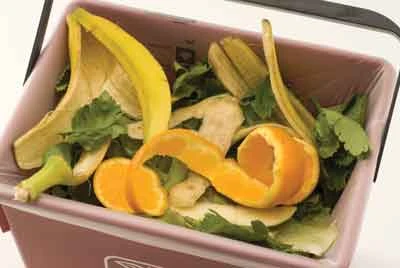
Americans send more food—35 million tons—to landfills and incinerators than any other single municipal solid waste (MSW), even more than paper and plastic. When wasted food is sent to landfills, it decomposes and becomes a source of methane, a greenhouse gas that contributes to climate change, the EPA says. In addition, the production and transportation of food has a number of environmental impacts. By reducing wasted food our society helps conserve energy and reduces environmental impacts, EPA adds.
On its website, www.epa.gov, EPA offers several suggestions for reducing food waste, including:
- Source reduction or prevention—Preventing food waste before it is created;
- Feeding people—Donating fresh, wholesome food to those in need;
- Feeding animals—Feeding safe, fresh food scraps to animals;
- Industrial uses—Rendering fats, oils and grease into products or biofuels;
- Composting—Turning food waste into a valuable soil amendment;
- Anaerobic digestion—Turning food waste into renewable energy and a valuable soil amendment.
In 2010, EPA began challenging organizations along the food life cycle to adopt more sustainable practices through its National Sustainable Materials Management (SMM) program’s Food Recovery Challenge (FRC). EPA’s Food Recovery Challenge provides direct technical assistance, a tracking system and recognition to help support and motivate organizations to reduce their food waste. Through the simple act of measuring food that is wasted, organizations can immediately identify simple changes that lead to big reductions More than 200 organizations are now participating in the Food Recovery Challenge, the EPA says.
More information on the U.S. Food Waste Challenge is available at www.usda.gov/oce/foodwaste/index.htm. More on the EPA’s Sustainable Materials Management Program and Food Recovery Challenge is available at www.epa.gov/smm/foodrecovery.
Latest from Waste Today
- Vecoplan to present modular solutions at IFAT 2026
- Terex Ecotec appoints Bradley Equipment as Texas distributor
- My Green Michigan expands depackaging capacity
- Washington selects Circular Action Alliance as PRO
- Ten-8 Industrial opens new central Florida service center
- Triumvirate Environmental acquires Environmental Waste Minimization
- Official NYC Bin availability expands ahead of deadline
- US Food Waste Pact’s 2025 Impact Report shows decrease in food waste