Photo courtesy of Apex Water Solutions

Over the last few years, I’ve had a front-row seat watching landfills shift operations to deal with regulatory changes surrounding PFAS, or per- and polyfluoroalkyl substances, and other contaminants of concern found in landfill leachate. The reason: More local and state governments are taking action on PFAS and their effect on the public and the environment, including introducing new regulations affecting wastewater treatment plants that currently accept leachate. That could mean that wastewater treatment plants stop accepting leachate, potentially sticking landfill operators with millions of gallons of toxic waste with nowhere to put it.
The toxic leachate that landfills create is unavoidable, but the tailspin that new regulations can put your landfill in doesn’t have to be. Gathering data for the future and exploring forward-thinking solutions can put your landfill in control when regulations change. With this simple checklist, operators can shift to a proactive mindset when it comes to leachate treatment and take the necessary steps now to be more prepared.
Step 1: Stop PFAS and other toxins from getting into the water.
Currently, most landfill operations include trucking leachate away to a wastewater treatment plant, where it is diluted and dispersed into the environment. But being proactive about leachate treatment and preparing for regulation changes mean the end goal is that PFAS and other contaminants of concern never get back into the environment. This checklist item is all about testing and education.
Since it is impossible to manage what you don’t measure, the first step is for operators to better understand the levels of all contaminants of concern, including PFAS, in their landfill’s leachate. If this hasn’t been done yet, the time is now! Testing should continue to occur regularly as concentrations vary season to season.
This step should also include connecting with your local government officials, community members and—most importantly—wastewater treatment plant operators. Strengthening critical partnerships like these can help landfills better understand the pressures their communities face when it comes to toxins and water, helping you be better prepared for regulations on the horizon.
Once you understand the baseline levels of the toxins in your landfill’s leachate and the community’s perspective, you can begin evaluating the best leachate treatment strategies to ensure these toxins don’t get back into the environment.
Step 2: Run a "What if the wastewater treatment plant immediately stopped taking leachate?" scenario.
Hauling leachate to wastewater treatment plants can be an effective solution in the short term, but it leaves landfills completely reliant on an external organization for a crucial piece of operations. Operators must ask themselves, “What if regulations force the nearest wastewater treatment plant to begin limiting the amount of leachate they accept or stop accepting leachate entirely? Will we haul it to the next-closest plant? How much will that cost? What if that one stops taking the leachate, too?”
Compare these scenarios against your annual plan and budget. Ask yourself, “Do the backup treatment options work in the short term, and can they scale over time?” Unlike many other operational decisions, leachate management cannot be something you “set and forget.” When treatment depends on a third party facing its own regulatory pressures, operators must be prepared to adjust as conditions and leachate characteristics change.
Remember, sooner or later, a day will come when regulatory pressure means that wastewater treatment plants stop accepting leachate. This could be years or even decades down the road, but that day is coming. When this happens, landfills without an option to treat leachate on-site— even closed landfills—risk being stuck with it.
Step 3: Calculate the real cost of doing nothing.
Implementing new systems often can seem daunting for operators, both in terms of labor and cost, but doing nothing doesn’t mean saving money. Hauling leachate to wastewater treatment plants and paying for them to treat it is already expensive, and these costs are only rising. Recently, a small landfill in Wisconsin saw the cost of trucking its leachate increase threefold in less than two years. Because the nearest wastewater treatment plant stopped accepting leachate, and the next-closest plant began to limit the volumes it would accept, the landfill’s costs went from slightly more than 7 cents per gallon to more than 20 cents per gallon. That had a significant impact on its budget.
If the contingency plan you developed in Step 2 involves trucking leachate to wastewater treatment plants that are farther away, this step should include calculating the extra transportation cost and any additional charges the new plant could impose to treat it. Remember, these costs could rise suddenly.
At the end of the day, doing nothing isn’t an option. The landfill always will generate leachate, and it will always need to be treated. Doing so effectively and cost-efficiently now and in the long run benefits the community and ensures the landfill can continue operating smoothly. In the end, many operators learn that treating leachate on-site is actually the least expensive option.
Step 4: Develop a treatment strategy that reduces PFAS risk.
A decade ago, PFAS were not a contaminant that many operators worried about. Just like chlorides, it didn’t seem likely that these would become enough of an issue to interfere with wastewater treatment plants accepting leachate. But with news stories about everything from hormone issues to rising cancer rates, these “forever chemicals” are becoming top of mind for the public.
Wastewater treatment plants treat leachate by diluting it and releasing it back into the environment. In addition to being increasingly costly, their biological processes don’t actually do much to address the issue of PFAS contamination. As more communities become aware of the dangers PFAS in leachate poses, the more likely it is that hauling leachate to a water treatment facility won’t be a viable choice.
PFAS might be the hot-button issue today, but that doesn’t mean that operators won’t have to worry about another contaminant tomorrow. As new information comes to light in the next decade or so, any chemical could be the next reason wastewater treatment plants stop taking leachate. Communicating with wastewater treatment plants now allows operators to understand the regulatory pressures they’re facing and how they’re changing. Understanding the public perceptions that shift the regulatory landscape from the plant operators’ perspective can help landfill operators better strategize how to be prepared, whether it's PFAS or another toxin.
Step 5: Create a road map to phase out wastewater treatment plants and treat leachate on-site.
Once you understand the baseline concentrations of PFAS and other toxins in your leachate and how on-site treatment can save you time and money, pilot testing different treatment options can begin. Any leachate treatment system should ensure that contaminants of concern are at a “no-detect” level—not just at the minimum level regulations demand. Doing so is vital to keeping this treatment viable and compliant in the long term.
The system also should be built with physical room to grow and change to meet the ever-changing regulatory landscape. Whatever the next toxin of concern is, landfills need a solution that allows them to address it on-site without being at the mercy of any third party.
Some solutions clean leachate up enough to meet local wastewater treatment plant regulations, so they continue accepting it—however, this means that landfills still are at the mercy of an external organization. This also means that operators will need to keep paying for trucking and treating leachate. This only adds costs and complexity to the operation.
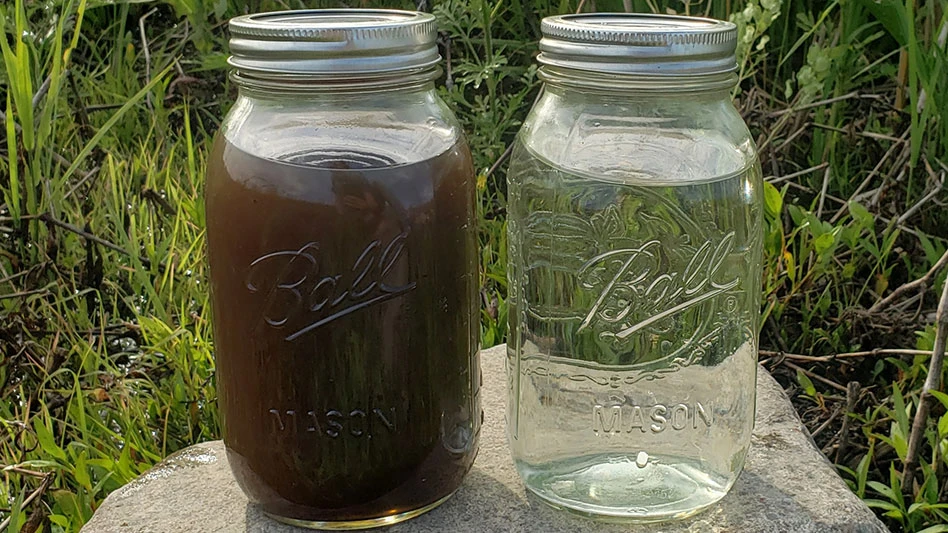
The most scalable solution is one that keeps the entire operation on-site, removes contaminants of concern and creates clean water that can be released into the environment safely. This provides landfills with ease of use and flexibility, as well as a uniquely developed system that treats each landfill’s leachate most effectively. By treating leachate on-site, operators also eliminate trucking and treating leachate costs—creating significant savings within a landfill’s budget, which often can pay for the on-site treatment system—making on-site treatment a budget-neutral solution.
At this stage, it’s critical to partner with a reliable treatment solution provider to ensure that building an effective system is not a burden on landfill staff. The system also should be scalable—meaning the landfill can grow and regulations can change and operators will always be ready to face them.
Landfill leachate always will contain PFAS and other contaminants of concern. But without treatment that specifically removes those contaminants, they will be discharged to the environment. As the public becomes more aware of the dangers of these chemicals, there will be more pushback against how the public is exposed to them. Then, regulations will follow.
Regulations preventing landfills from hauling leachate to wastewater treatment plants are coming—it’s not a matter of if, but when. Before that time comes, operators need a plan that removes PFAS and other contaminants of concern while still being cost-effective and scalable.
On-site leachate treatment offers the most flexible, reliable and scalable solution to the PFAS contamination problem. With these simple steps, landfill operators can take action to keep contaminants out of our environment and our bodies effectively and efficiently for years to come.
Greg Ackerson is CEO of Apex Water Solutions, Crystal, Minnesota, an industry leader in landfill leachate and PFAS management. Apex Water Solutions' WARP (Wastewater Treatment Remediation Process) System is an on-site U.S. landfill leachate treatment that produces clean water that meets national drinking water standards, removing PFAS and other contaminants of concern that would otherwise be transported, diluted and discharged into the environment, threatening public health and groundwater.More from our latest newsletter
- Mozart Devco announces energy offtake agreement
- Avergies, Valorizon and Waga Energy launch RNG production in southwestern France
- Cemex Ventures increases investment in waste-to-energy startup
- Wisconsin releases food waste evaluation report
- US Composting Council releases draft bank loan kit
- Monster Organics expands services to North Carolina
- Compost2026: Controlling contamination in Vermont