Image courtesy of Amp Robotics Corp.
Google has signed an agreement with Commonwealth Sortation LLC, an affiliate of Amp Robotics Corp., based in Denver, to remove 200,000 metric tons of carbon dioxide equivalent (CO2e) by 2030 and accelerate new pathways to tackle methane.
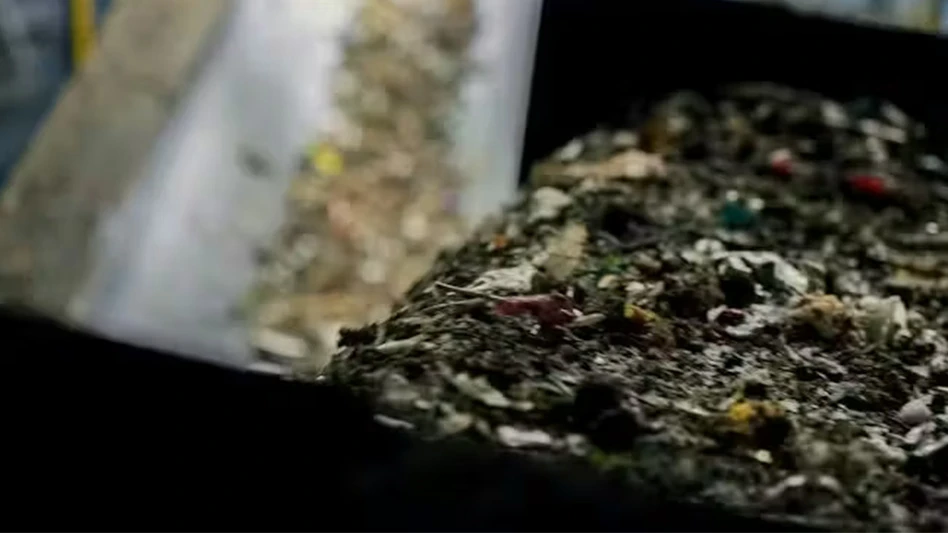
Amp uses artificial intelligence- (AI-) powered sortation technology to recover recyclable commodities and organic material from municipal solid waste (MSW). Amp says it converts organic material into biochar, a stable material that sequesters carbon and keeps it out of the atmosphere.
Landfilled MSW is the third-largest source of human-generated methane emissions in the United States, according to the U.S. Environmental Protection Agency (EPA). By diverting organic material from landfills and transforming it into biochar before it produces methane, Amp says its process reduces near-term warming and locks carbon away for the long term.
This purchase will enable Amp to add biochar production capacity to what the company says is the largest recycling project in the U.S., ultimately unlocking the potential to convert five million tons of organic waste into biochar over the next 20 years.
Amp and Google will work together to establish frameworks for quantifying the impact that waste diversion paired with biochar carbon removal could have on methane elimination.
“We’re excited to catalyze an approach to waste management that takes on the twin challenges of climate change: the near-term warming of methane and the long-term warming of carbon dioxide,” says Randy Spock, carbon credits and removal lead at Google. “Amp’s technology, through its partnerships with local waste management authorities, offers a scalable way to turn waste organic materials into a real climate solution, all while supporting local communities by reducing waste and mitigating air pollution.”
In November 2025, Amp signed a 20-year contract with the Southeastern Public Service Authority of Virginia (SPSA), the regional waste authority that serves eight communities and 1.2 million residents in South Hampton Roads.
Through this project, Amp says its AI sortation technology will ultimately process 540,000 tons of MSW annually, diverting or repurposing at least 50 percent of this material from landfill.
In addition to preventing waste buildup at SPSA’s landfill, each ton diverted reduces or sequesters more than 0.7 tons of CO2e—which the company says amounts to more than 378,000 tons of carbon dioxide avoided or removed annually, equivalent to taking more than 88,000 cars off the road each year.
“Recycling and carbon sequestration are a powerful pairing,” says Matanya Horowitz, Amp founder and chief technology officer. “The waste industry is built to capture value from materials. With biochar, we can turn organic waste from a major source of emissions into a durable, carbon-storing asset for municipalities and waste operators. Together with Google, we’re helping transform one of the economy's most emissions-intensive sectors into a force for climate impact.”
Beyond carbon removal, Amp says Google’s support for its Virginia project advances a broader vision of zero waste and a more circular economy. AMP's AI-powered sorting captures recyclables otherwise bound for landfill and gives them a second life as low-carbon manufacturing feedstock.
The biochar will first be used as landfill daily cover, where it can filter leachate, reduce odors and help prevent methane emissions. Over time, Amp aims to expand biochar’s use in several domains including construction and cement.
Latest from Waste Today
- Vermont bill proposes prohibition on discharge of PFAS
- Martin County is first Florida municipality to commit biosolids to Indiantown upcycling facility
- Redrock Environmental Group sanitation workers join Teamsters Local 431
- OhioHealth receives SWACO grant to purchase digester
- Casella appoints senior vice president and chief revenue officer
- WeSort.AI recovers critical raw materials from recycling plants
- Collective Waste Solutions acquires Alcop Resource Recycling transfer station
- A blueprint for curbside composting