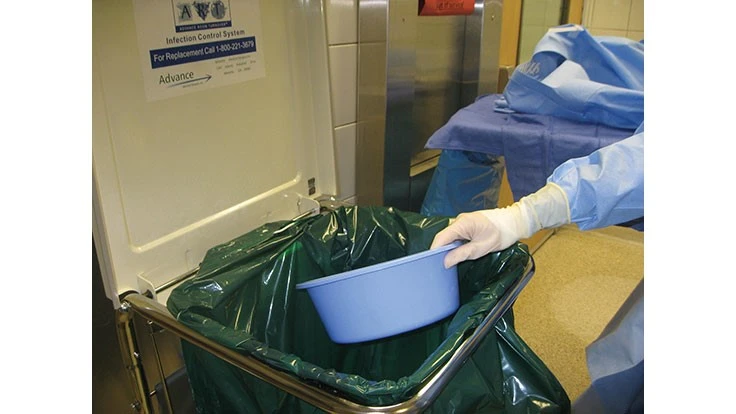
According to the Healthcare Plastics Recycling Council, St. Paul, Minnesota, roughly 1 million tons of clean, noninfectious healthcare plastics are generated in U.S. health care facilities annually. While the potential of this largely untapped waste stream is obvious, how to access this waste stream can be less clear, which is why HPRC has prepared “The Healthcare Plastics Guide for Recyclers” to help inform and educate plastics recyclers and processors about the common streams of plastic waste generated in clinical settings.
By laying out the common materials as well as the strategies for working with hospitals, processing techniques and potential markets, the association says it aims to build the foundation for recycling activities across the health care industry.
This guide includes the most commonly generated health care plastic streams; how to partner with hospitals for a successful recycling program; recycling options, including common steps in mechanically processing health care plastics; case studies and other helpful resources; and technical specifications for common health care plastics.
To meet strict United States Food and Drug Administration (US FDA) requirements for medical supplies, equipment and associated packaging, most health care plastics are pure, high-quality materials. By working with hospitals to help them produce clean streams of specific materials, recyclers gain access to a material source that can help improve the performance of regrind and repro pellets as well as the products produced from these materials, the HPRC says.
Latest from Waste Today
- Vecoplan to present modular solutions at IFAT 2026
- Terex Ecotec appoints Bradley Equipment as Texas distributor
- My Green Michigan expands depackaging capacity
- Washington selects Circular Action Alliance as PRO
- Ten-8 Industrial opens new central Florida service center
- Triumvirate Environmental acquires Environmental Waste Minimization
- Official NYC Bin availability expands ahead of deadline
- US Food Waste Pact’s 2025 Impact Report shows decrease in food waste